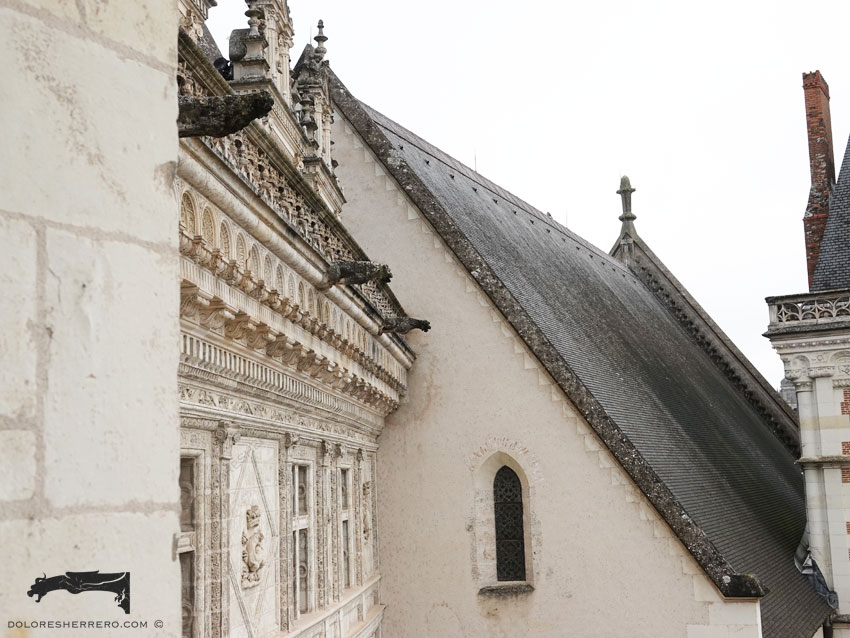
Today’s post takes us to one of the most outstanding architectural ensembles in France, where one of the most remarkable groups of gargoyles on a civil building is preserved.
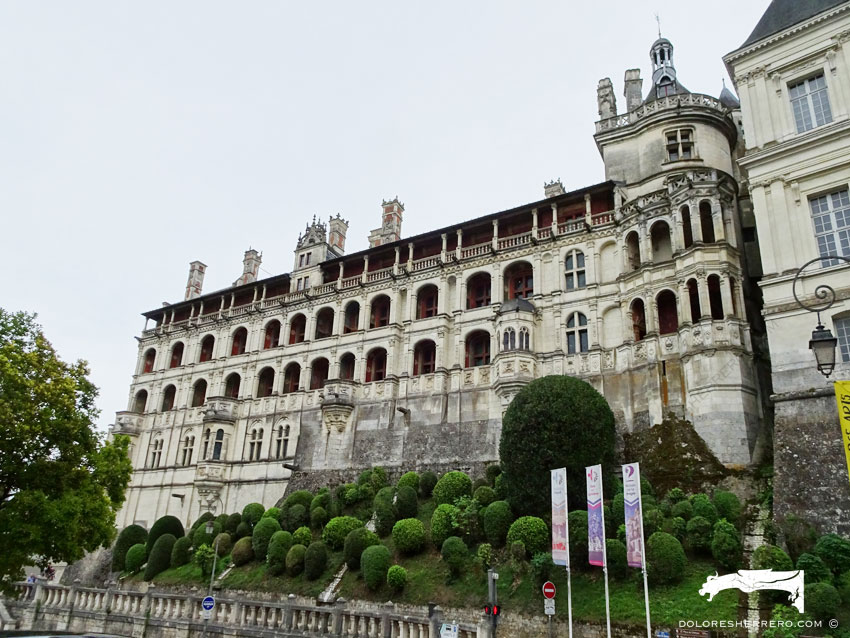
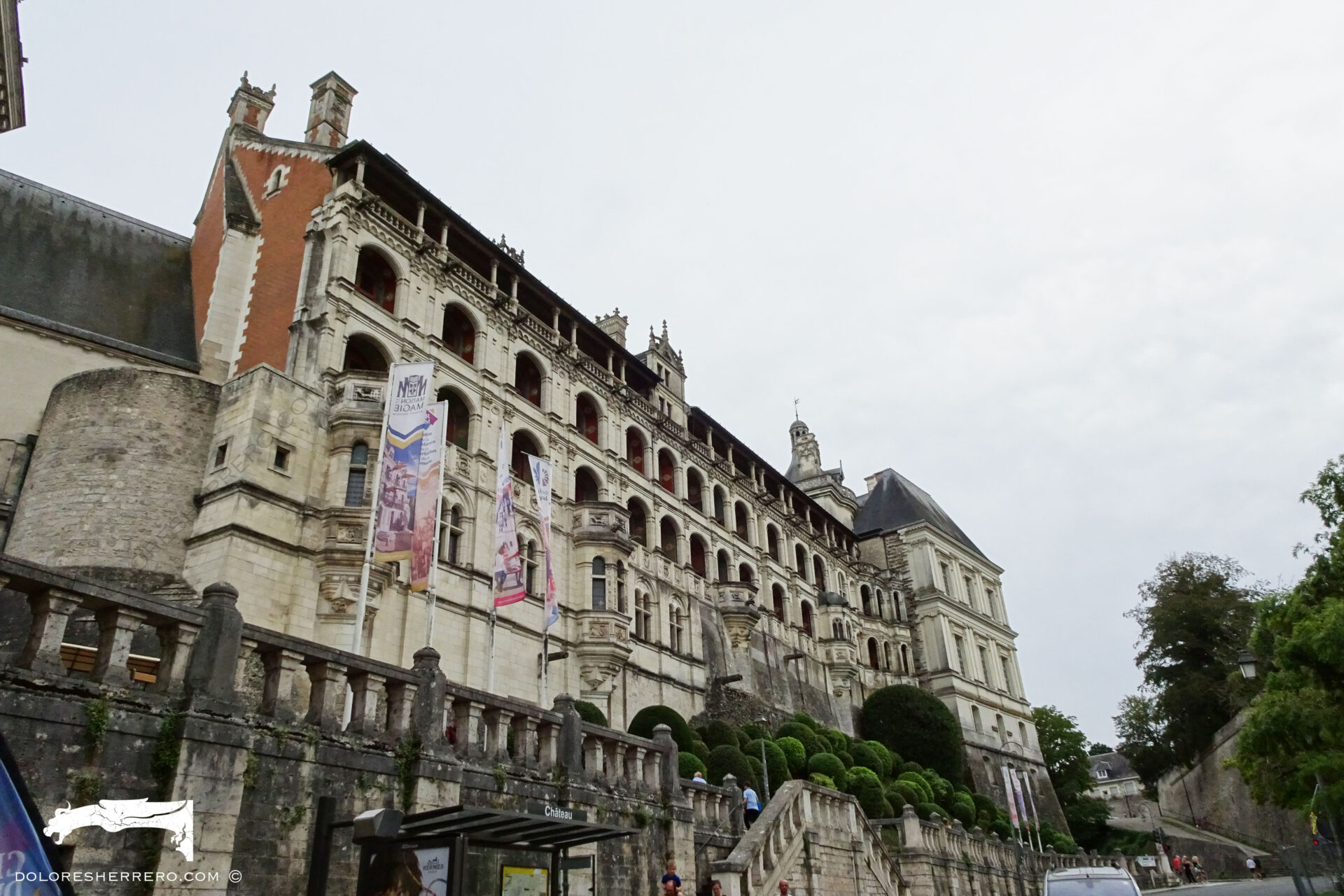
We are referring to the Château Royal de Blois, one of the principal castles of the Loire Valley, declared a UNESCO World Heritage Site in 2000.
The building was erected on the former medieval castle of the Counts of Blois and served as a residence for several French kings. Between 1843 and 1870, the architect Félix Duban carried out major restoration works that helped shape the building’s present architectural diversity.
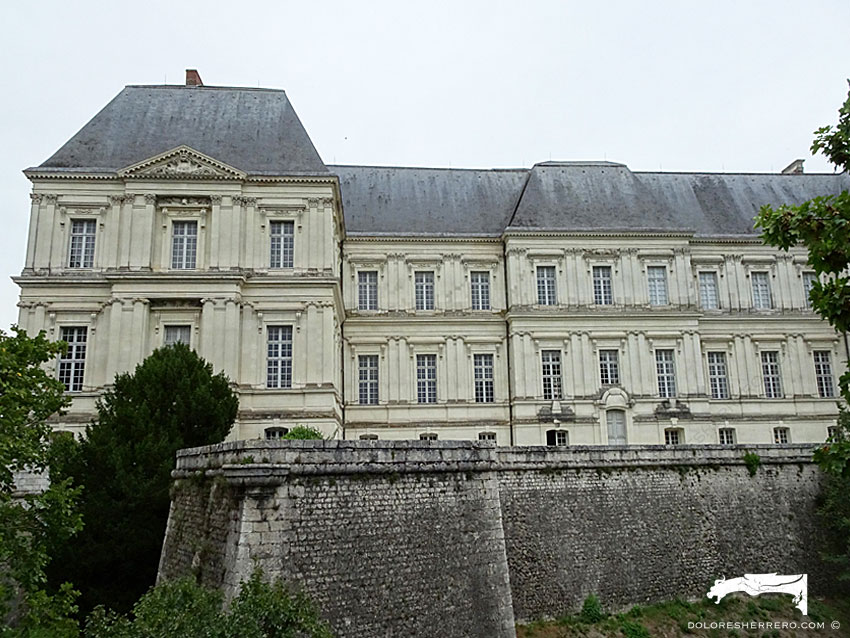
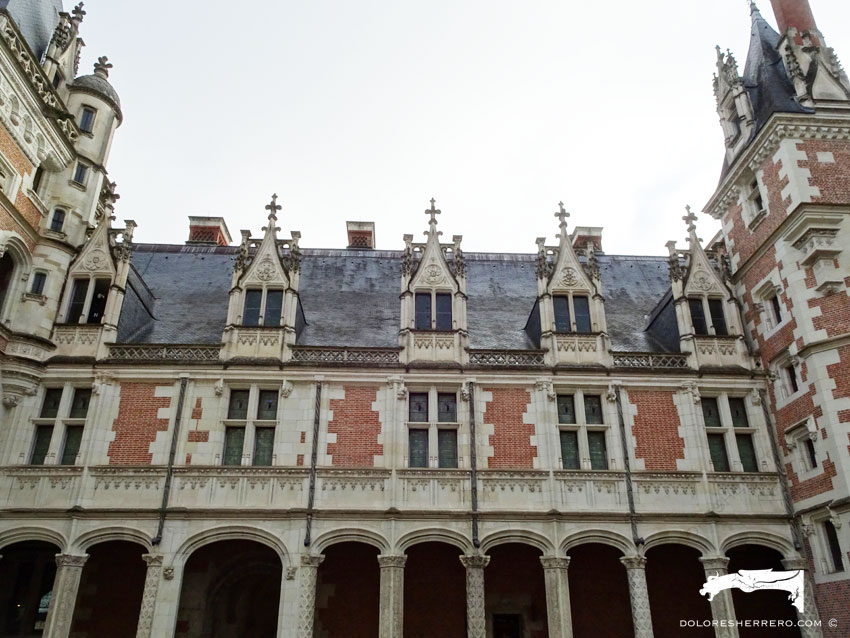
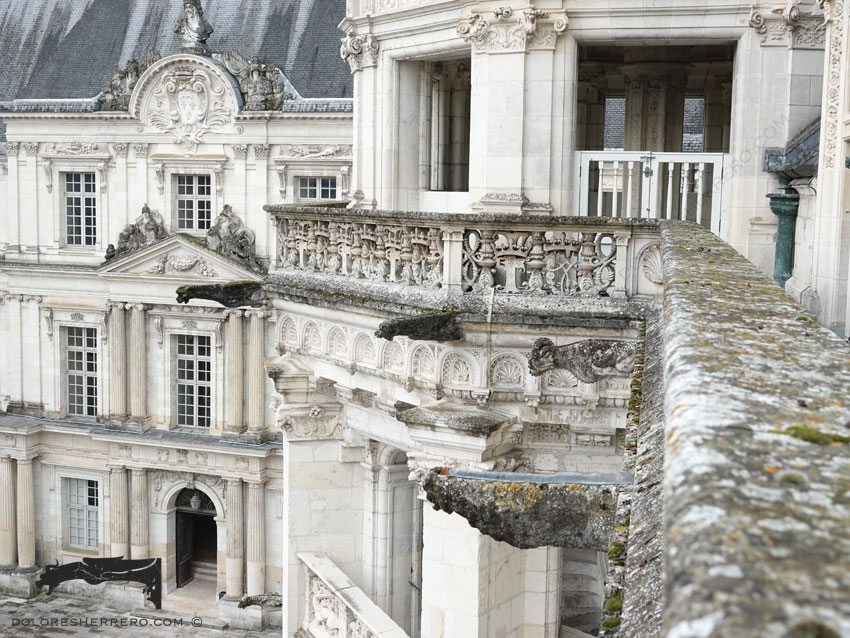
The analysis is structured around four areas of the building in which the gargoyles are located: the courtyard, the north side, the south side, and the museum. The pieces are presented according to their typologies in order to offer an organised and as comprehensive a view of the ensemble as possible. Given that some gargoyles are in a deteriorated condition, only those that are well preserved have been selected.
Although the term gargoyles is used throughout this study as a general designation, it should be noted that some of the figures may in fact correspond to chimeras or grotesques, as their position does not allow the presence of a water spout to be verified.
The tour therefore begins with the gargoyles of the courtyard.
Gargoyles of the Courtyard of the Château Royal de Blois
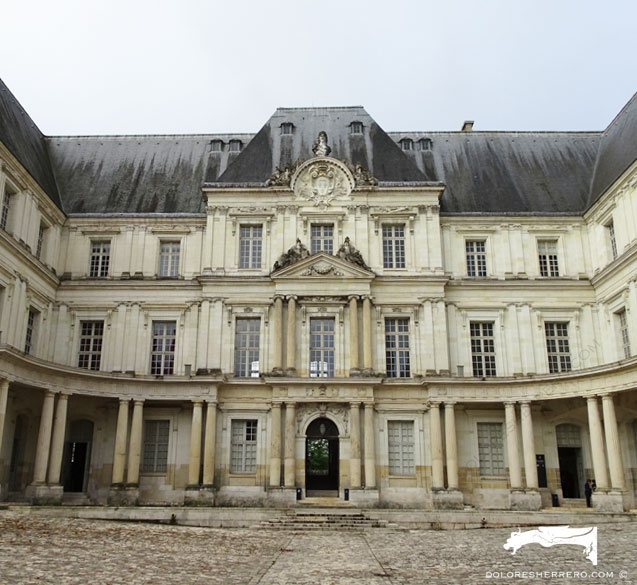
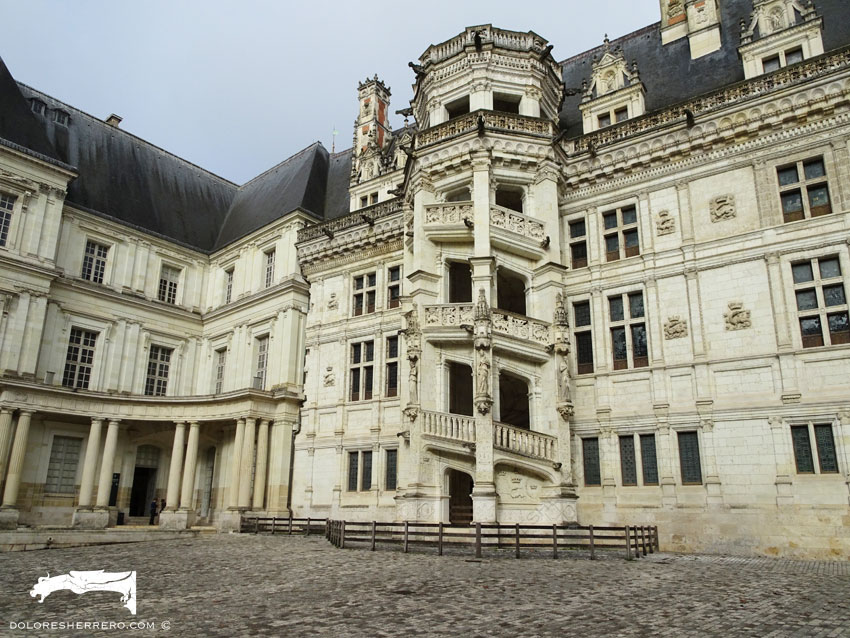
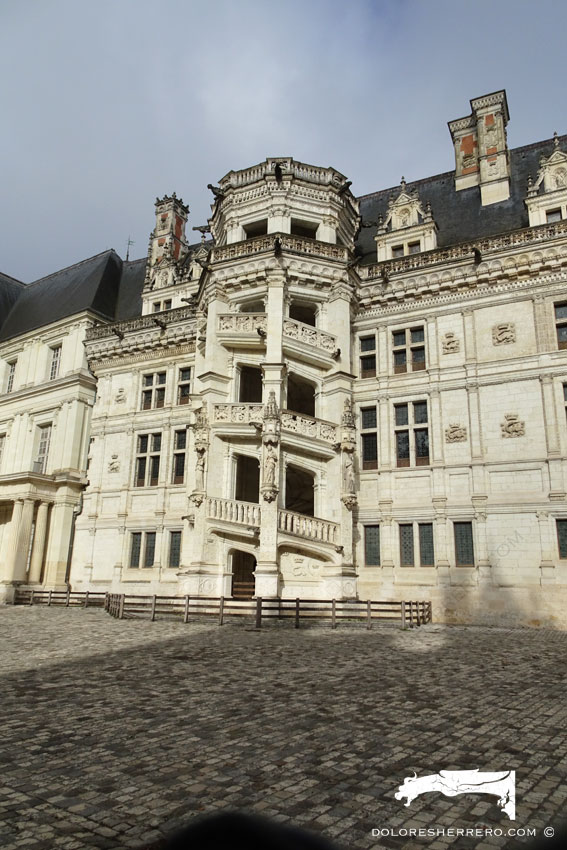
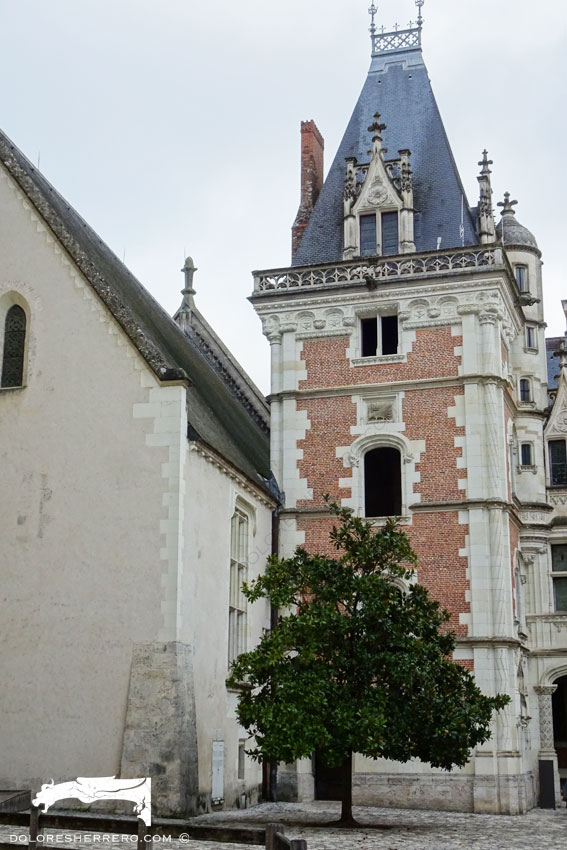
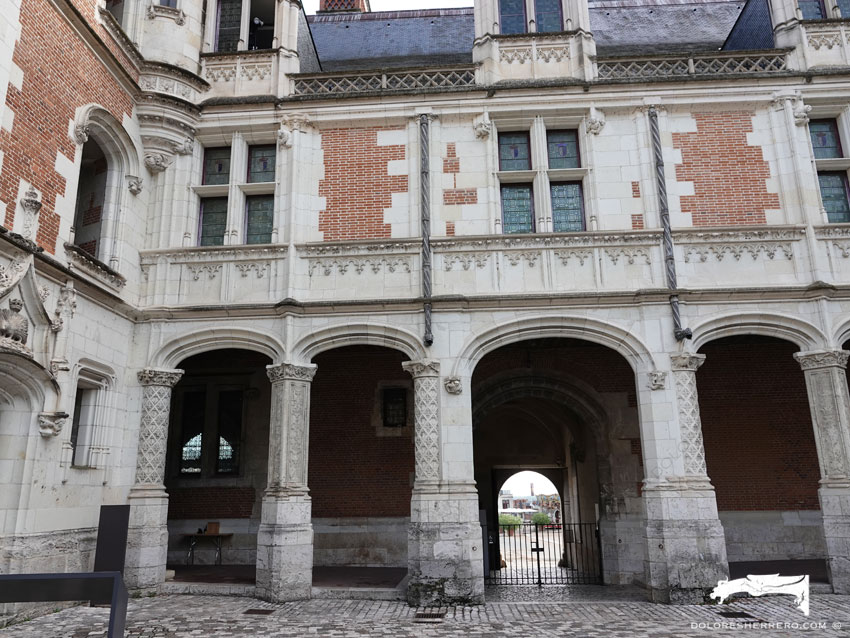
The castle’s great courtyard brings together four artistic styles, endowing it with remarkable architectural richness: Gothic (the 13th-century medieval castle), Flamboyant Gothic (the Louis XII wing, 1498–1508), Renaissance (the Francis I wing, 1515–1519), and Classicism (the Gaston d’Orléans wing, 1635–1638).
Gargoyles Representing Real Animals
As is customary, animals are classified as real in order to distinguish them from mythological or fantastic creatures.
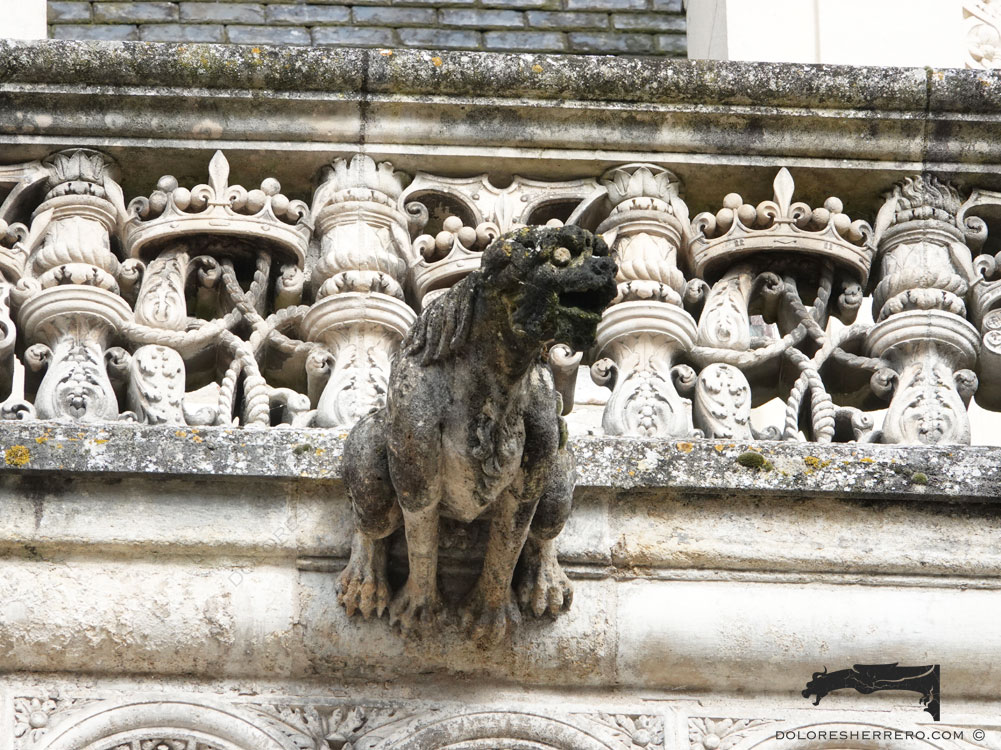
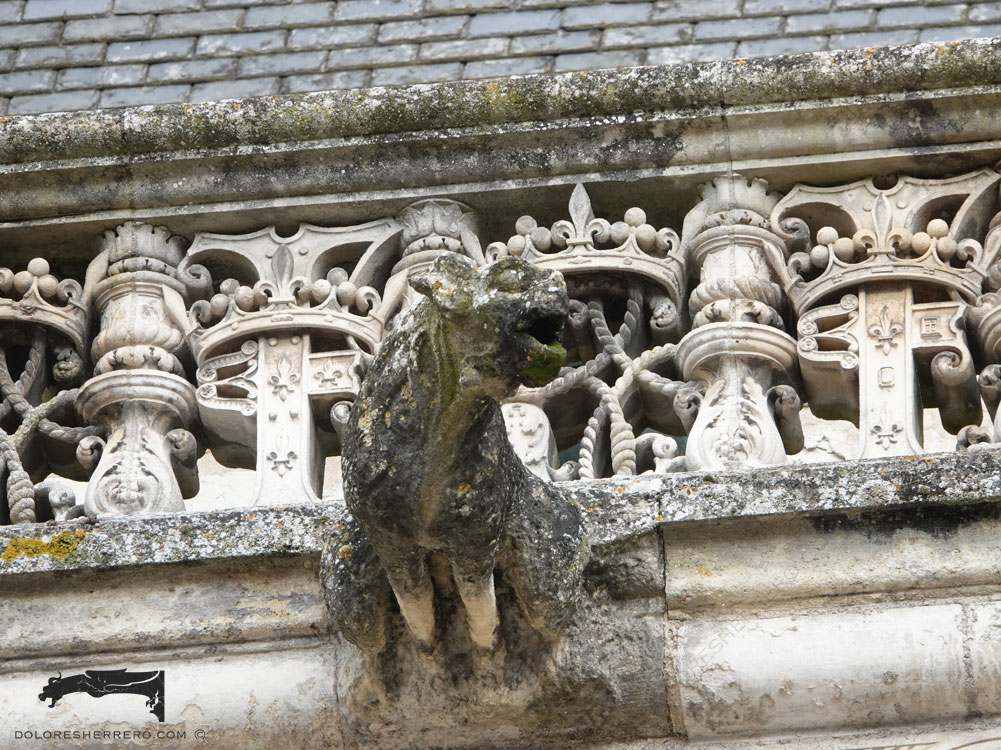
Two animals are identified: the dog and the ram. Details such as coats, large eyes, and flat, drooping ears can be observed, as well as a particular feature in the positioning of the limbs: the left foreleg is placed behind the hind leg, which lends a certain dynamism to the figure.
A ram of notable carving and style can also be observed, with a protruding and decorated trachea and spiral motifs on the neck.
-
- Ram
-
- Dog
-
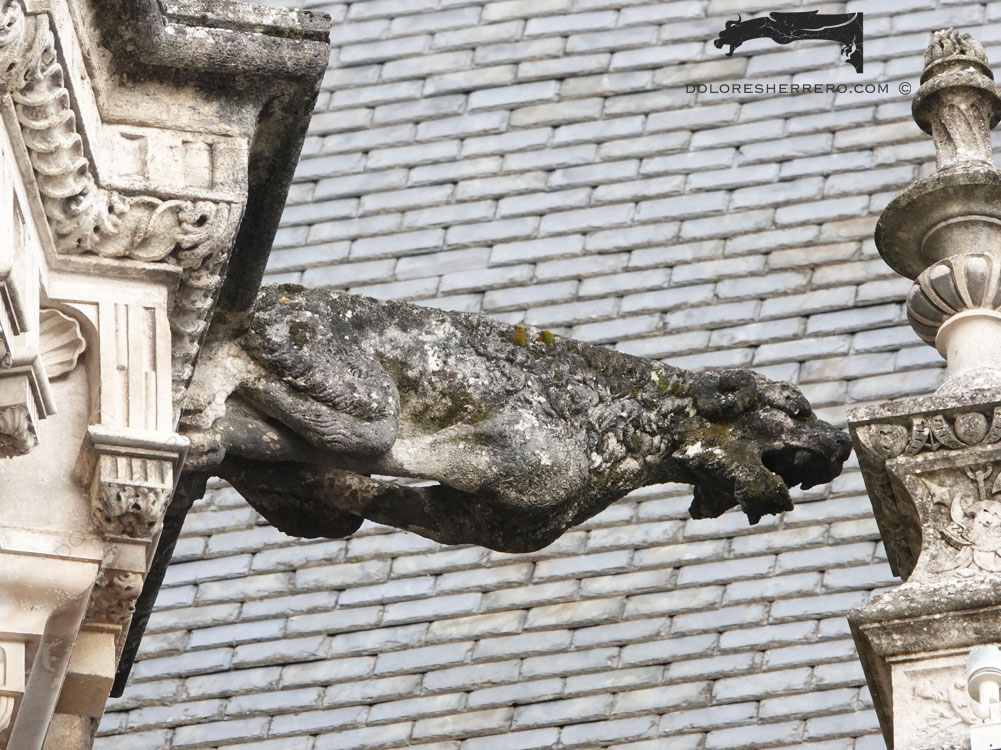
- Ram
-
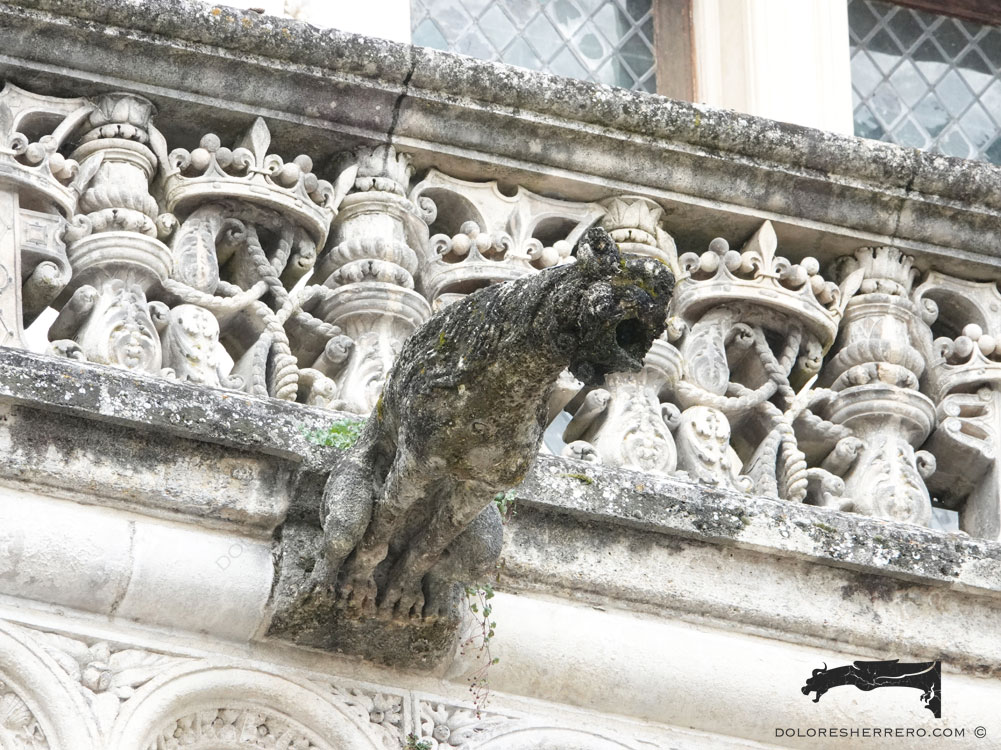
- Dog
-
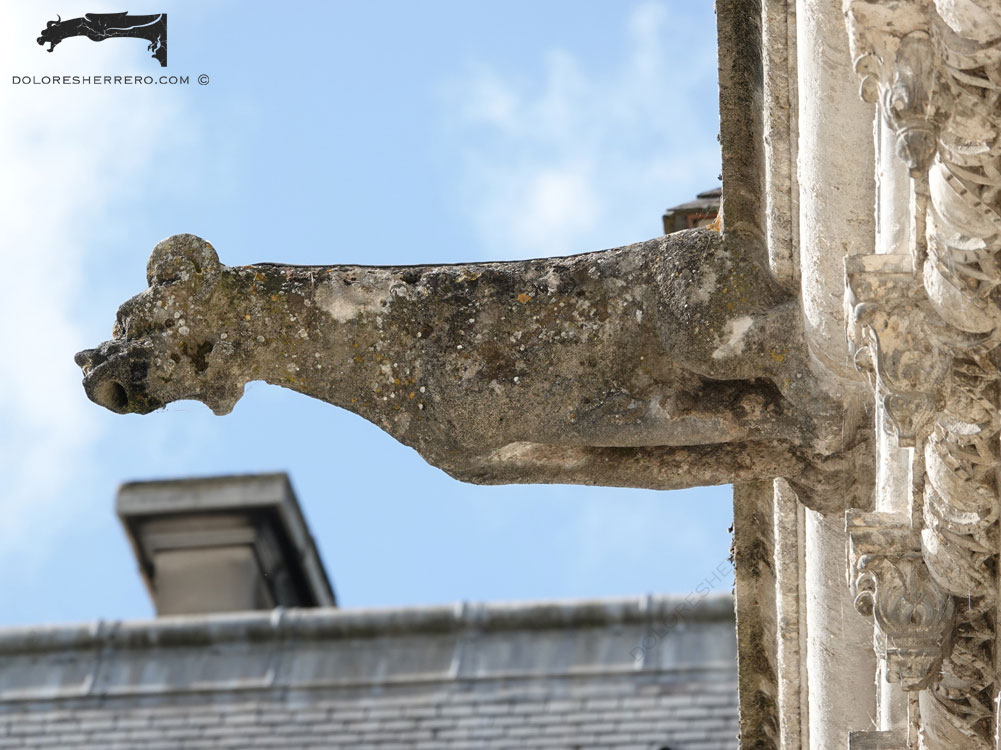
- Ram
-
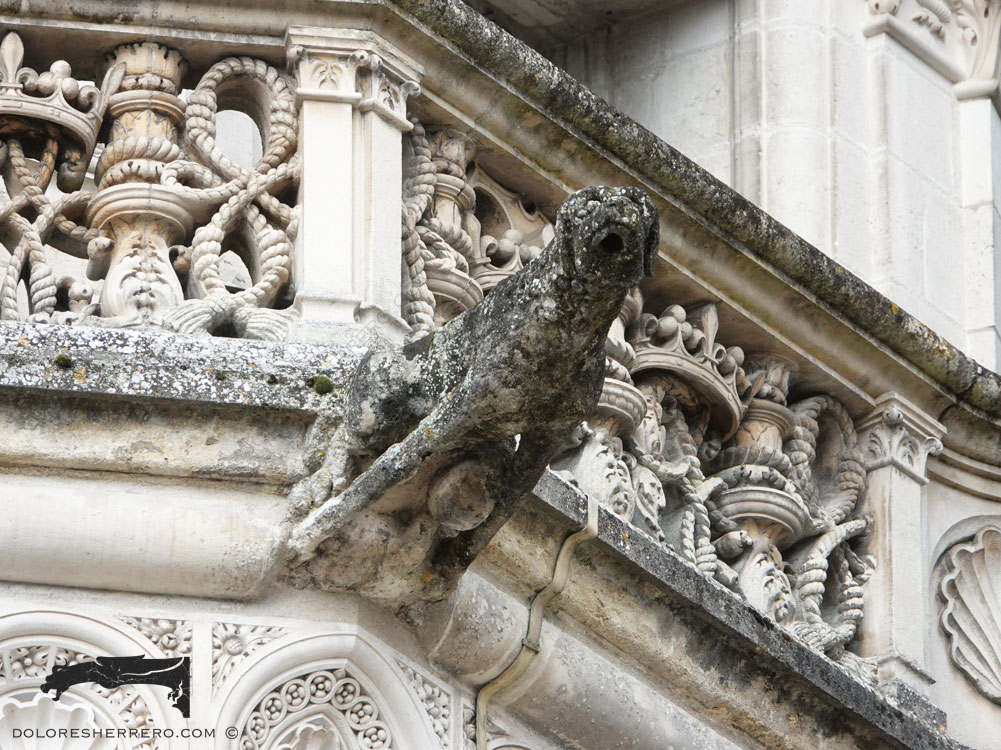
- Dog
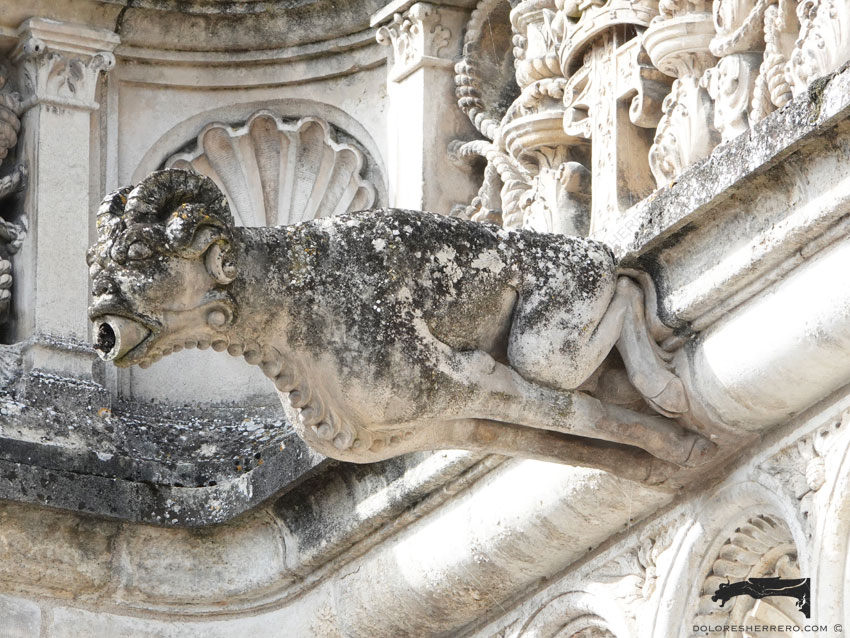
Ram
Gargoyles Representing Fantastic or Mythological Animals
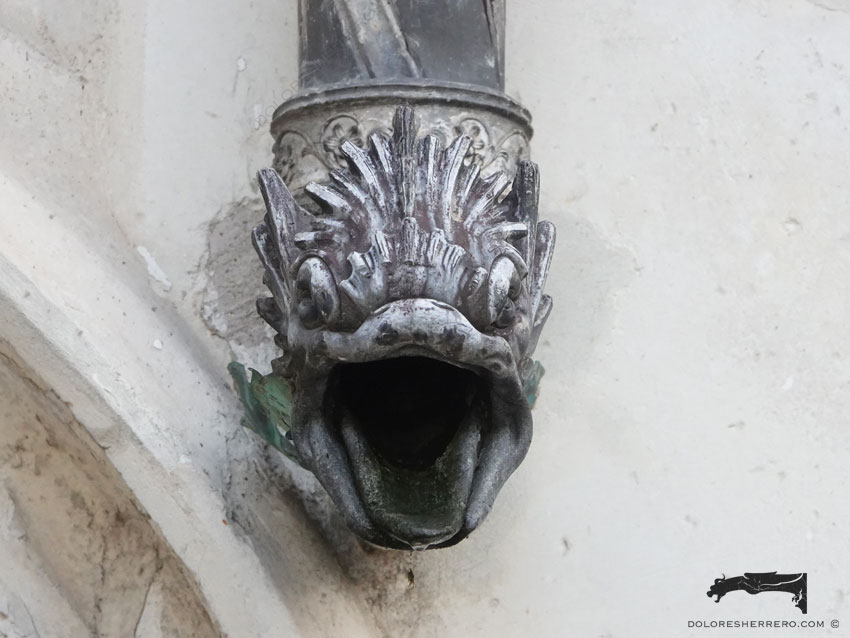
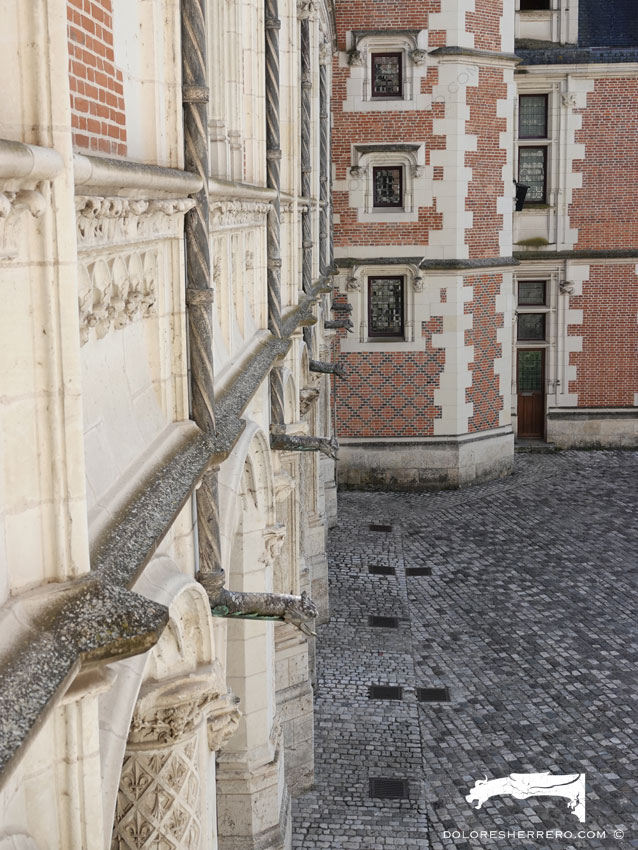
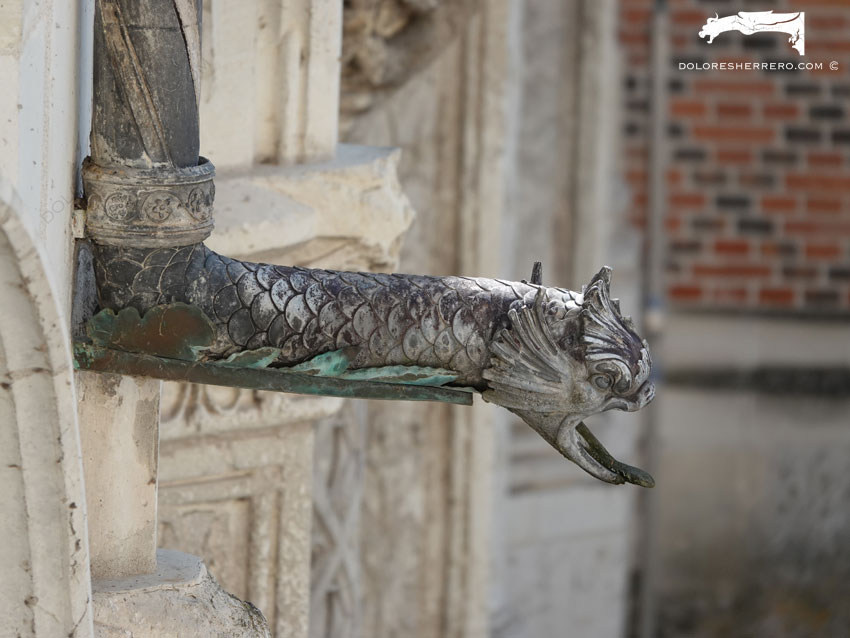
A distinctive metal dragon stands out, with scales, a protruding tongue, and a feathered head, positioned at the end of the wall conduits that channel the water. This type of drainage system, terminating in dragon heads or other fantastic creatures through which the water is discharged, can also be observed in other gargoyles across Spain and Europe.
Gargoyles Representing Animal Monsters
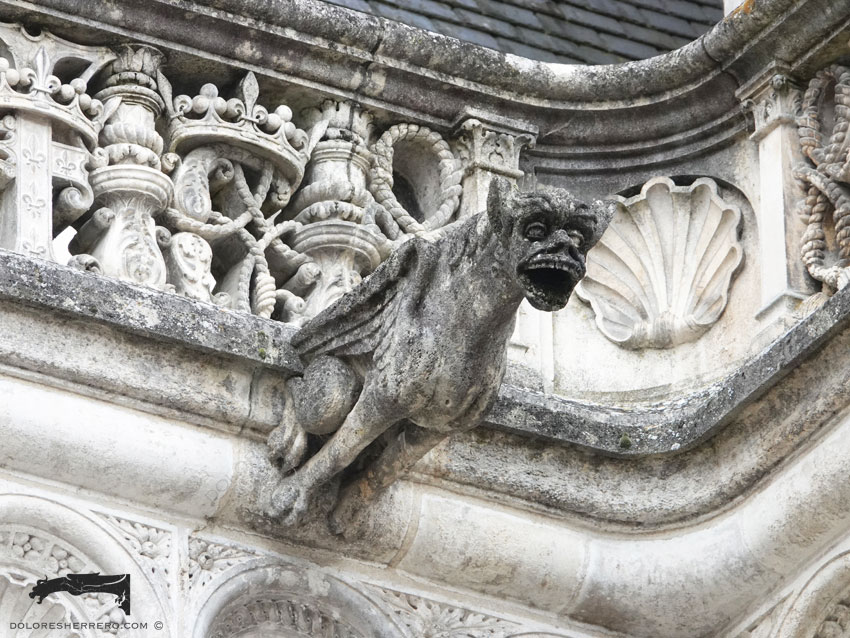
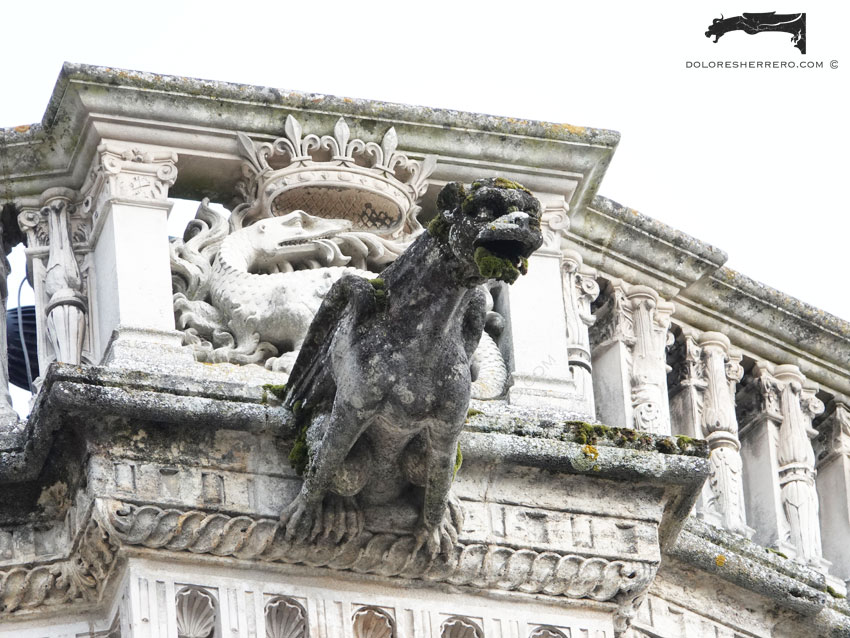
Many animal monsters—hybrids resulting from the combination of different species—display demonic features, and could therefore also be classified within the demonic typology. However, in this study, only those that present clearly defined demonic traits are included in that category.
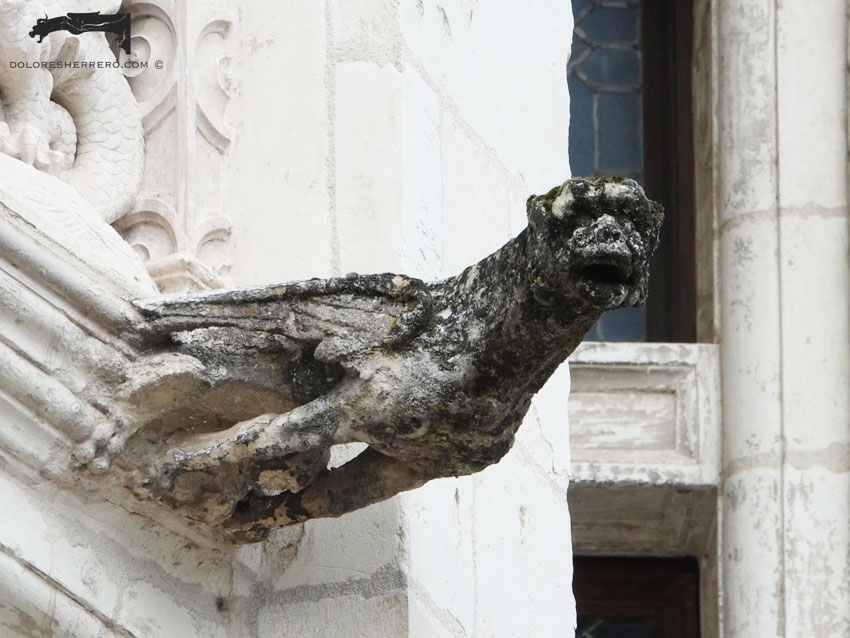
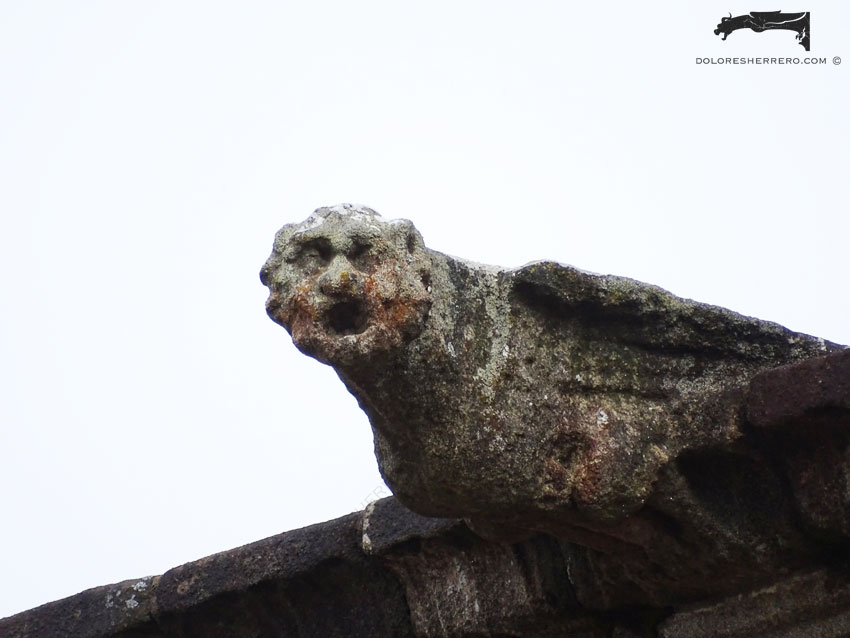
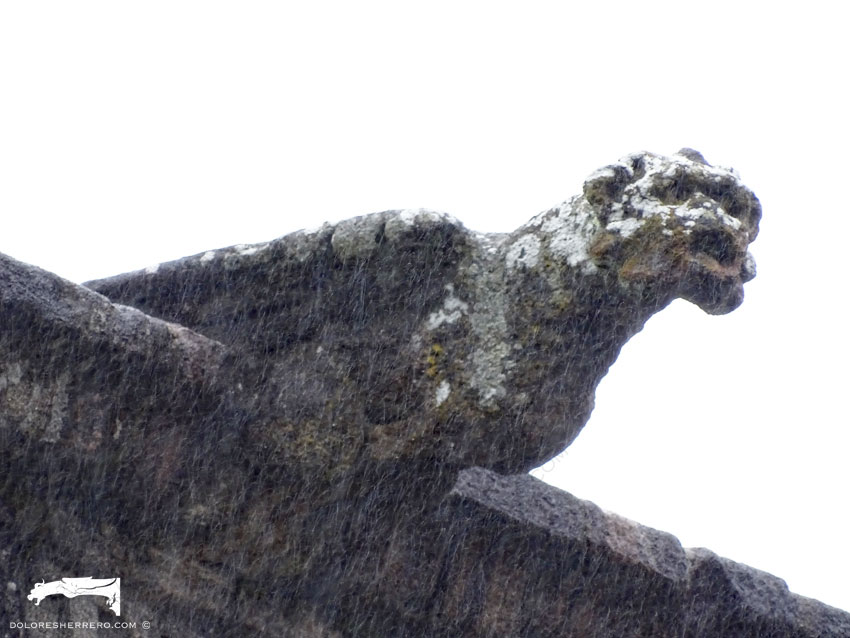
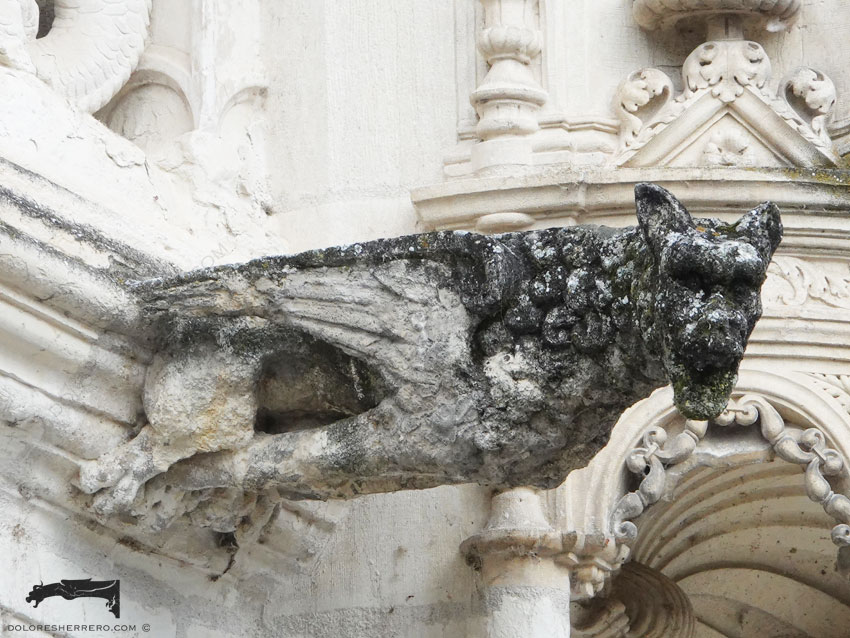
All of them are winged dogs with distinctive characteristics, some already observed and others newly identified: pupils, crossed legs, decorated wings, teeth, hollowed or marked eyes, muscular necks, elongated and sunken snouts, and fur.
It is noteworthy that some of them closely resemble two gargoyles from the Royal Hospital of Santiago de Compostela (Spain).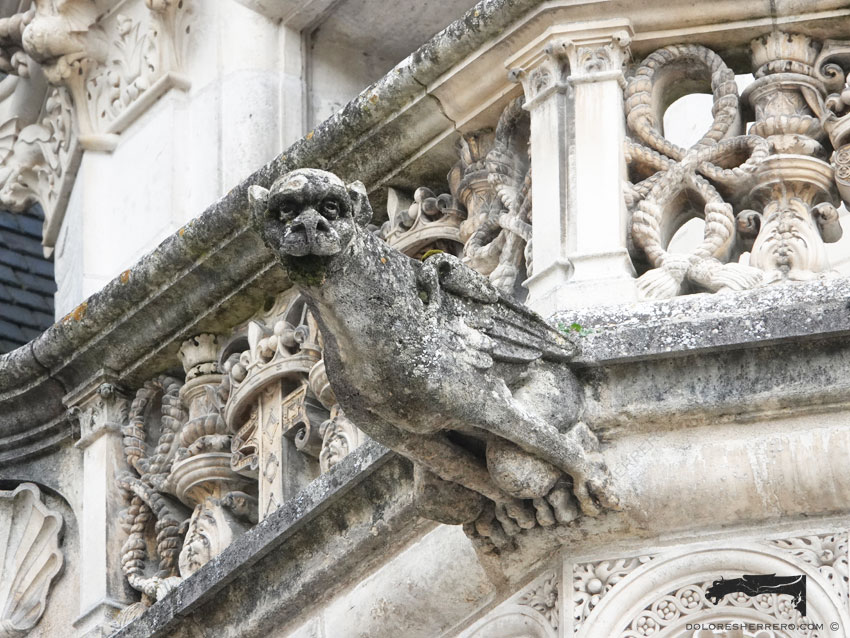
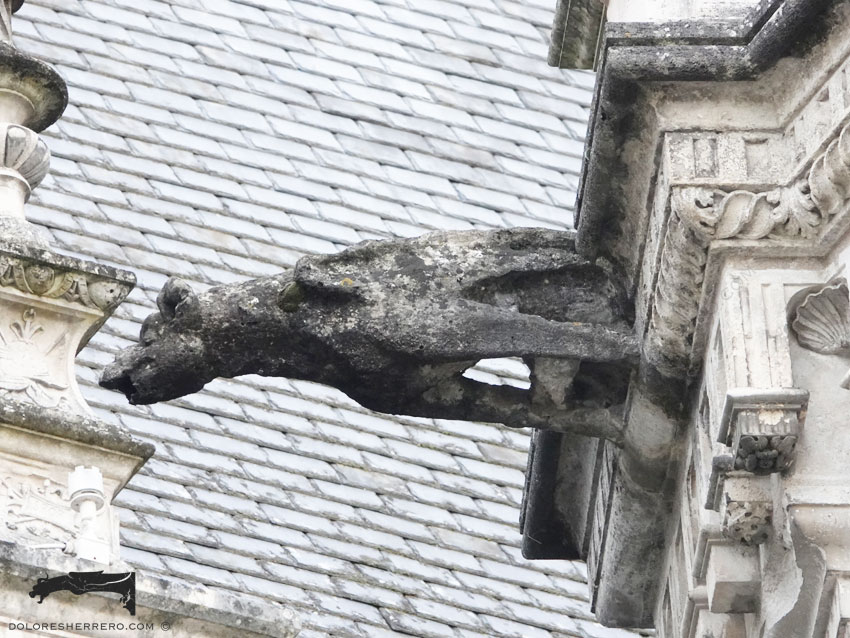
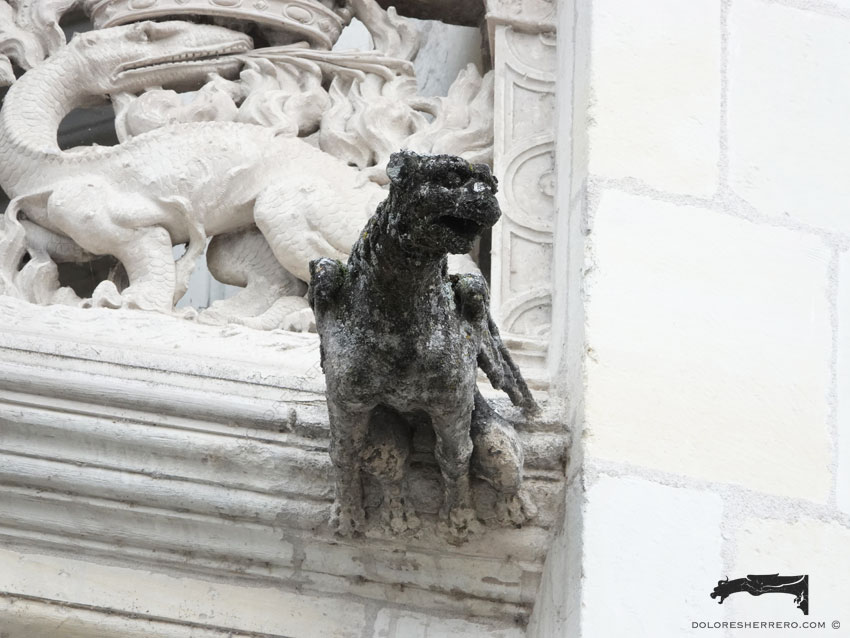
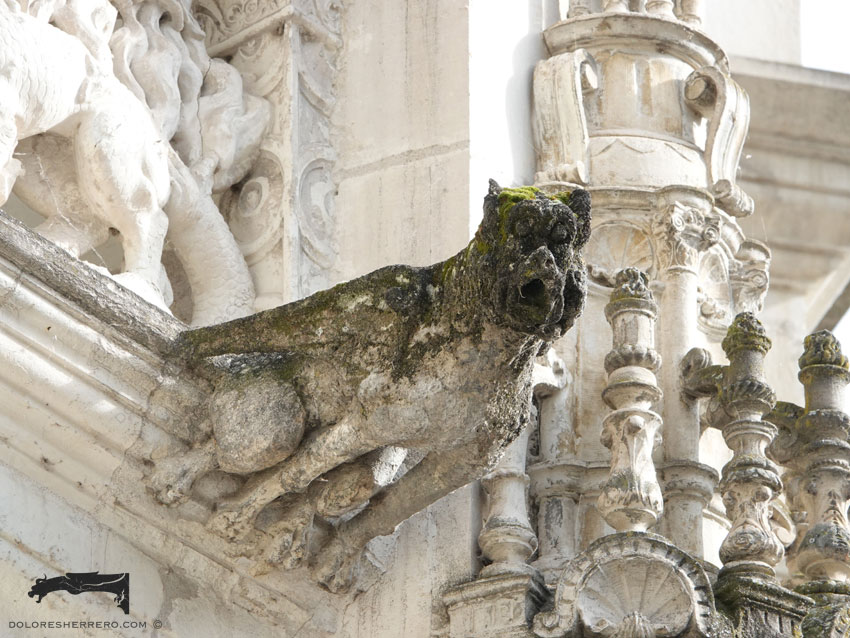
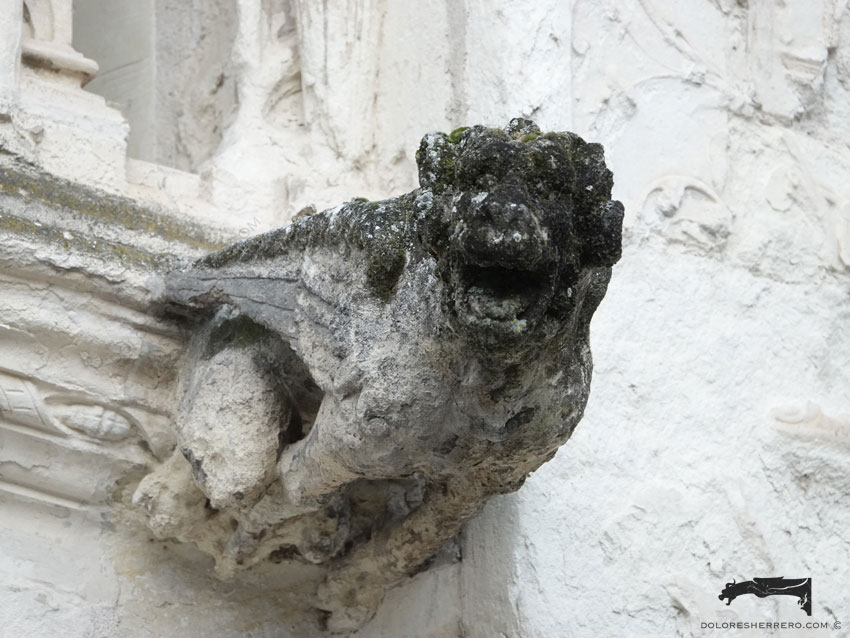
-
- Royal Hospital in Santiago de Compostela (Spain)
-
- Royal Hospital in Santiago de Compostela (Spain)
Gargoyles Representing Demons
As noted, although a large number of gargoyles display a demonic appearance, only those that possess characteristic elements of this typology are included within the demonic category, as detailed below.
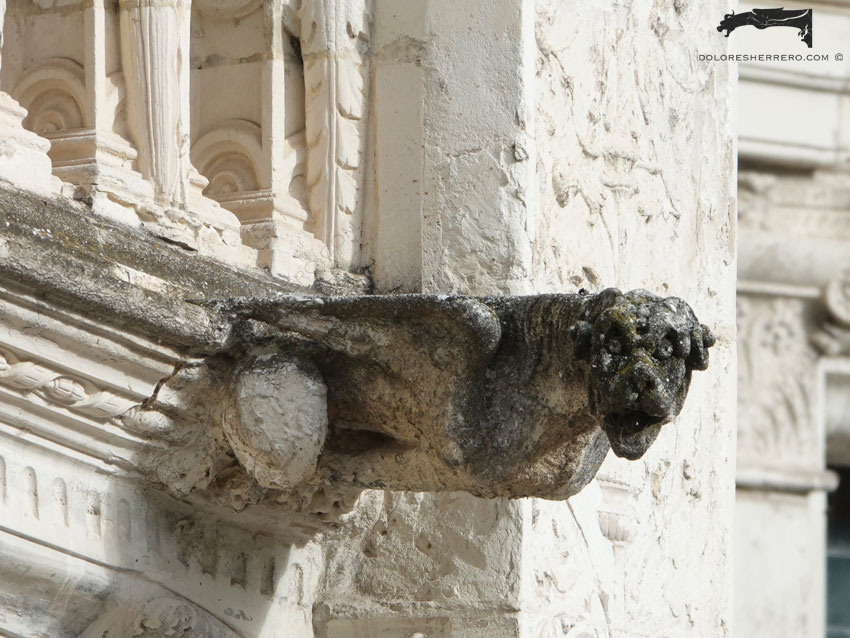
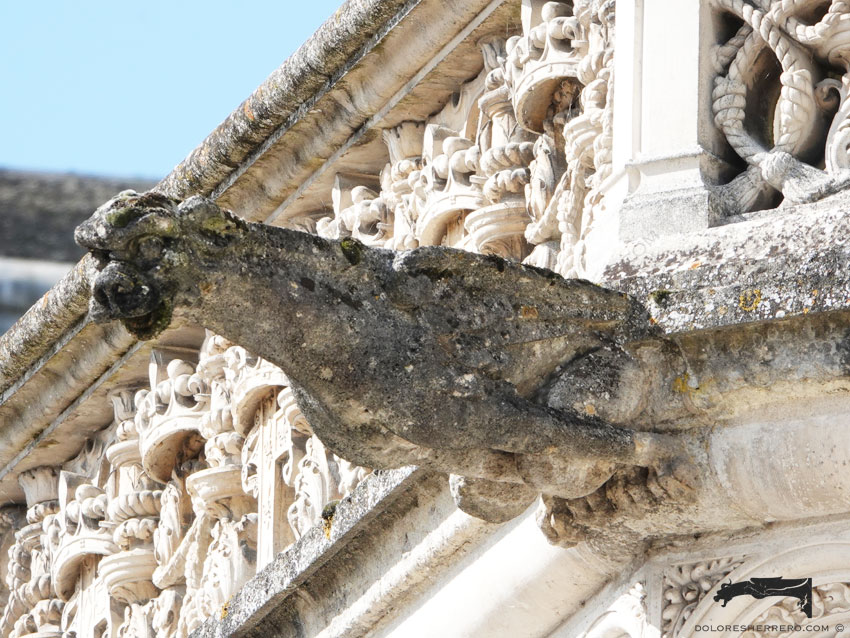
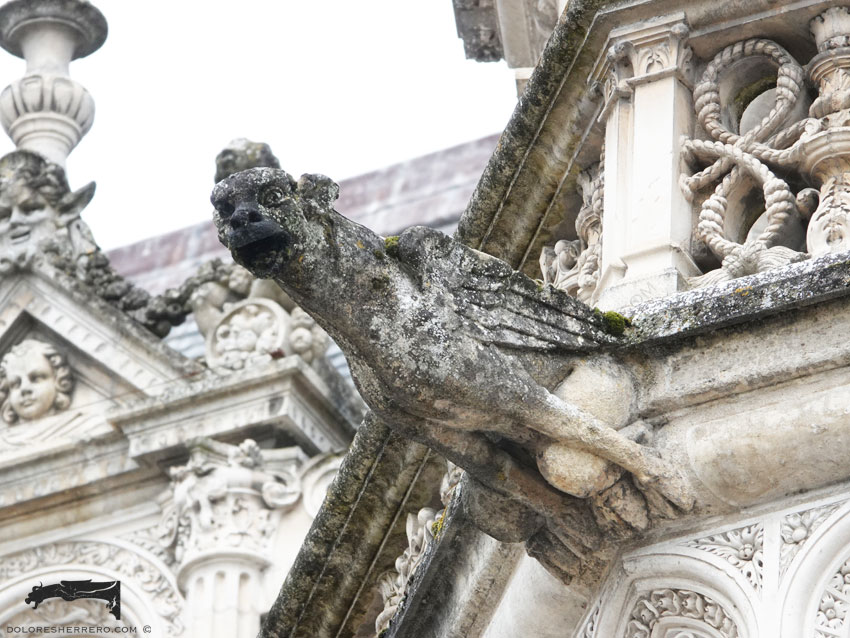
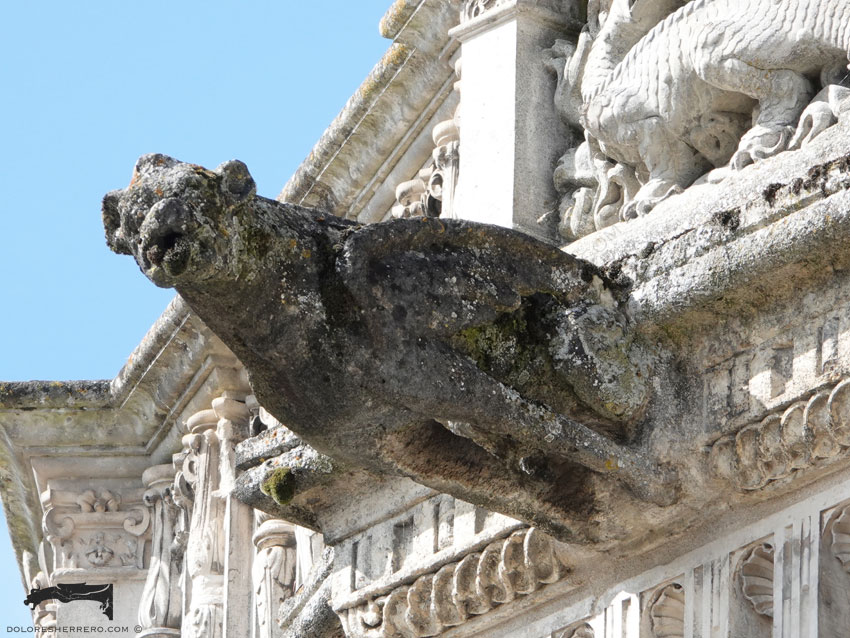
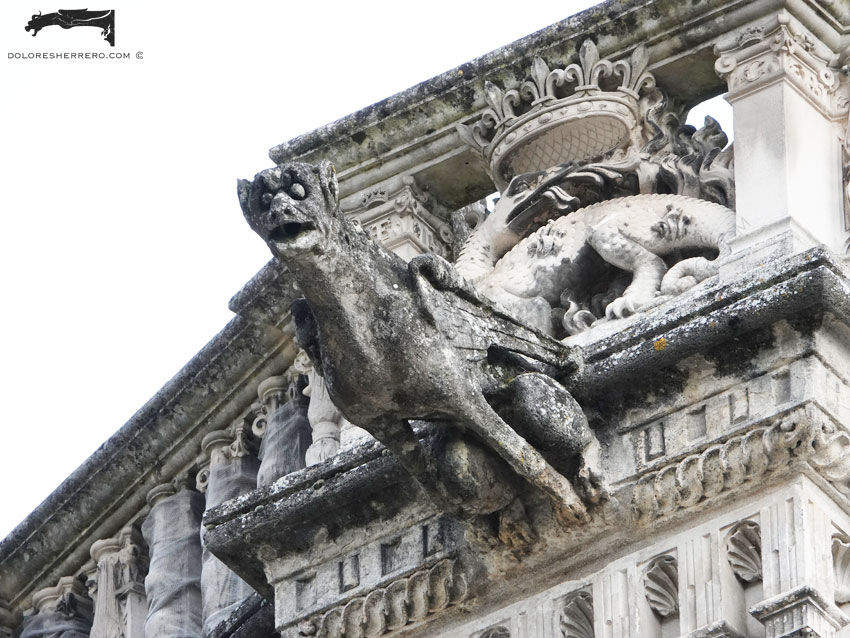
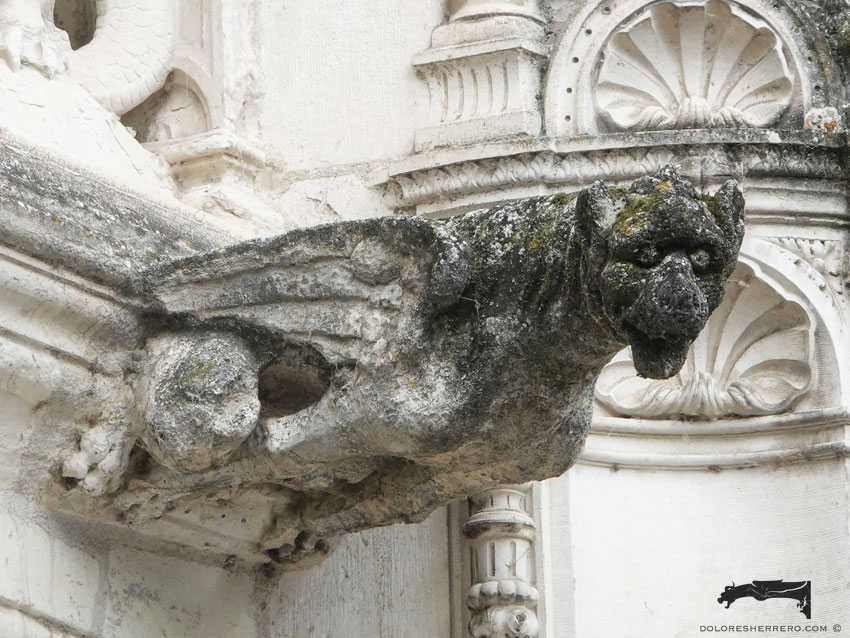
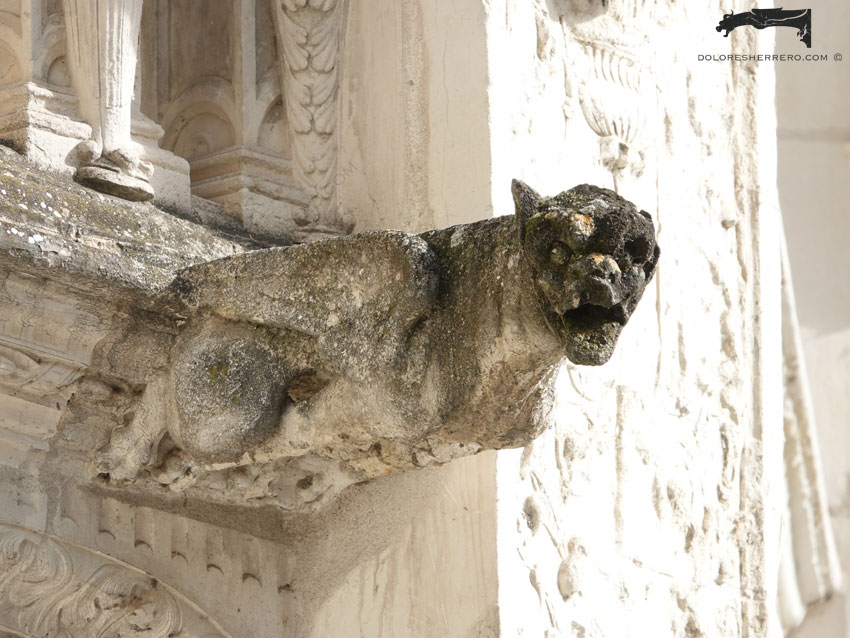
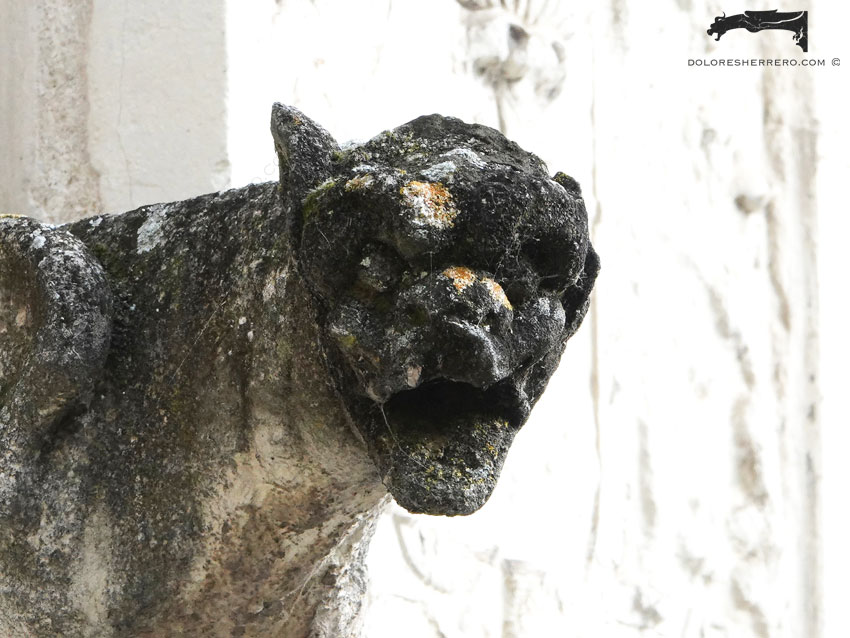
Once again, winged quadrupeds (dog, ram) can be observed, with features already identified: pupils, filled eyes, fur, and crossed legs. To these are added further elements associated with the demonic typology: pointed ears, a pronounced nasal bridge or crest, fierce expressions, cloven hooves, a frontal protuberance or horn, a dragon-like neck, and a ghostly appearance. Finally, a remarkable gargoyle stands out, with an elongated snout and a leonine mane, conveying a terrifying aspect.
Gargoyles Representing Human Figures
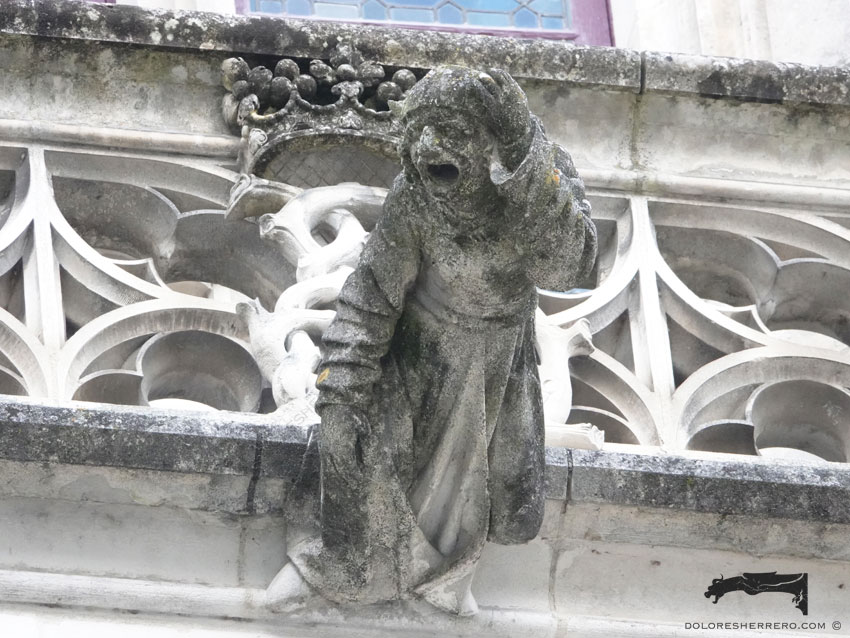
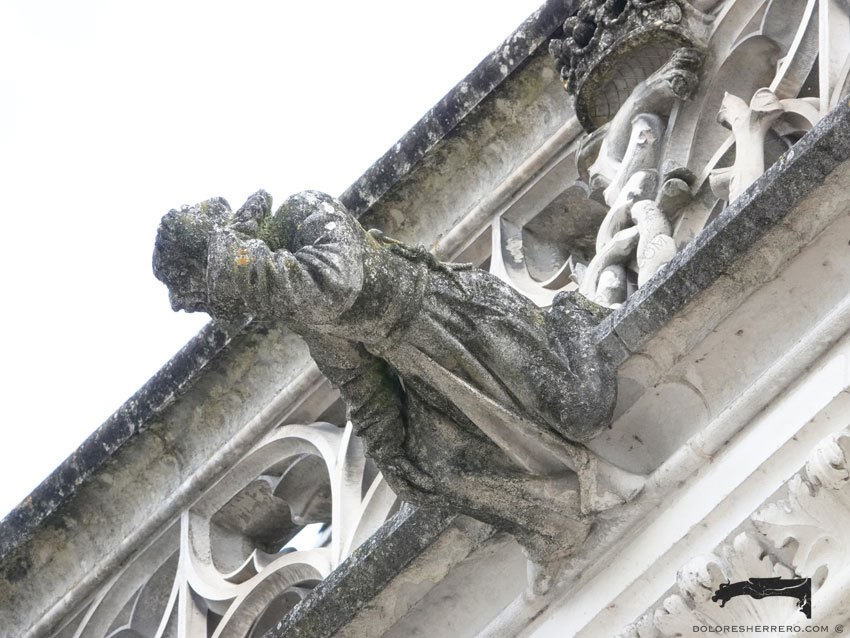
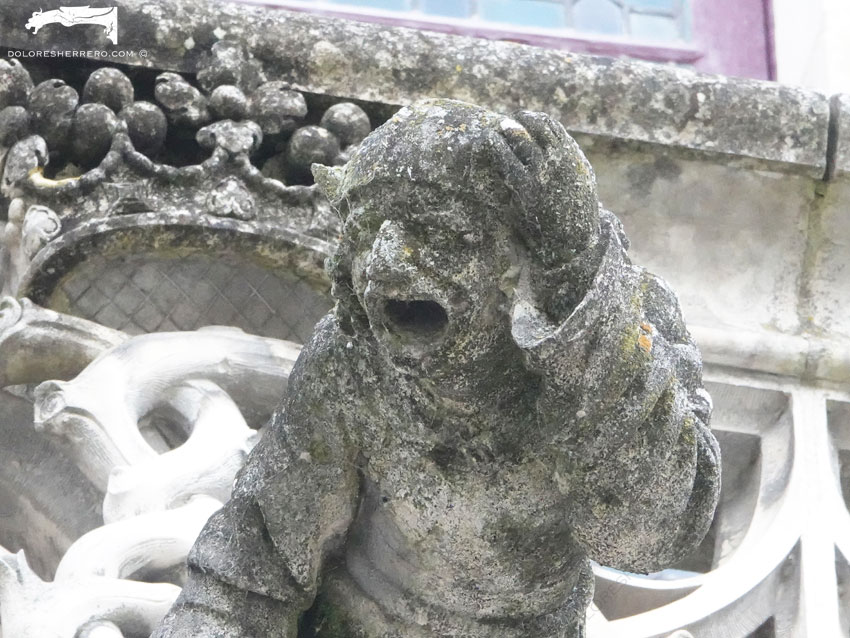
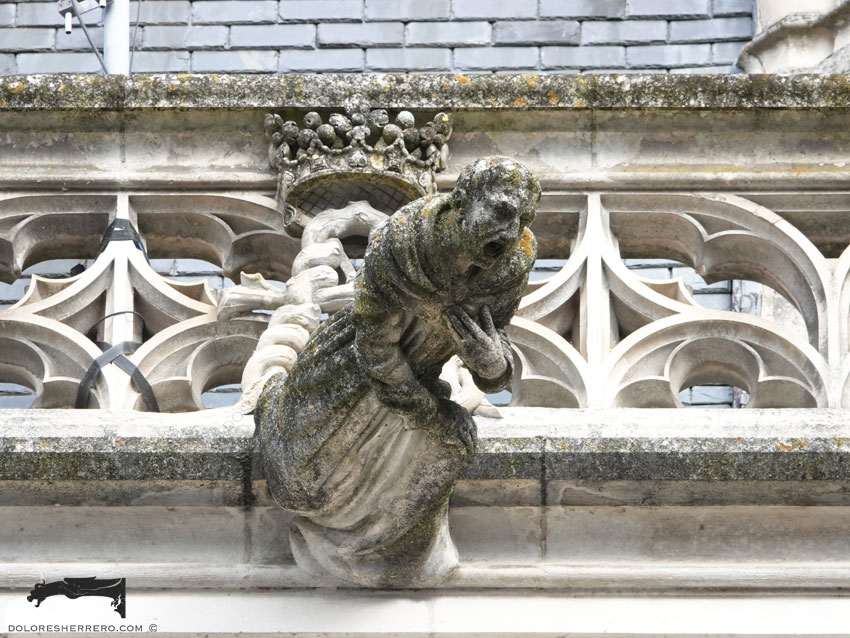
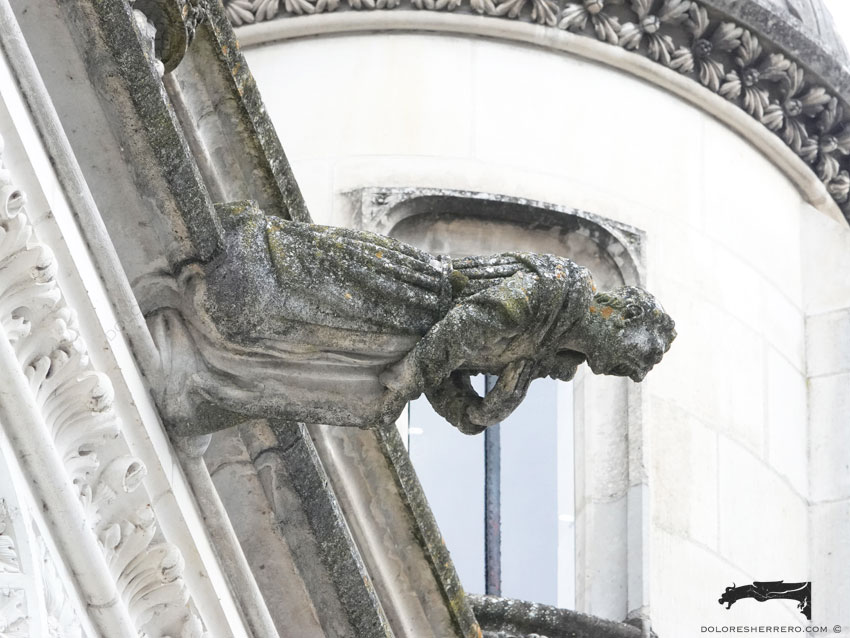
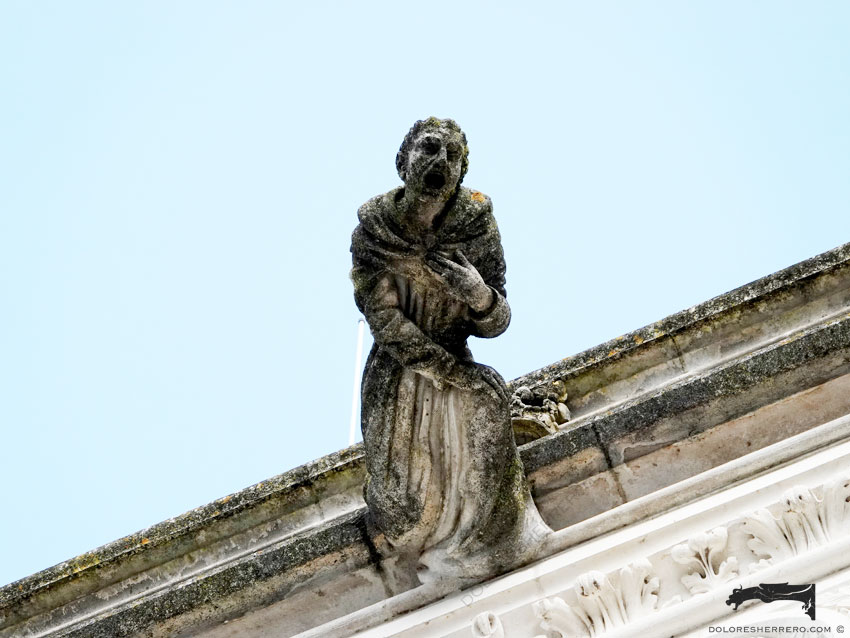
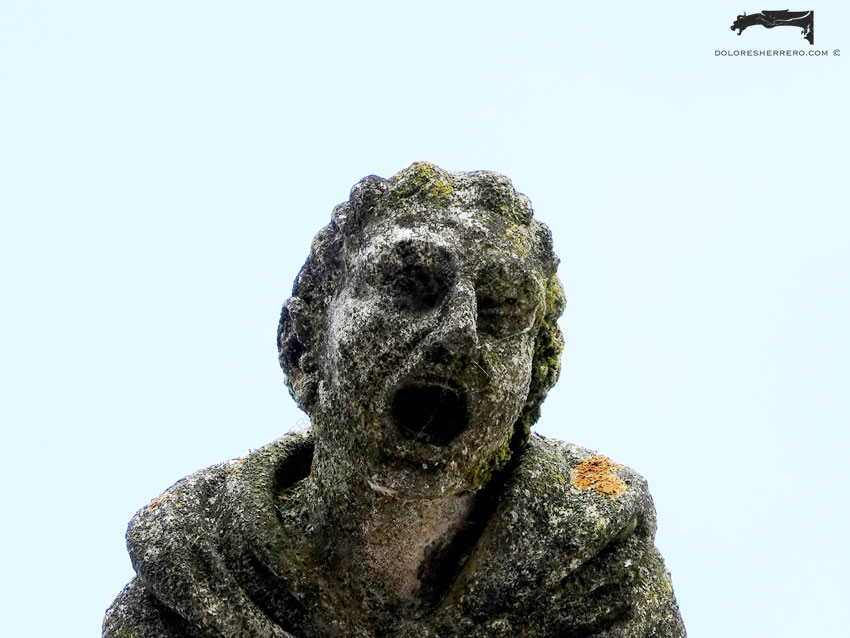
The human gargoyles are particularly remarkable. In this area, two stand out prominently.
The first represents a man wearing a garment with deep folds reaching down to his feet, a belt or cincture (possibly indicating a monk), and a cap on his head. He is depicted with his left knee on the ground, his right hand resting on his right knee, and his left hand placed on his head. The figure is highly expressive, conveying a gesture that may suggest shouting, lamentation, or pain.
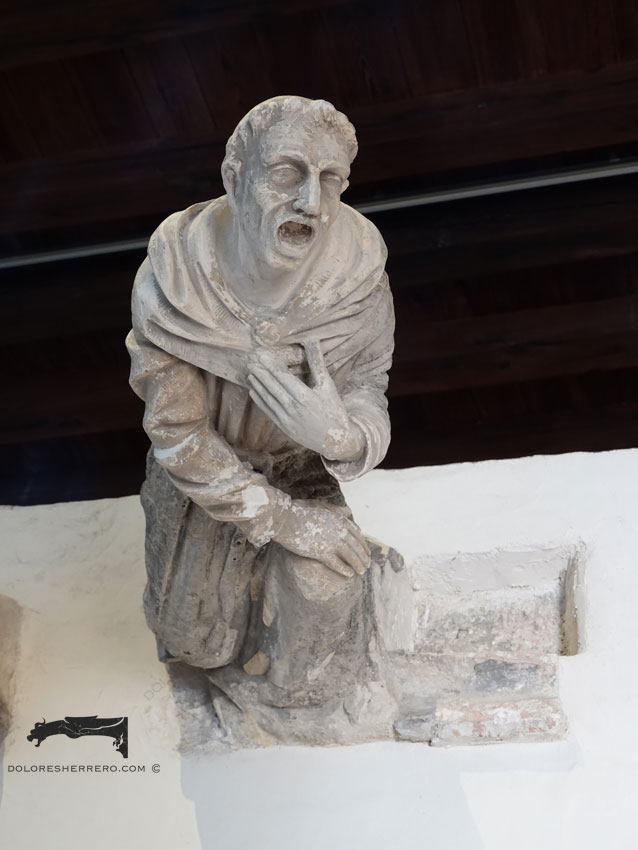
The second represents a monk, likewise wearing a garment with deep folds reaching down to his feet, a belt or cincture, and a tonsure. He is depicted with his right knee on the ground, his right hand resting on his left knee, and his left hand placed on his chest. The figure is equally expressive, conveying a gesture of devotion.
Gargoyle Representing a Geometric Form
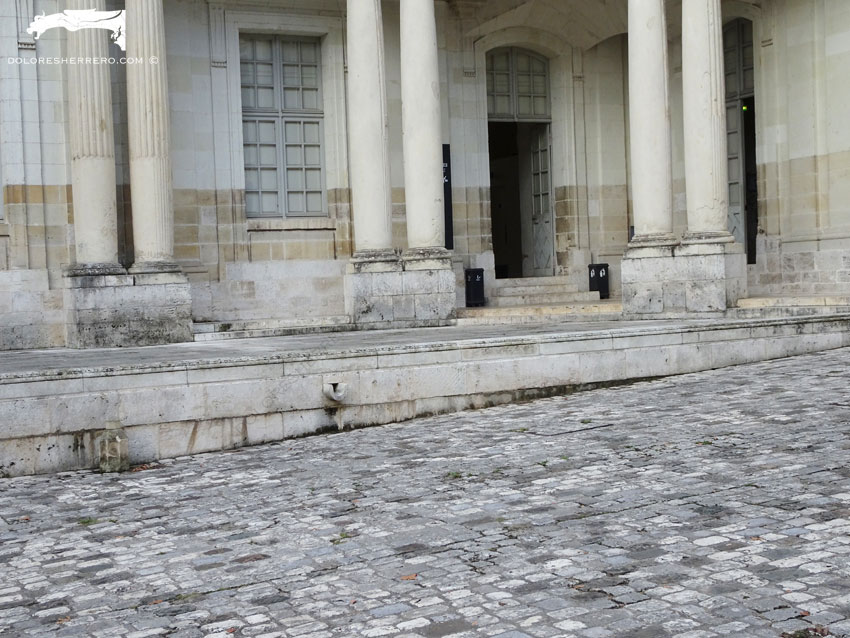
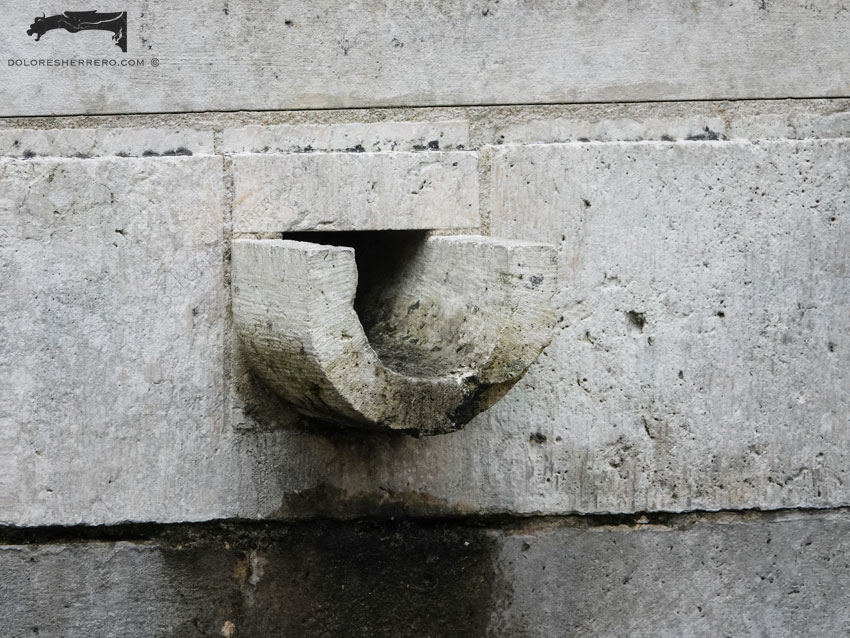
Additionally, a geometric gargoyle can be observed, consisting of a semicylindrical block at ground level.
Gargoyles of the North Side of the Château Royal de Blois
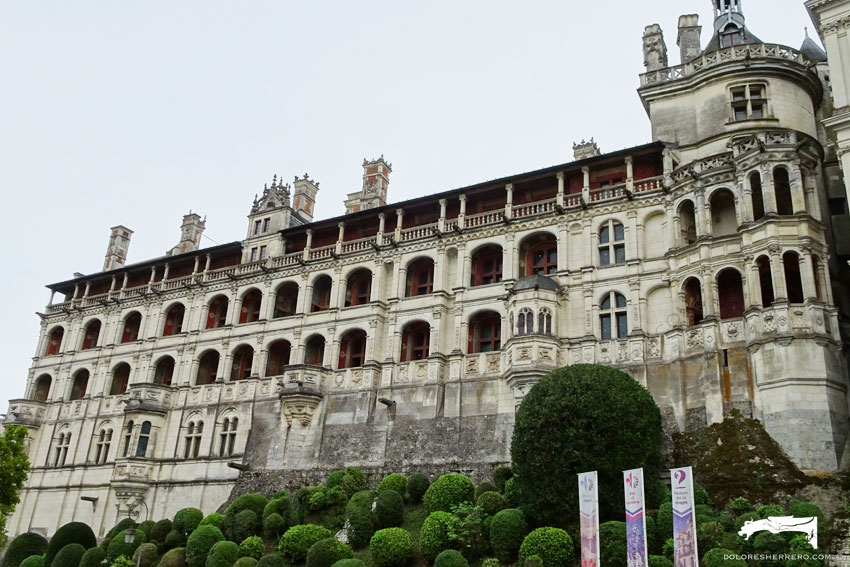
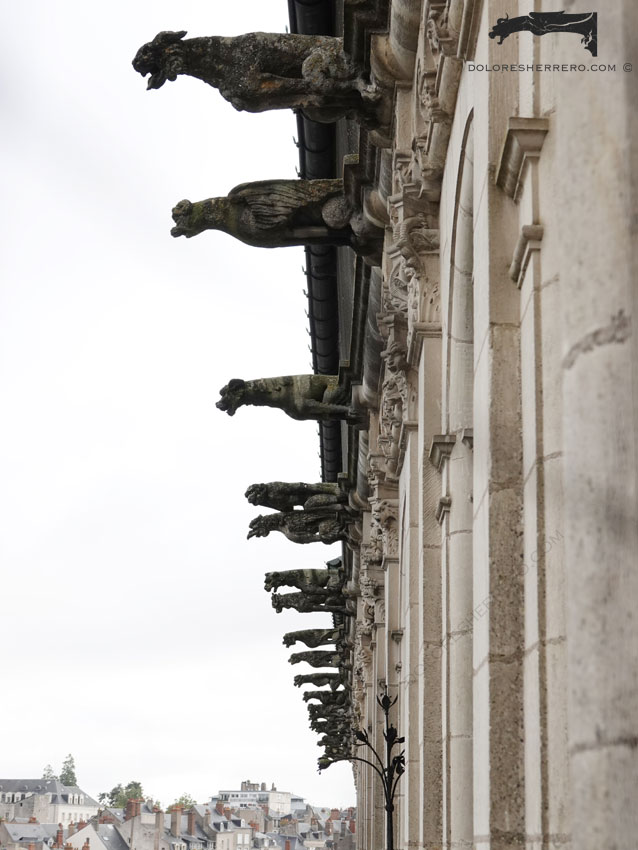
We now turn to the north side, to the Loggia façade.
Gargoyles Representing Real Animals
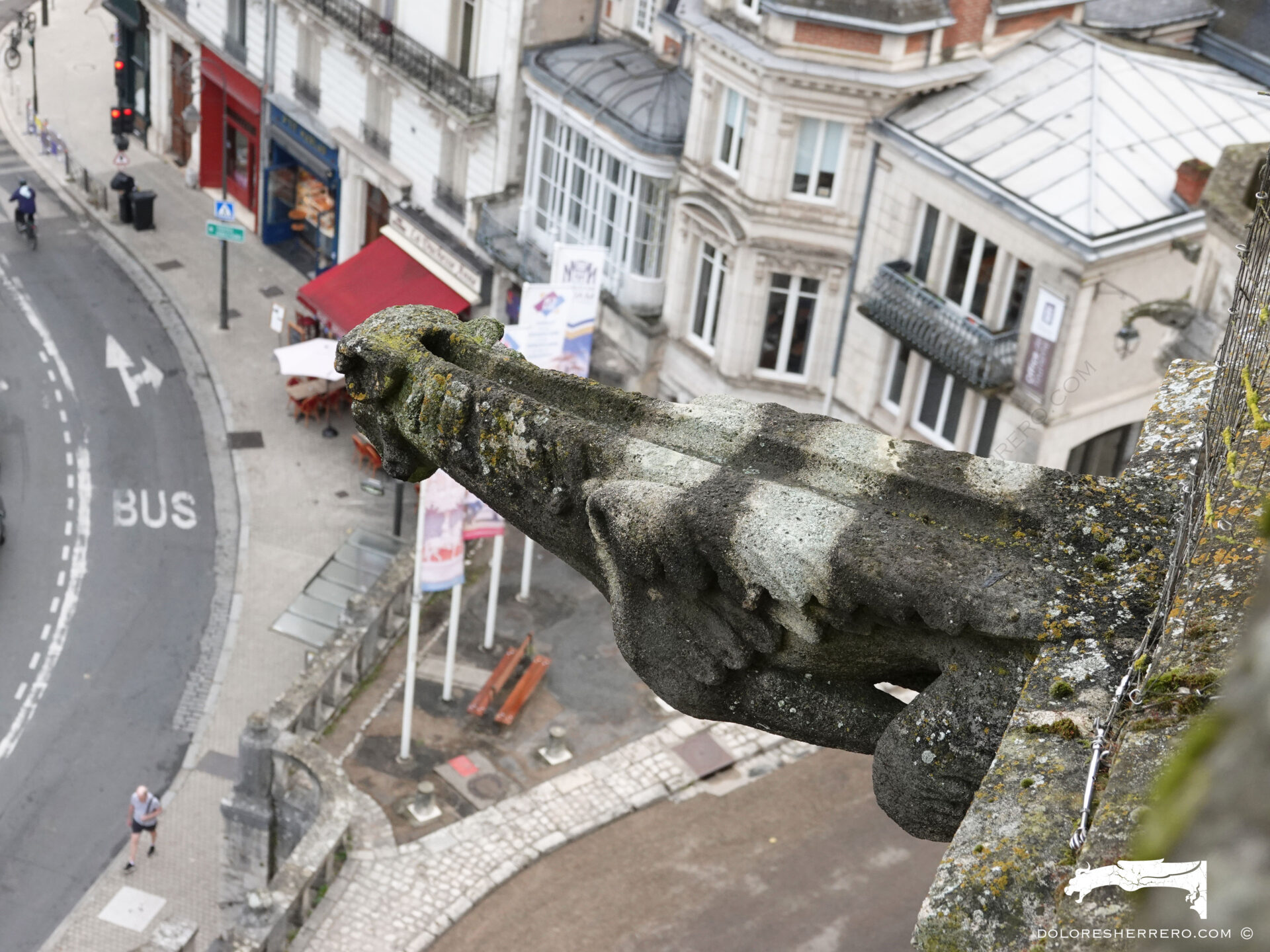
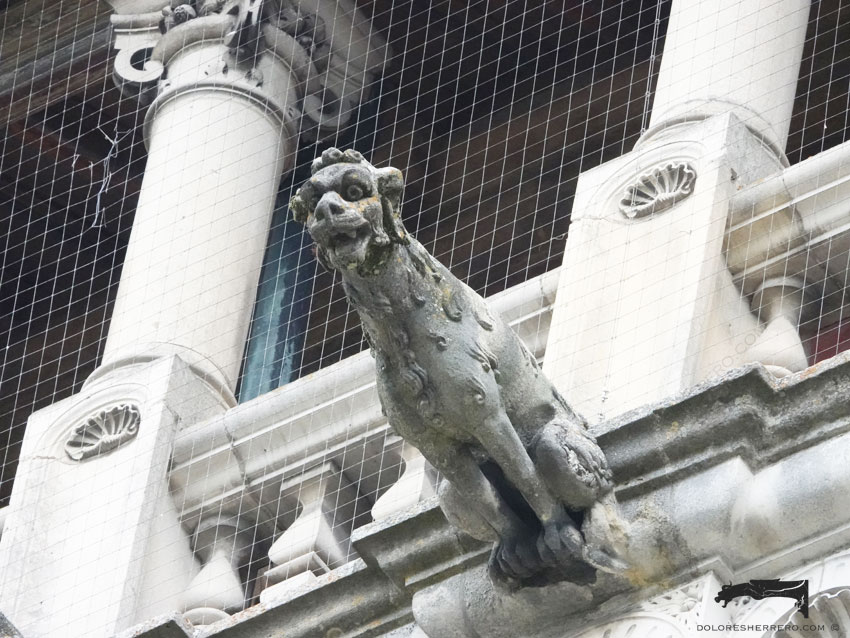
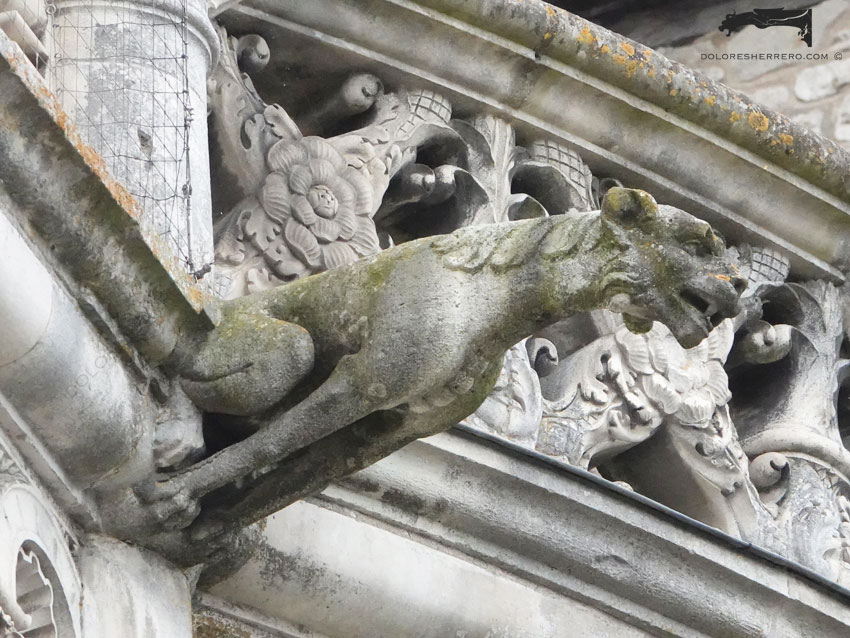
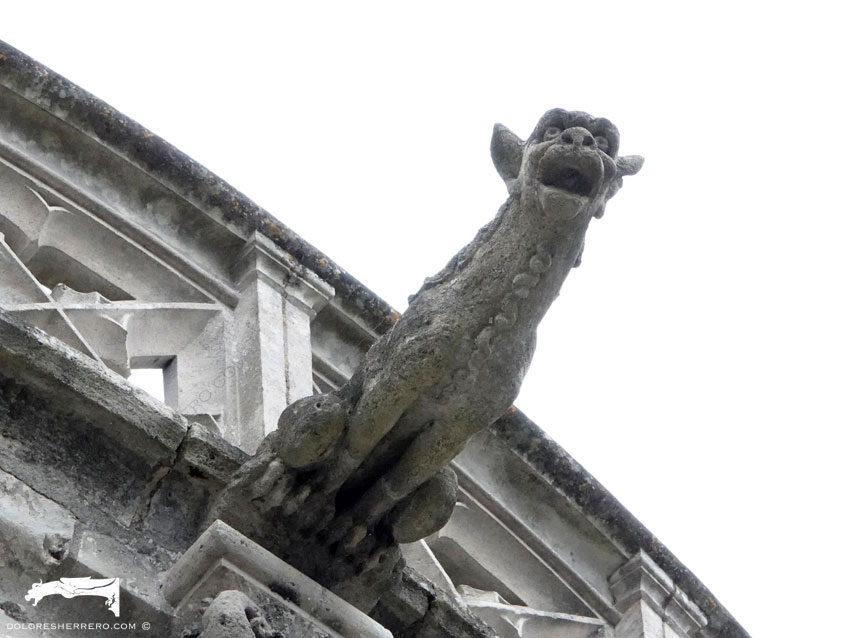
In this area, figures of dogs can once again be observed, displaying many of the characteristics already noted, along with some new features: coats (curly, smooth, or mane-like), pupils, fangs, ears (long and drooping, protruding, or laid back), a protruding tongue, teeth, crossed legs, collars, wrinkles around the mouth conveying fierceness, and filled eyes.
There are also a pair of monkeys: one with its hand placed on its neck, with fur and a tilted head; and another with pupils and body fur which, due to the form of its head, could also be assigned to another typology (anthropomorphic or demonic).
The last figure appears to represent a wild boar, as no tusks are visible, with fur on the neck.
-
- Dog
-
- Dog
-
- Dog
-
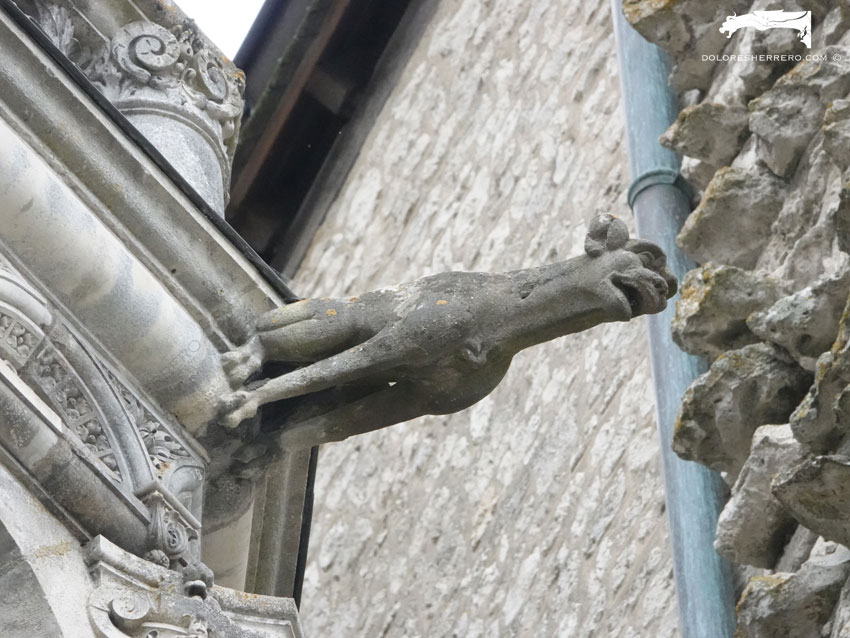
- Dog
-
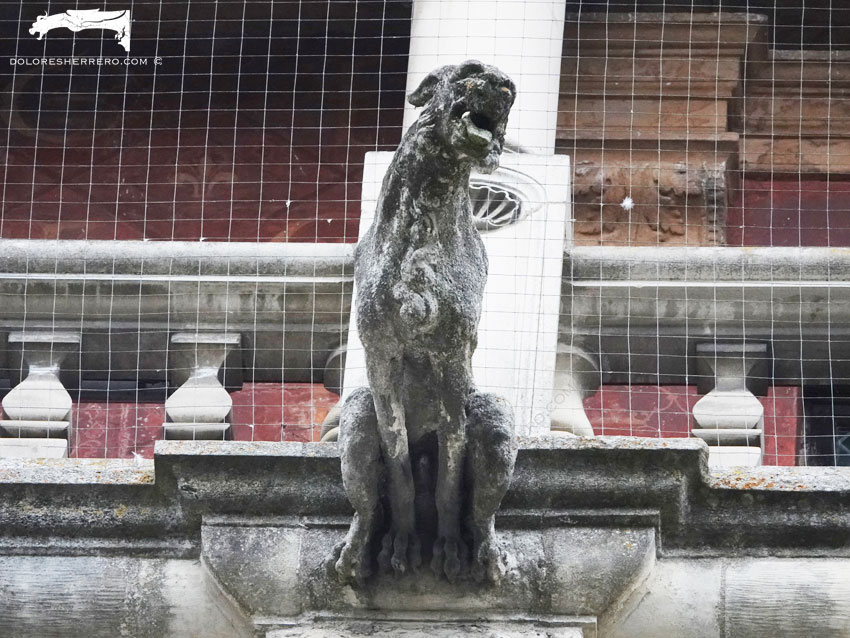
- Dog
-
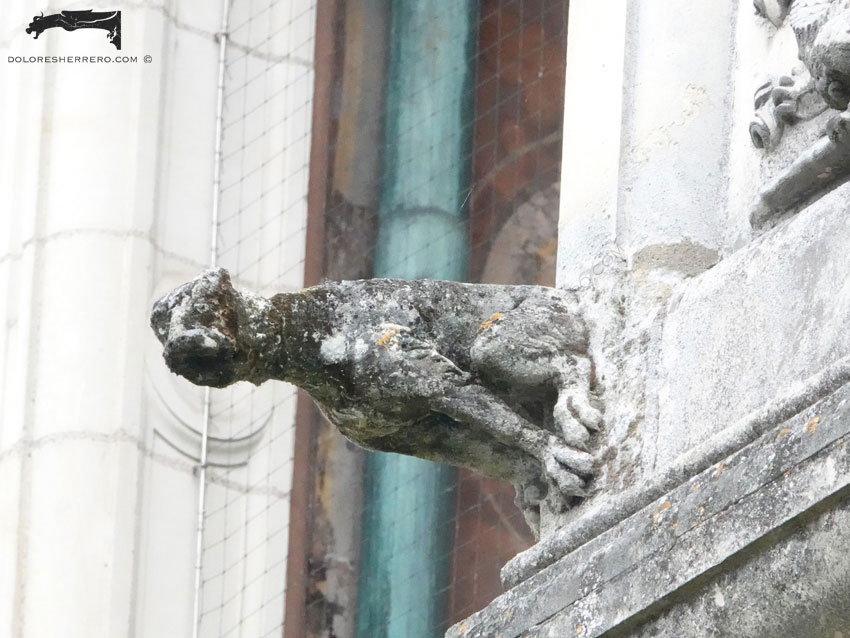
- Dog
-
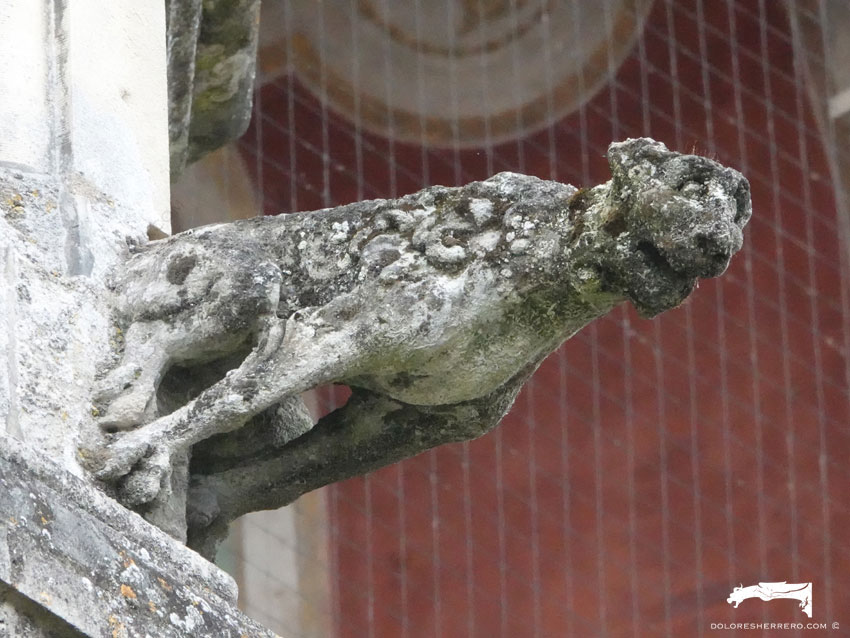
- Dog
-
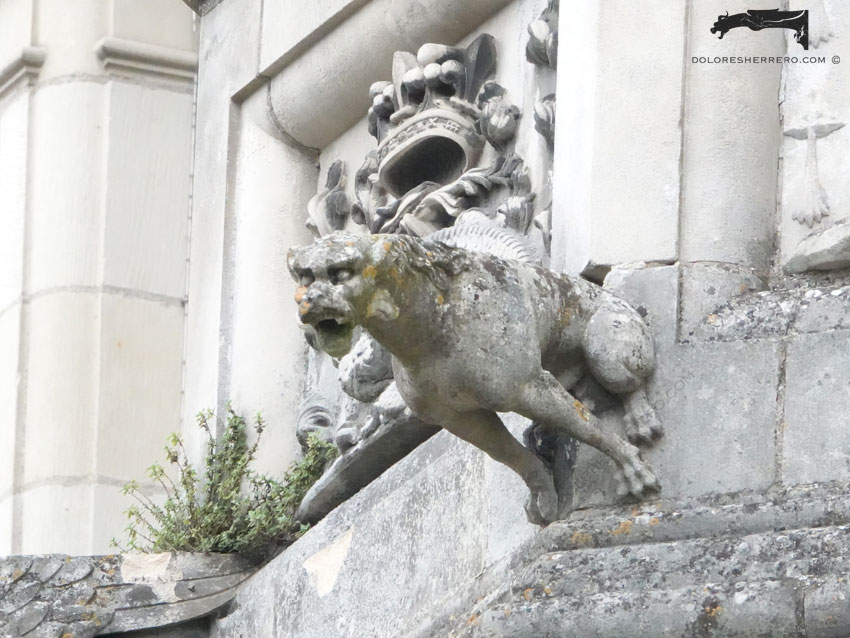
- Dog
-
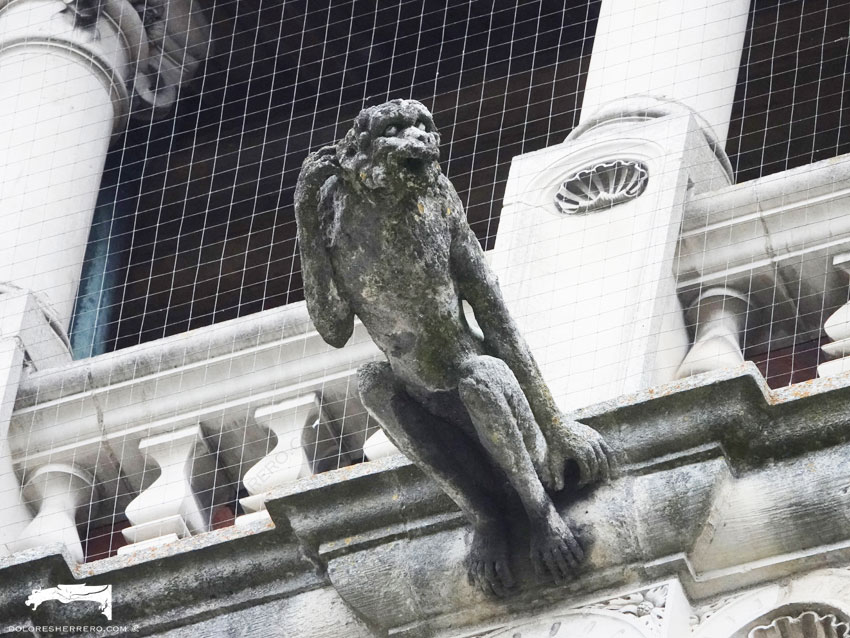
- Monkey
-
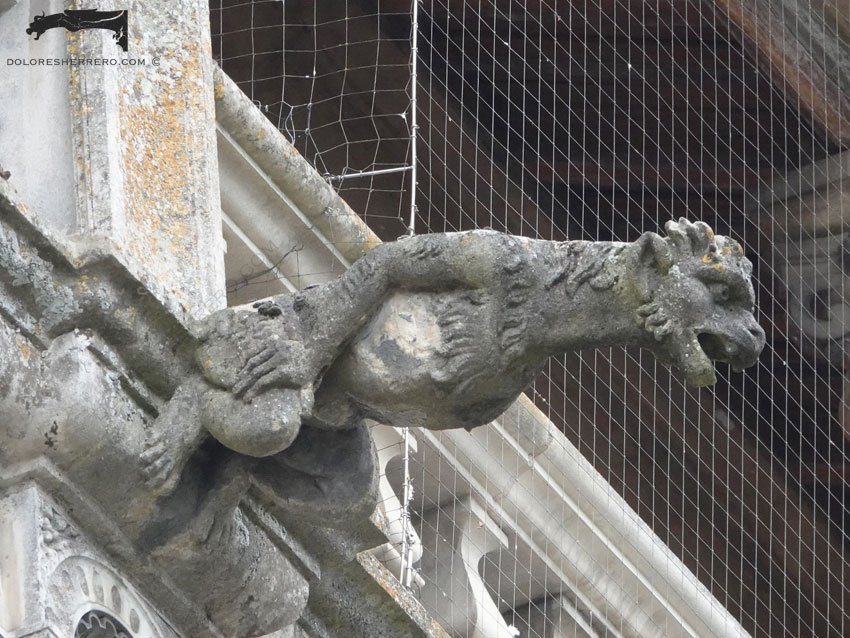
- Monkey
-
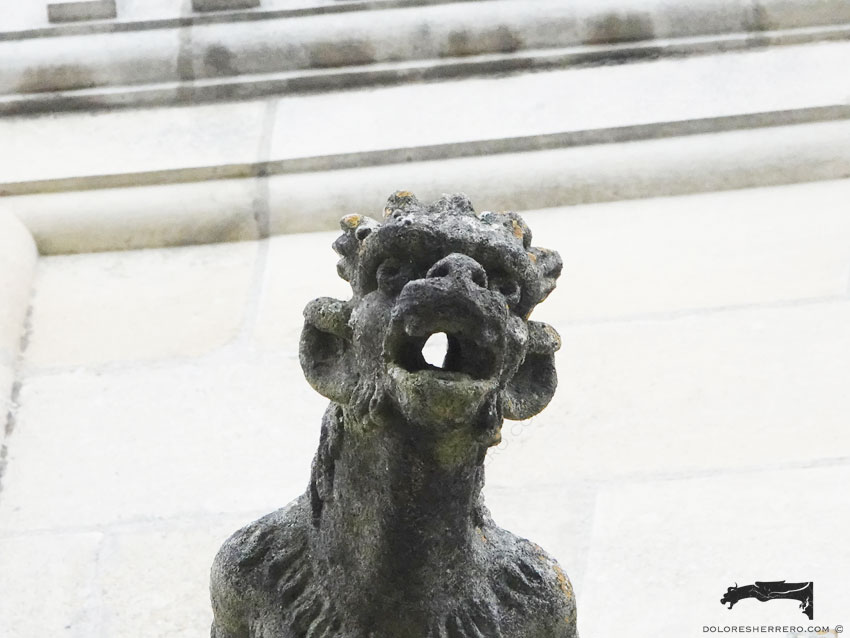
- Monkey
-
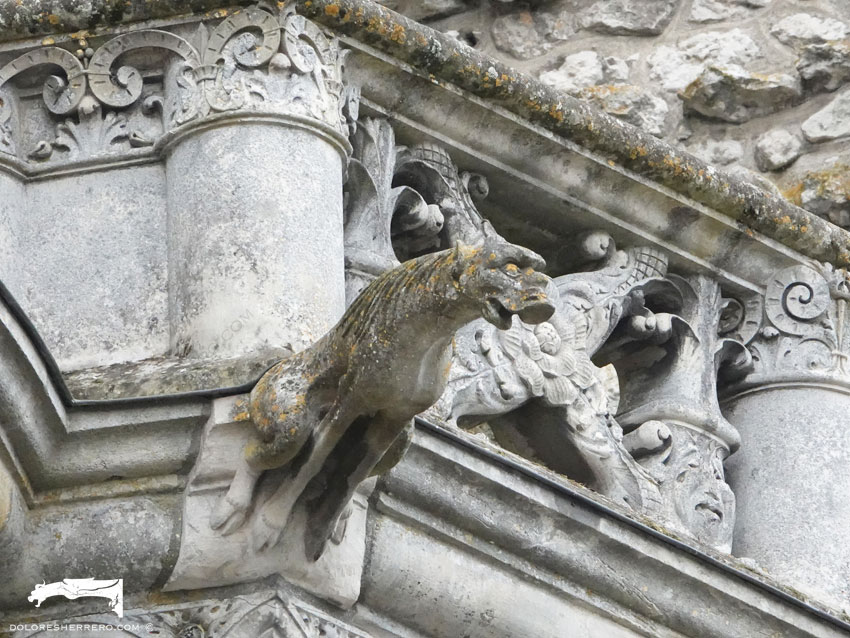
- Wild boar
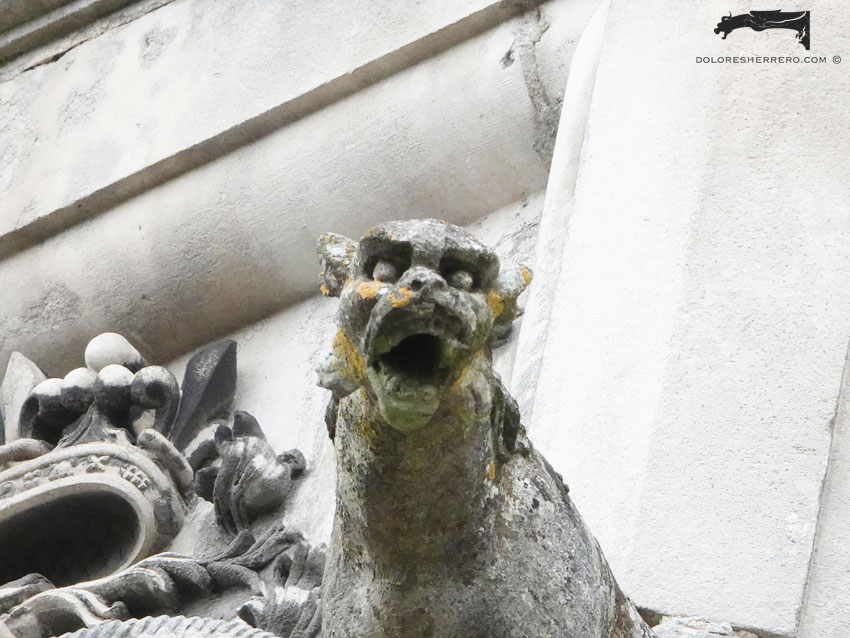
Dog
Gargoyles Representing Fantastic or Mythological Animals
Among the fantastic or mythological animals, several figures stand out.
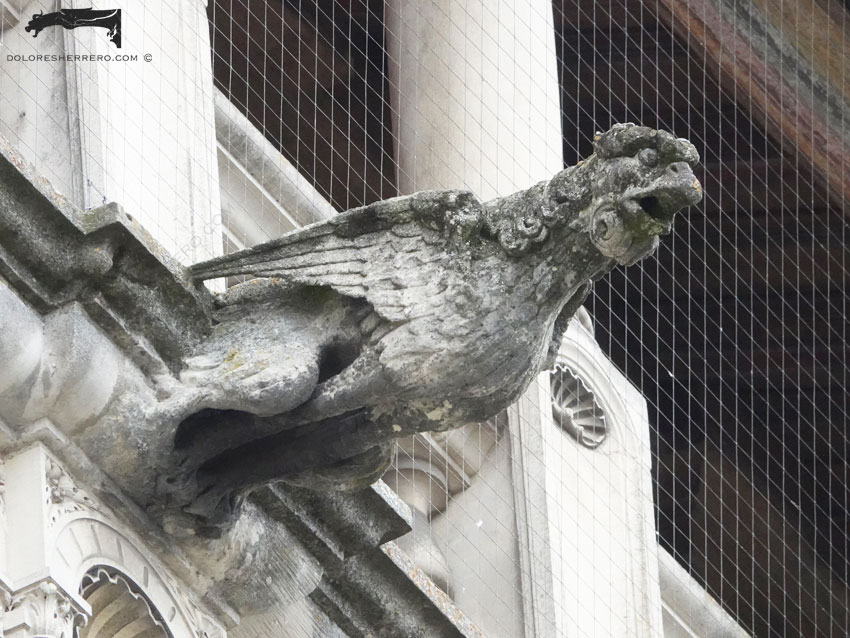
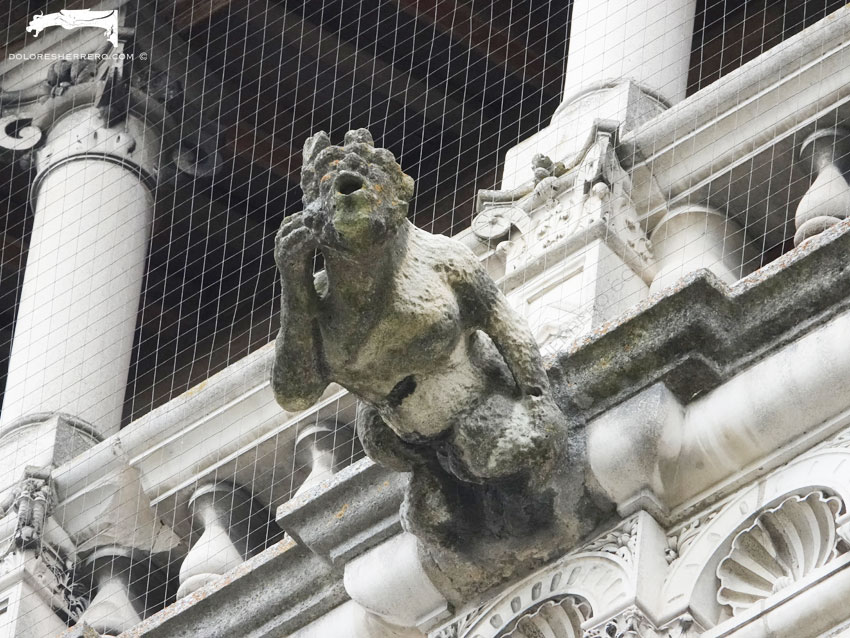
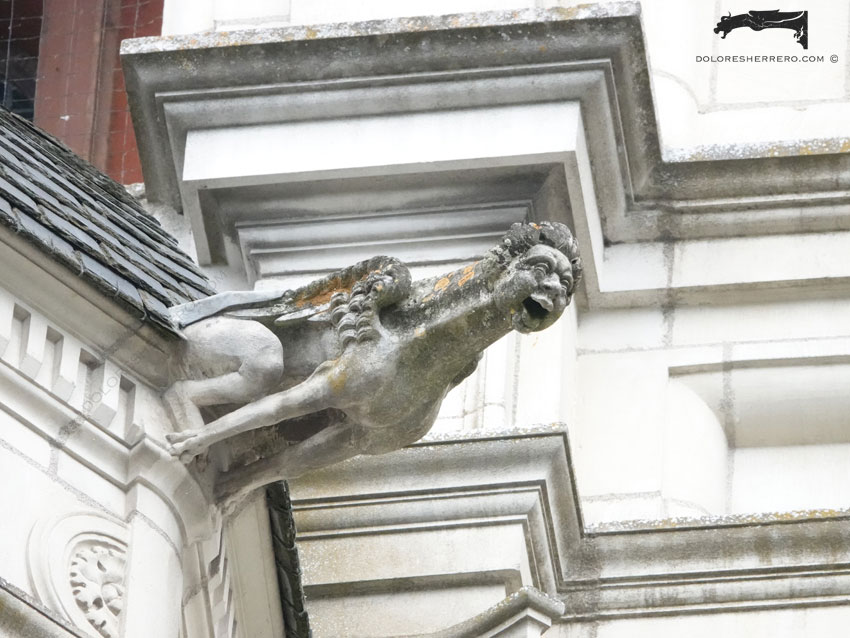
There are several griffins with fur, plumage, and crests. There is also a striking satyr, with his right hand placed on his neck and his left hand on his left leg, with horns and body hair. A notable sphinx is also present.
-
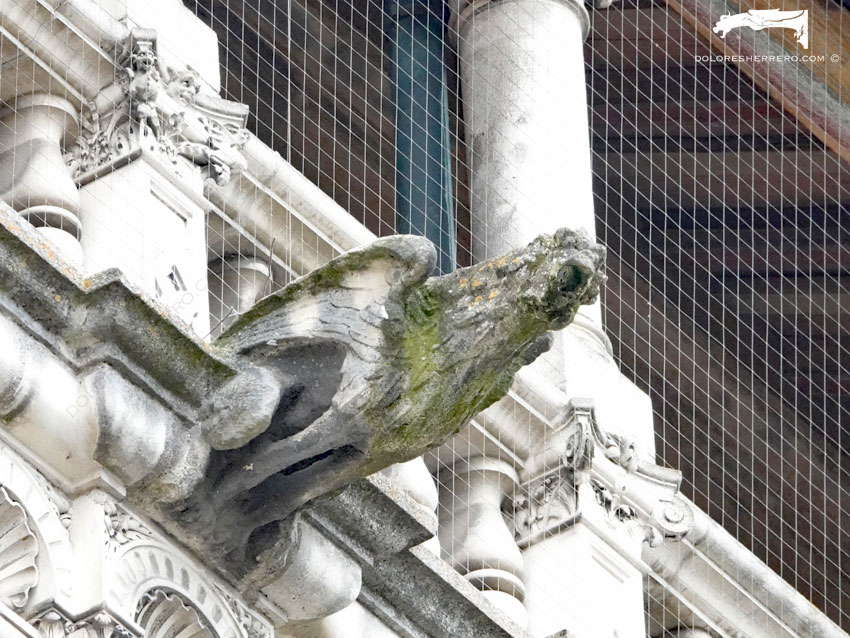
- Griffin
-
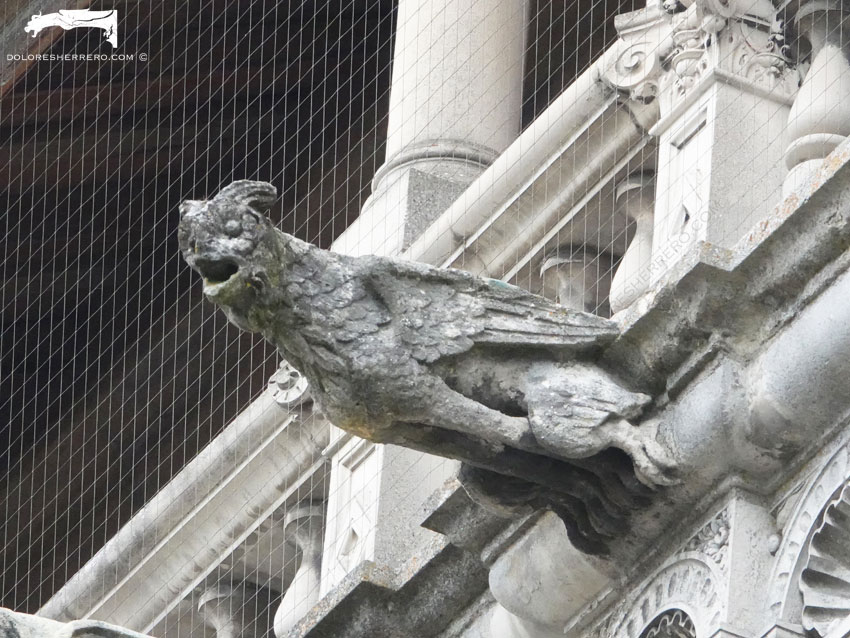
- Griffin
-
- Griffin
-
- Satyr
Sphinx
Gargoyles Representing Animal Monsters
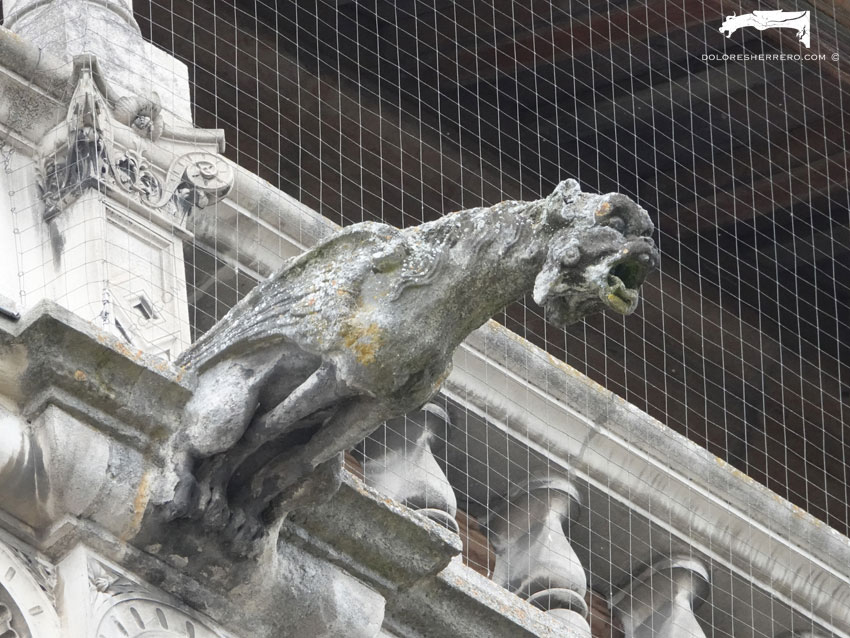
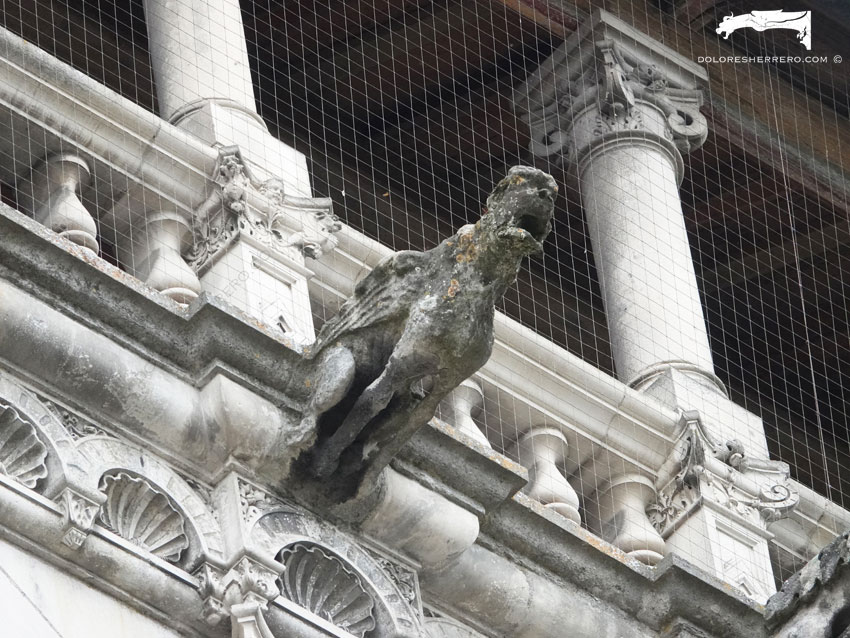
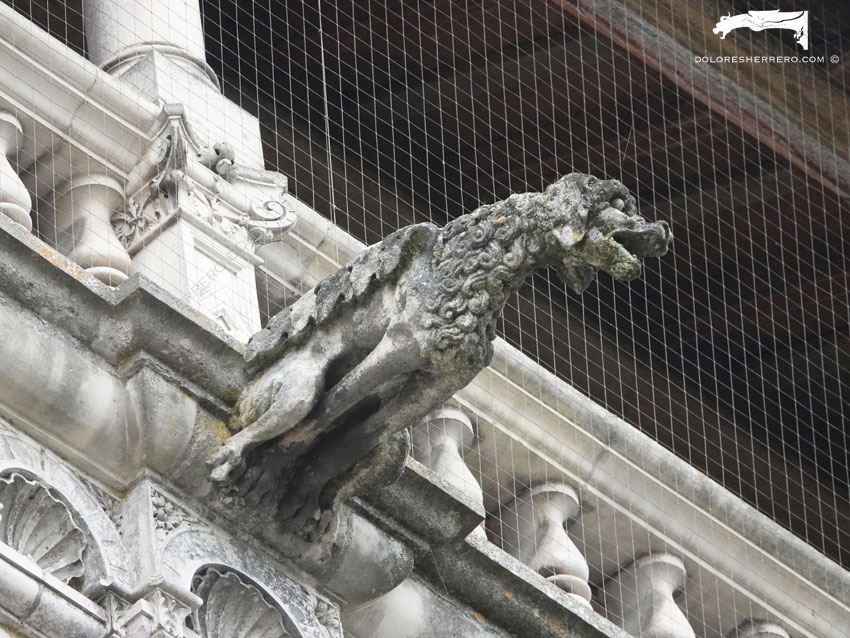
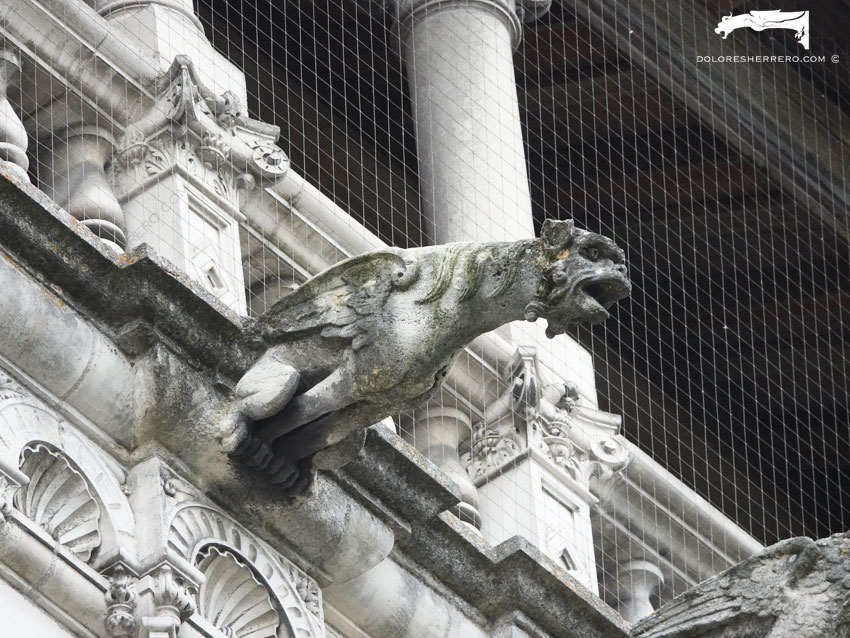
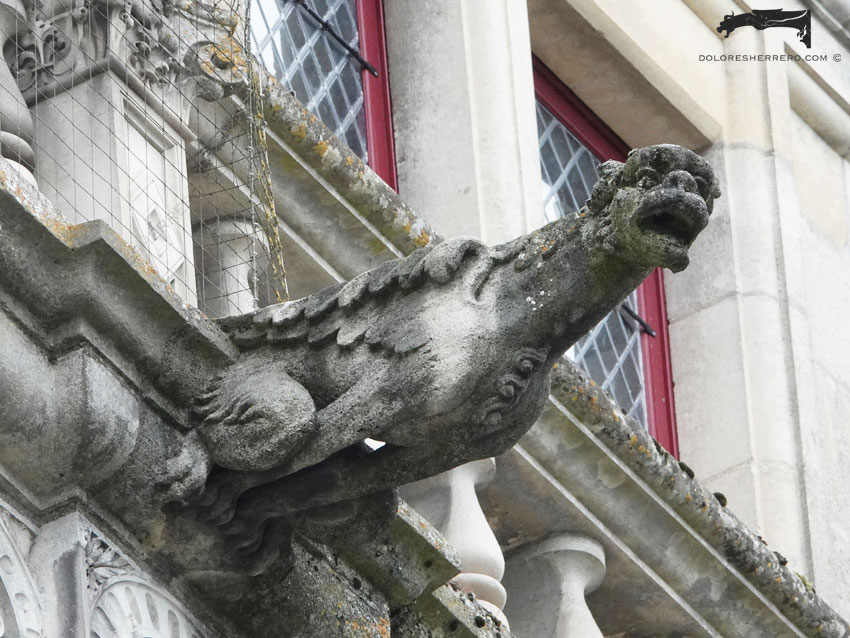
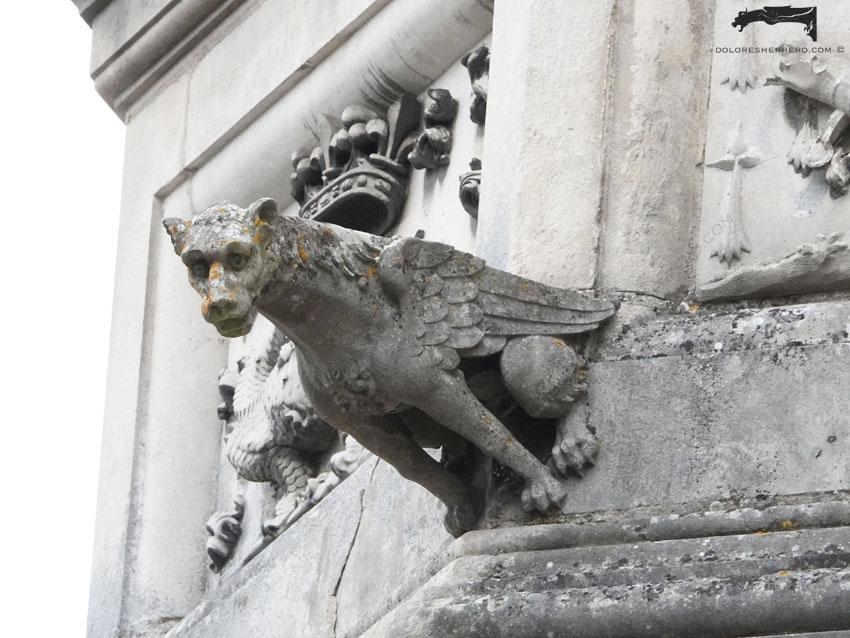
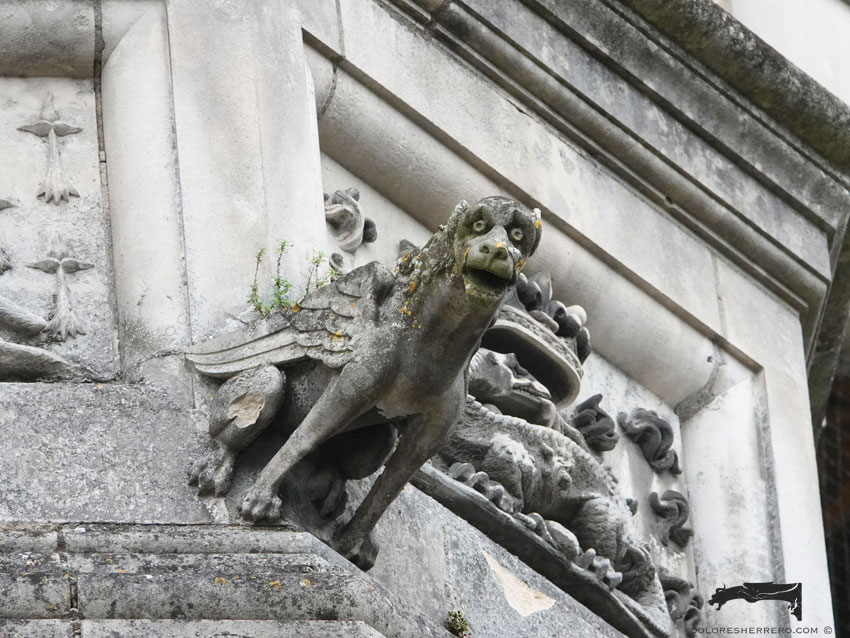
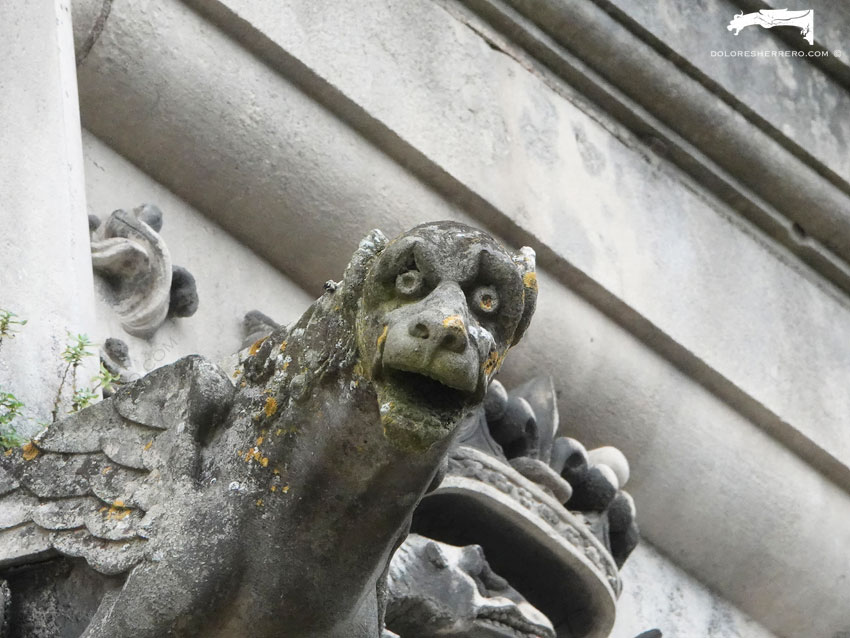
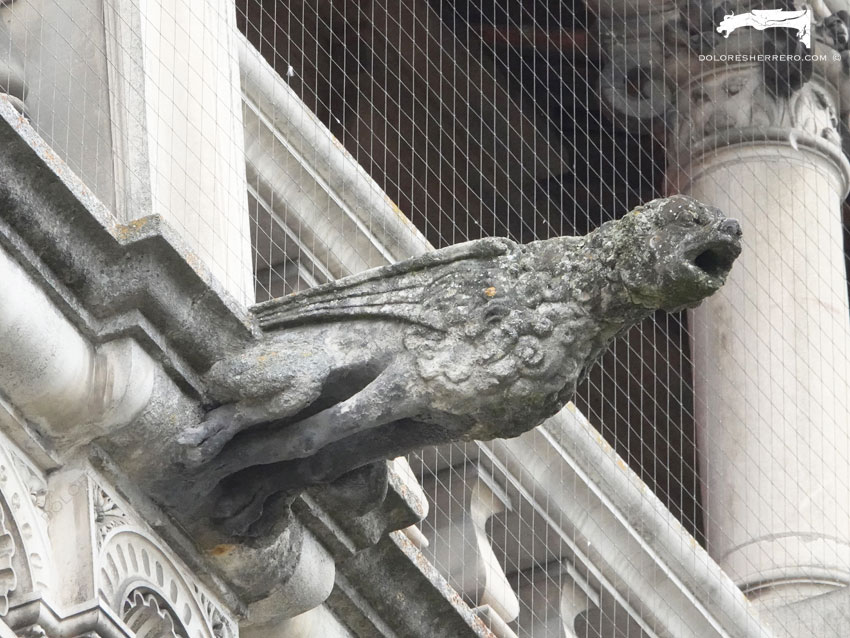
Winged dogs and rams continue to be observed, displaying the features already noted, along with some additional distinctive elements: coats (smooth, curled, or in ringlets), teeth, a protruding tongue, filled eyes, pupils, crossed legs, a leonine mane, flat and drooping ears, leaf-shaped wings, a marked trachea, cloven hooves (a more distinctly demonic feature), wings decorated with large, leaf-like feathers, and oval, outlined eyes.
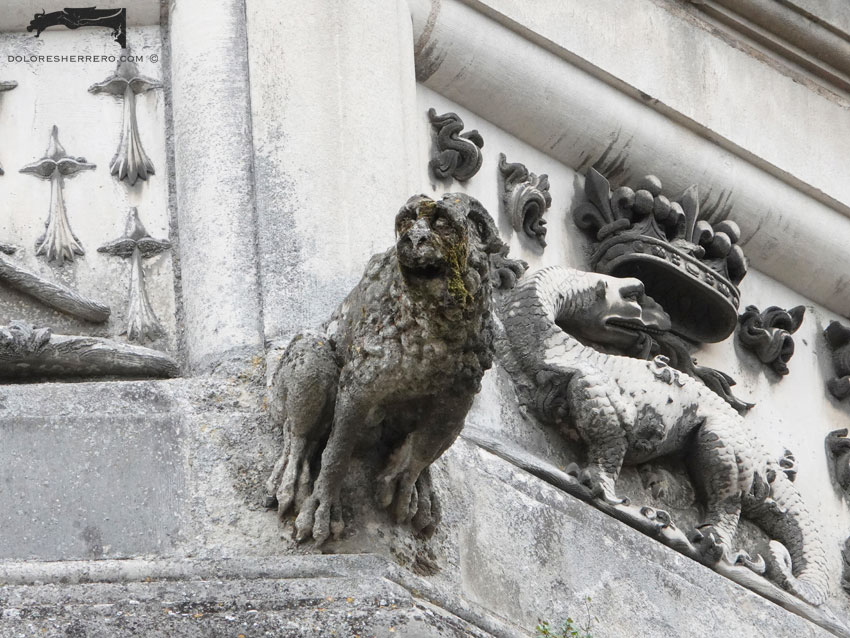
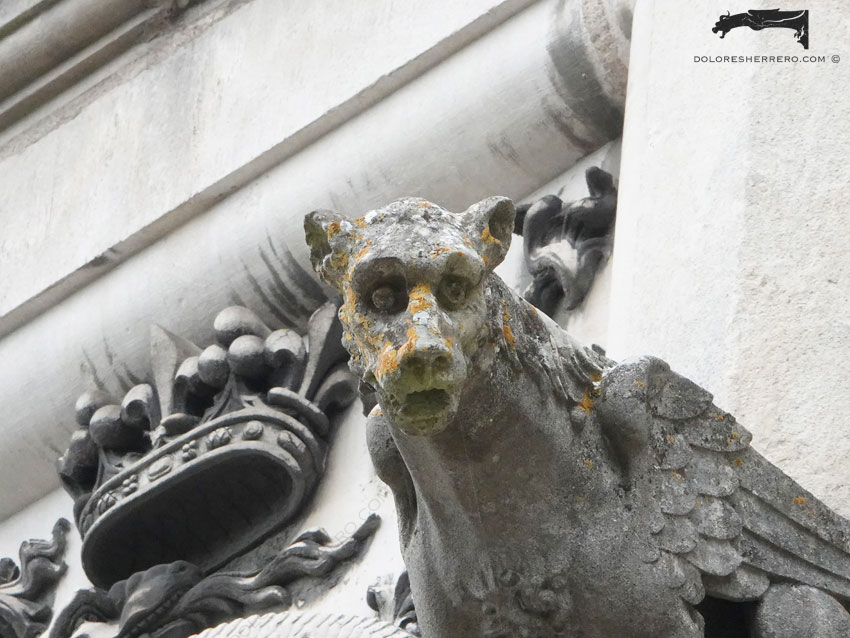
There is also a magnificent winged lion, as well as another lion with ram’s horns and a simian snout.
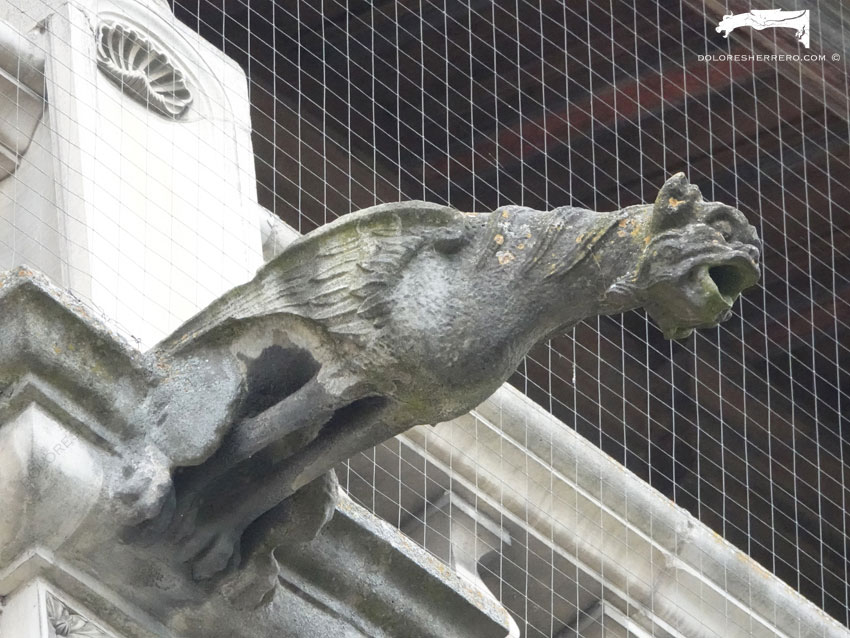
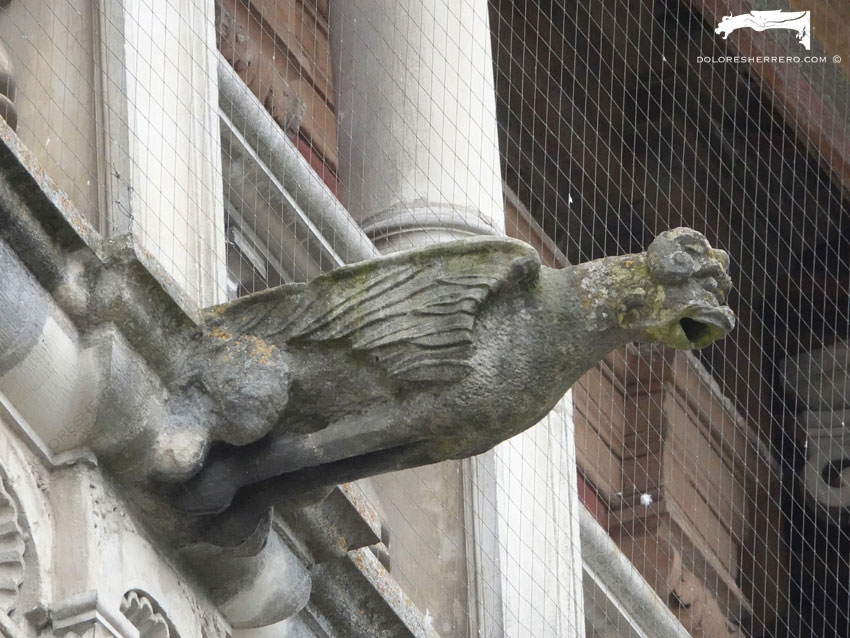
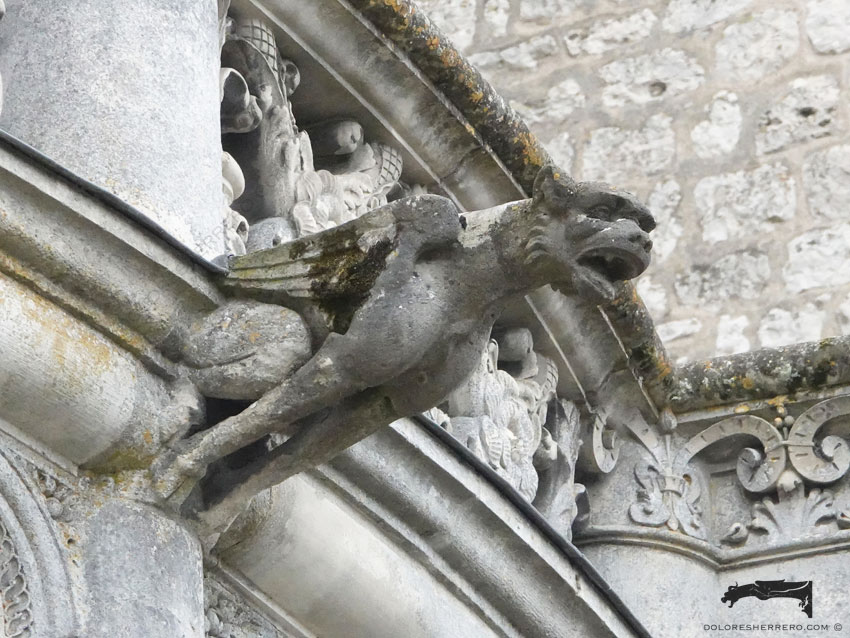
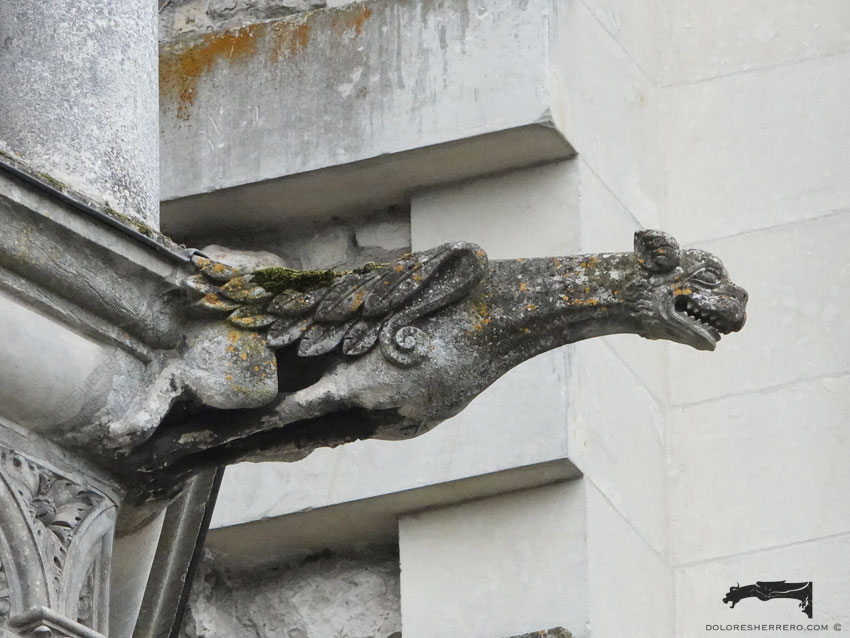
Gargoyles Representing Demons
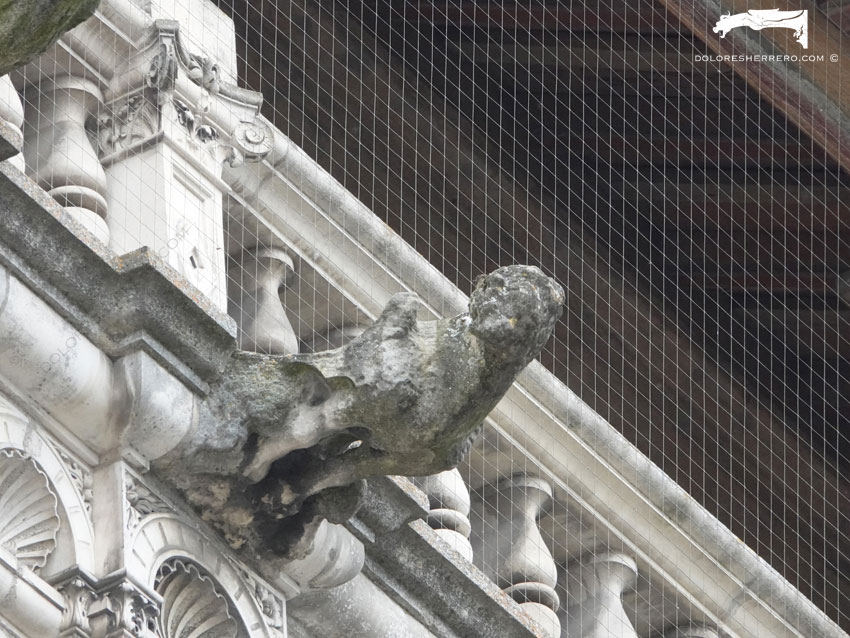
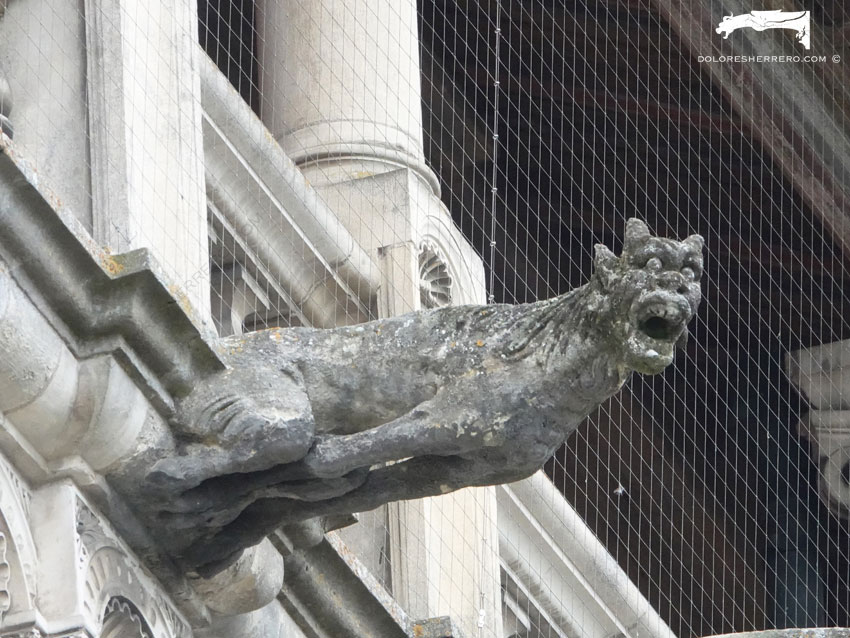
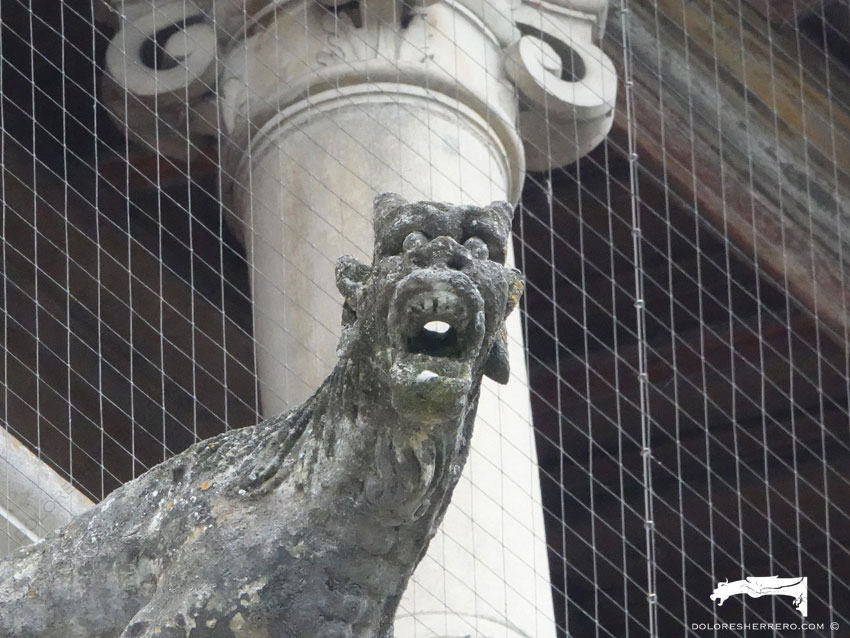
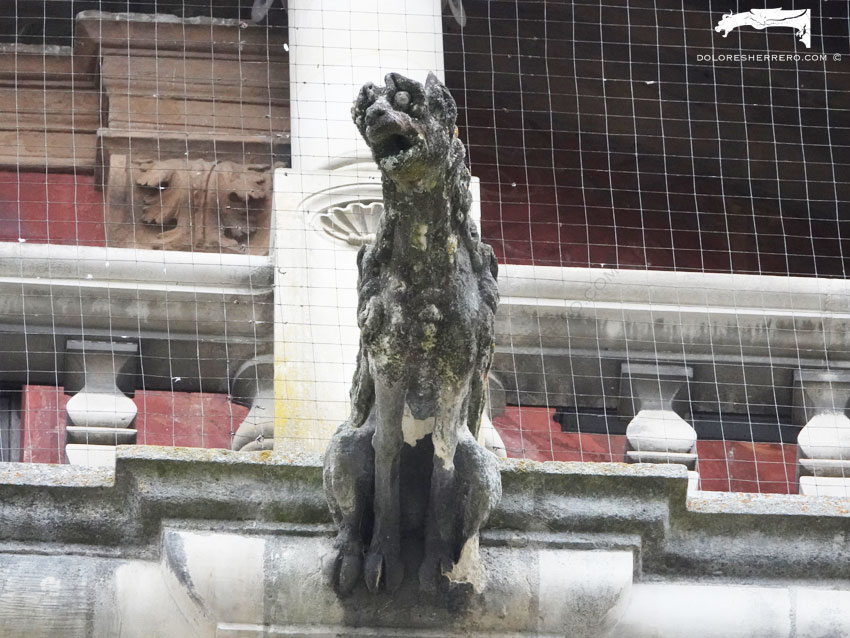
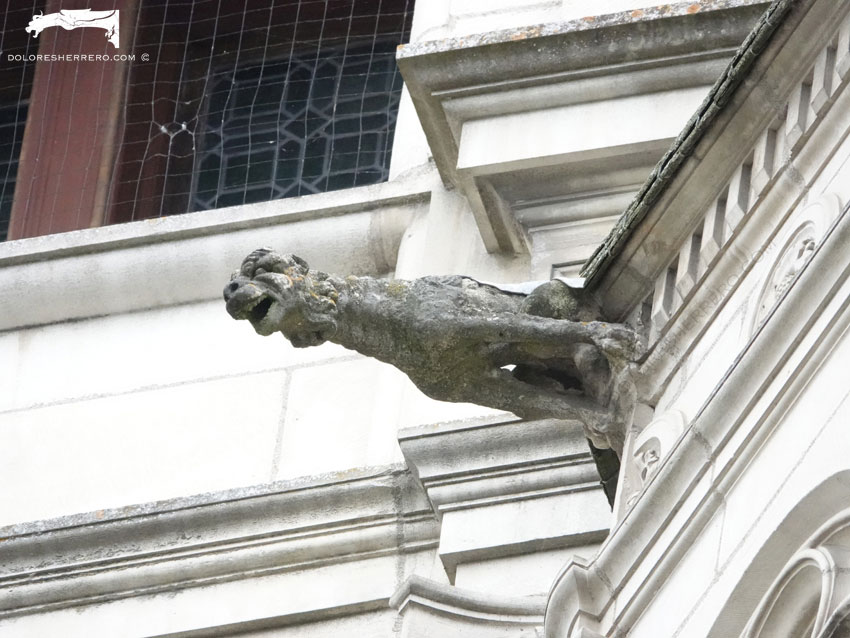
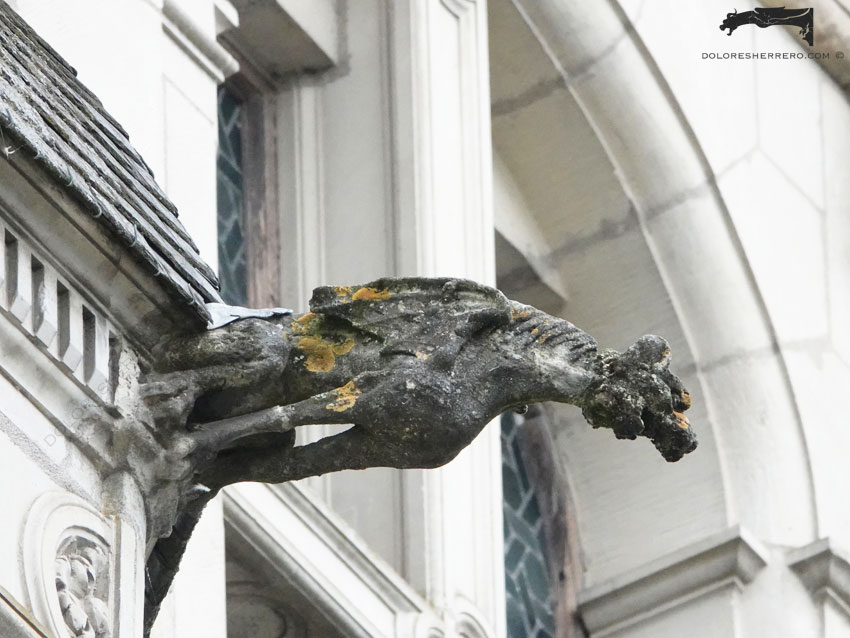
Five winged quadrupeds are included in this group, displaying features more characteristic of the demonic typology: membranous wings, cloven hooves, horns, fierce expressions, pointed ears, and a dragon-like trachea.
Additional features can also be observed, such as crossed legs, tilted heads, fur, filled eyes, pupils, pronounced eyebrows, a marked trachea, cheeks, and elongated snouts.
Gargoyles Representing Geometric Forms
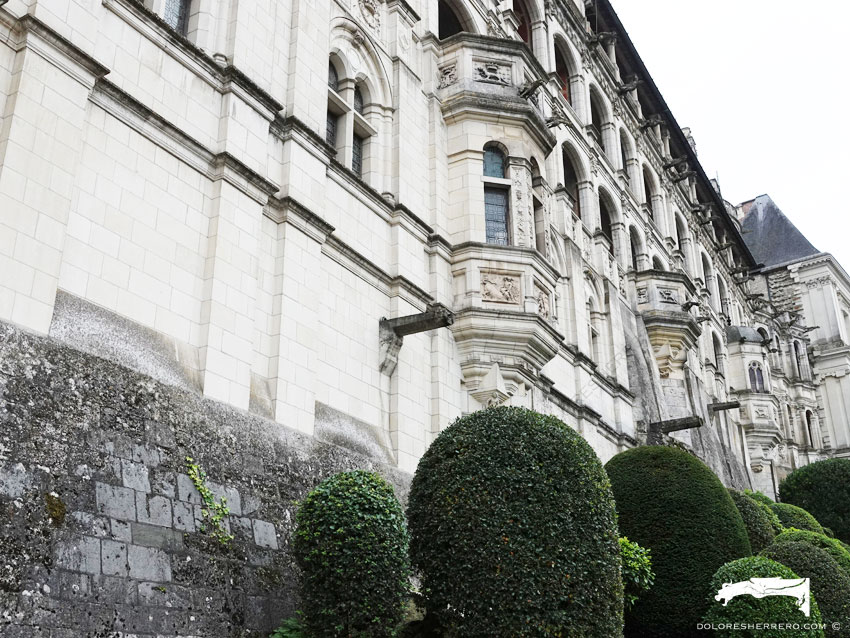
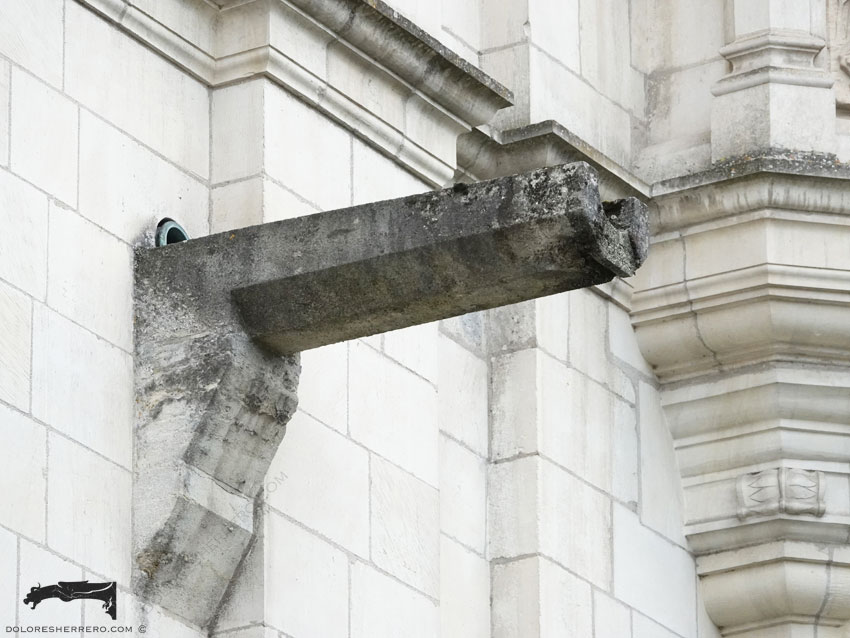
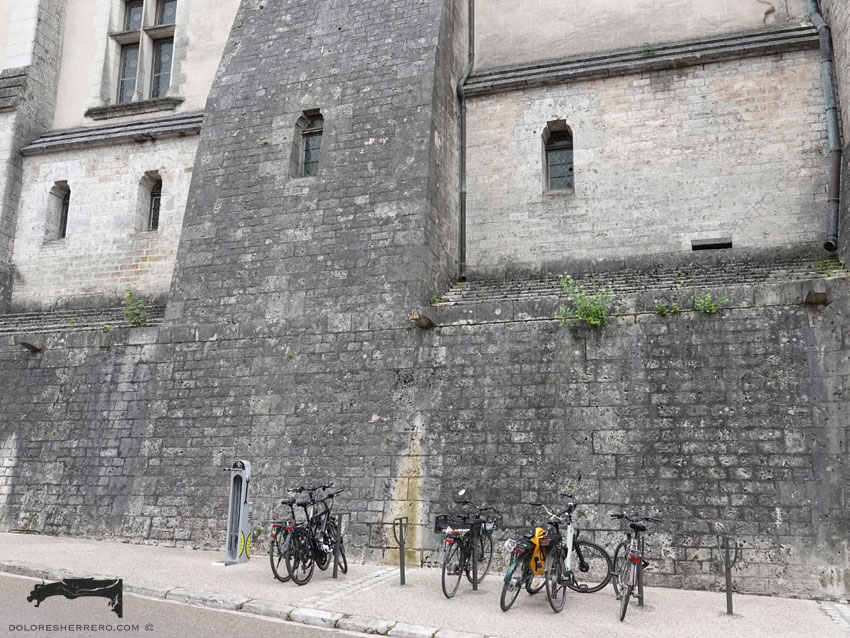
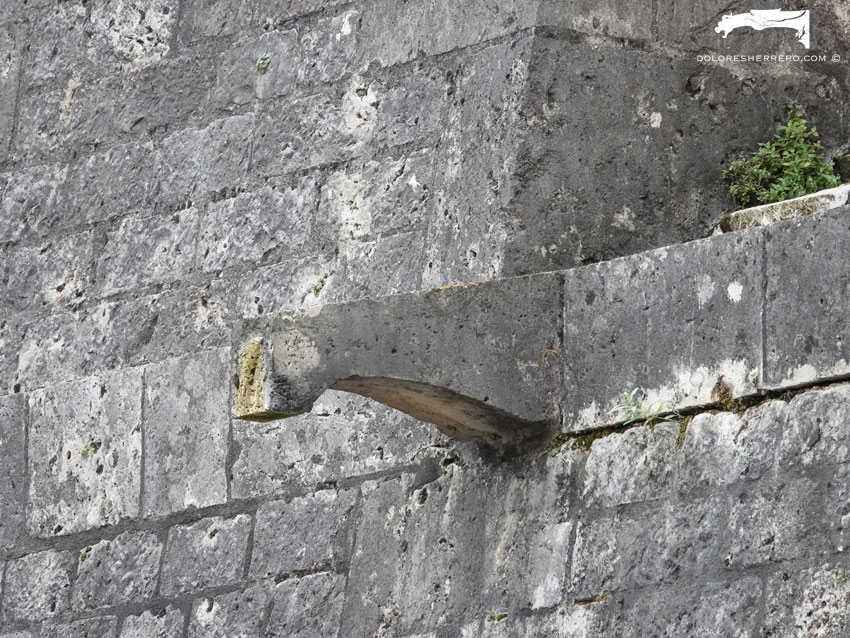
On this side, two types of geometric gargoyles can be observed. The first has a polygonal form, with a U-shaped opening, and is set on a corbel. The second is rectangular, with a groove underneath that extends, creating the impression of a head and body; a form that recalls the gargoyles of the cloister of Ávila Cathedral.
-
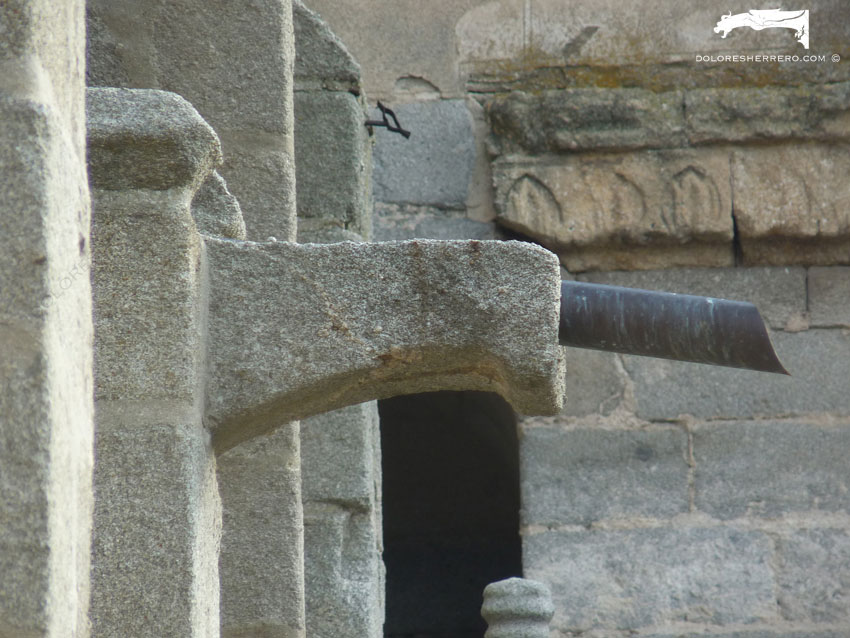
- Ávila Cathedral (Spain)
Gargoyles of the South Side of the Château Royal de Blois
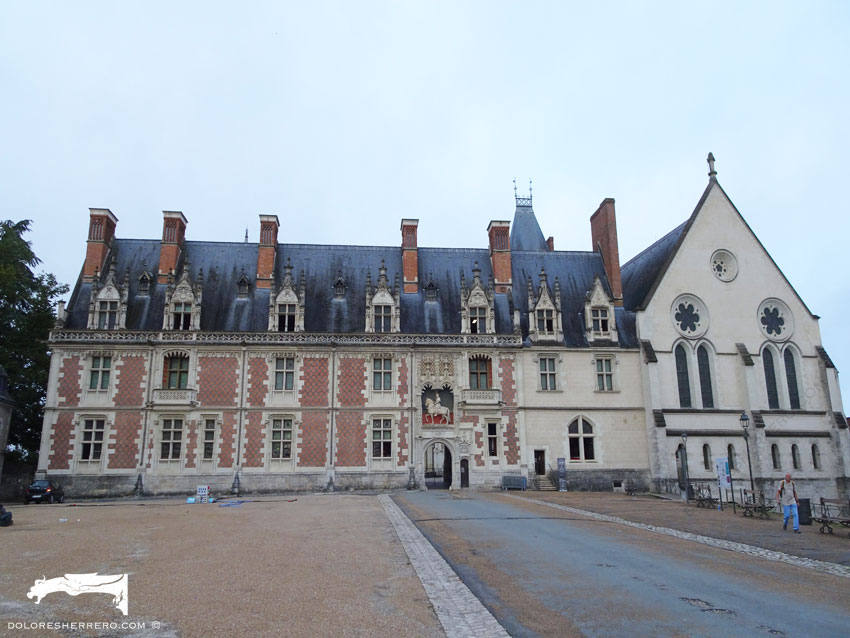
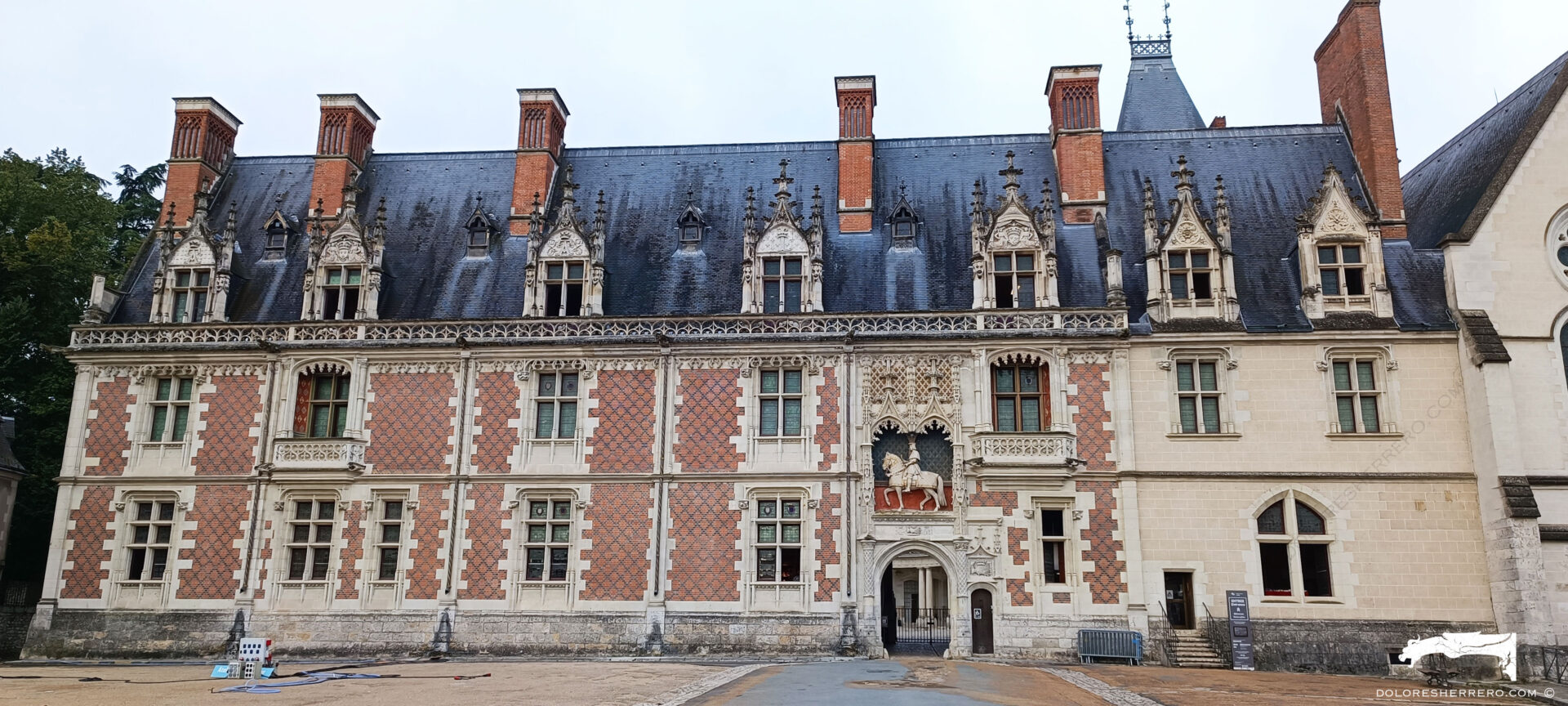
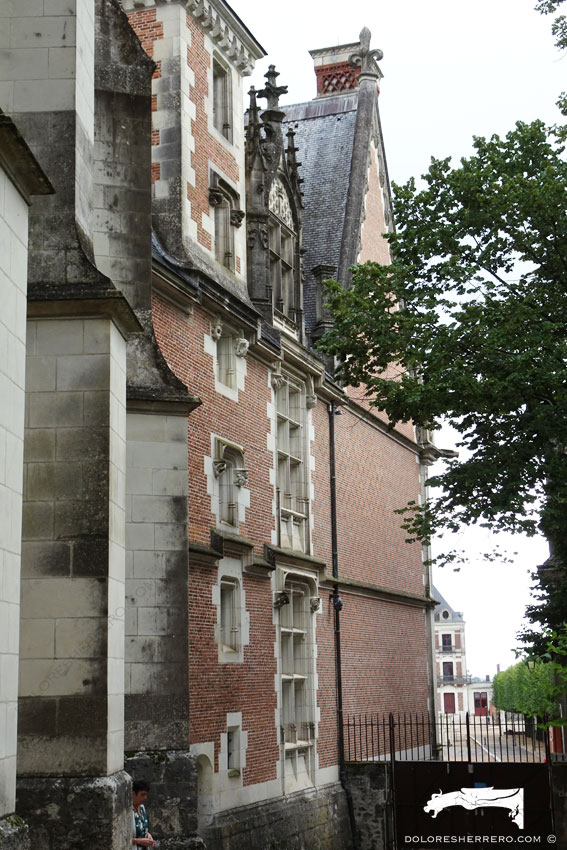
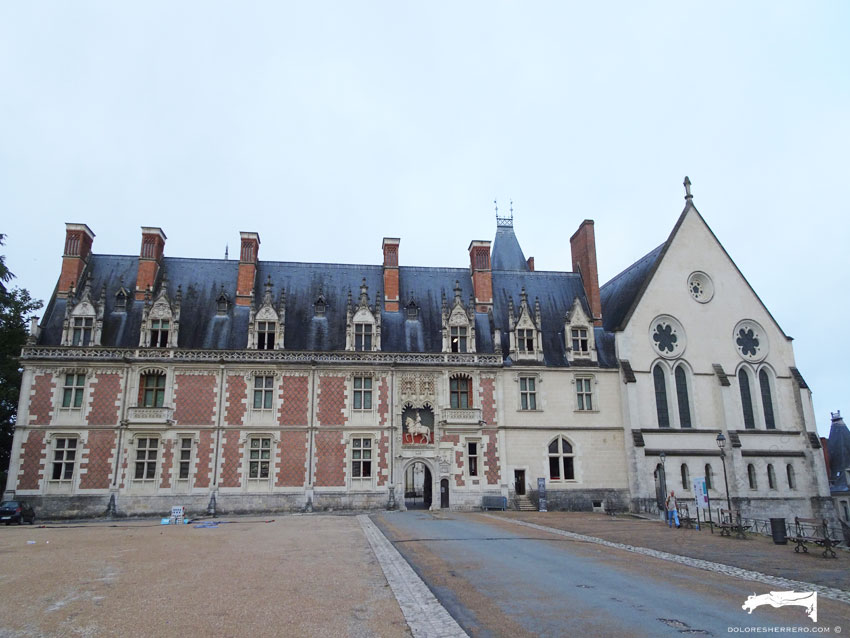
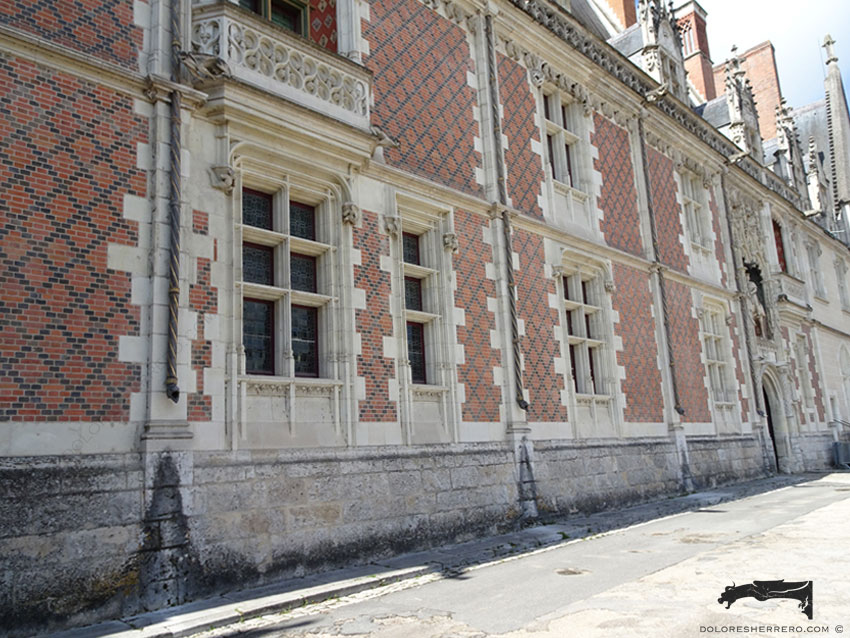
The gargoyles of the south side are analysed below, located on the Louis XII wing, where an imposing façade rises, above whose doorway stands an equestrian statue of Louis XII.
Gargoyles Representing Real Animals
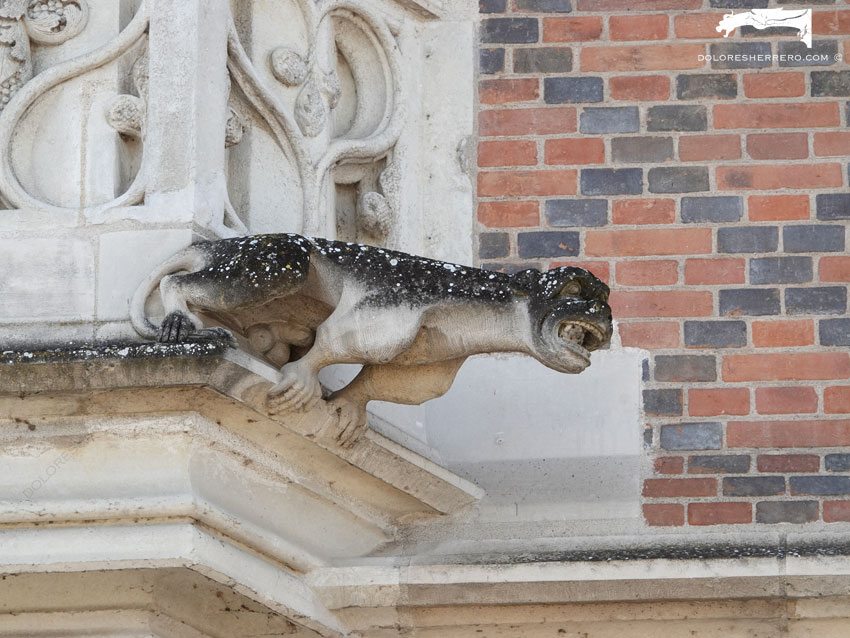
In this area, there are three dog figures and one monkey. The first dog is depicted with its offspring, a motif frequently found in gargoyles. The next two are quite similar, with fierce expressions (showing their fangs), oval, outlined eyes, and visible genitalia; one displays fur, and both have somewhat distorted bodies, likely adapted to fit the available space. They are two gargoyles with a distinctly grotesque quality, almost appearing to smile.
The monkey is similar to the previous two in terms of sculptural style. It also displays its genitalia and holds something in its mouth, possibly food.
-
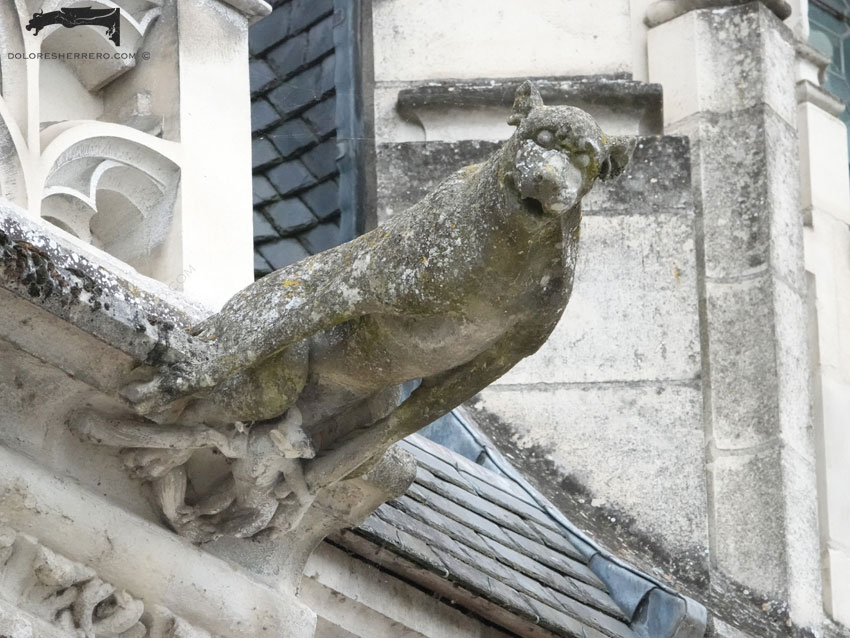
- Dog with its offspring
-
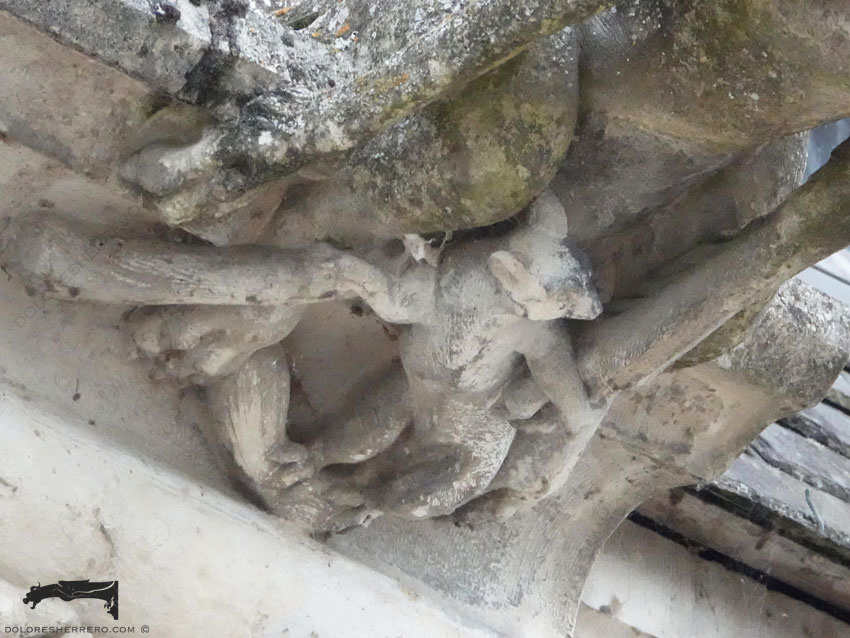
- Offspring (detail)
-
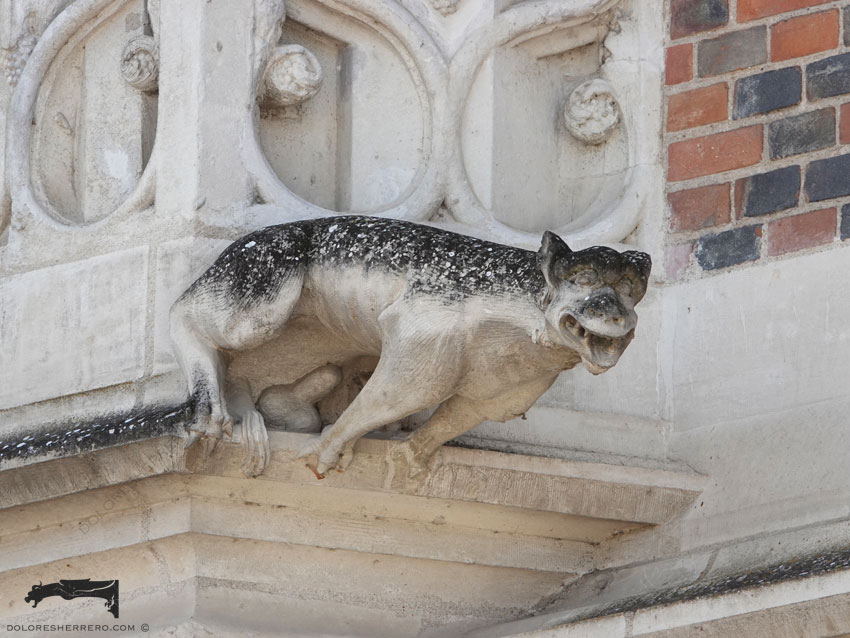
- Dog
-
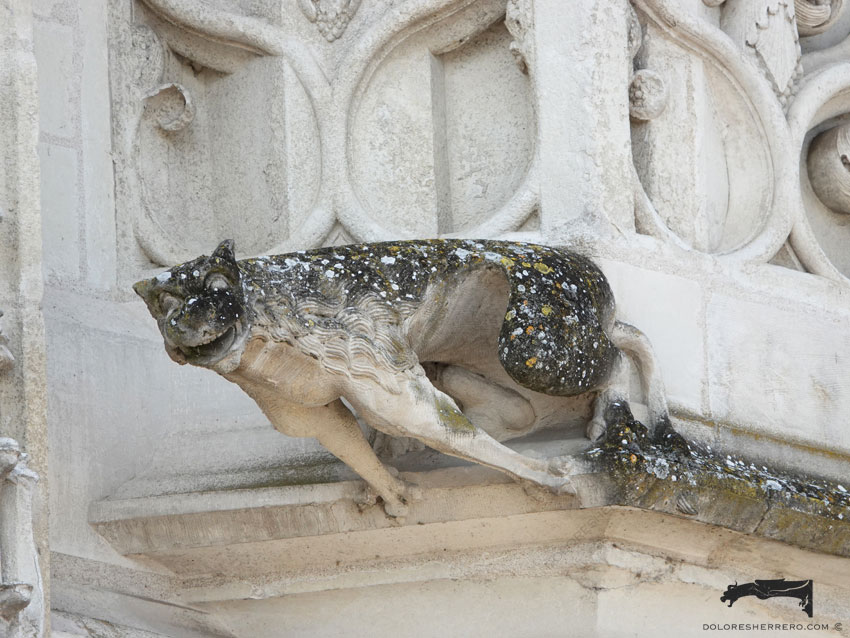
- Dog
Monkey
Gargoyles Representing Fantastic or Mythological Animals
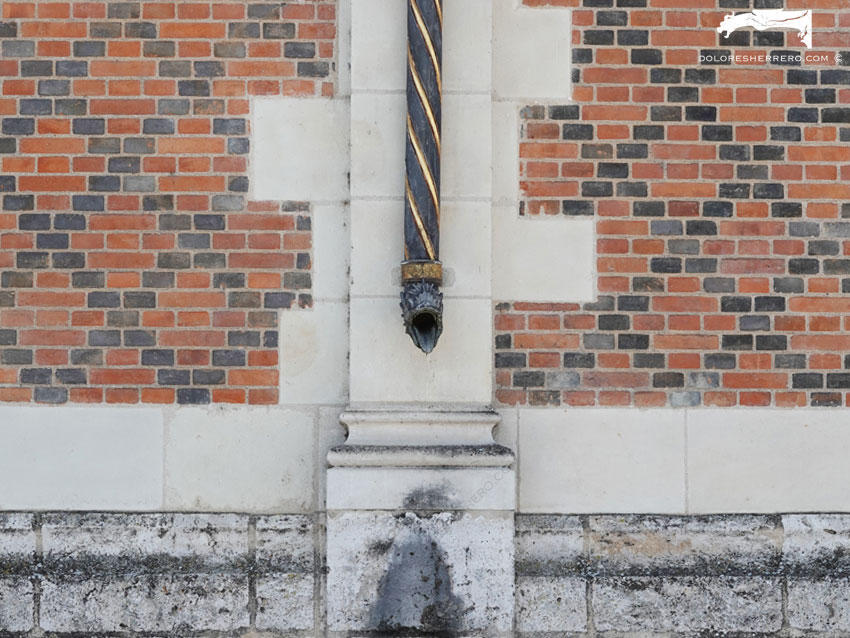
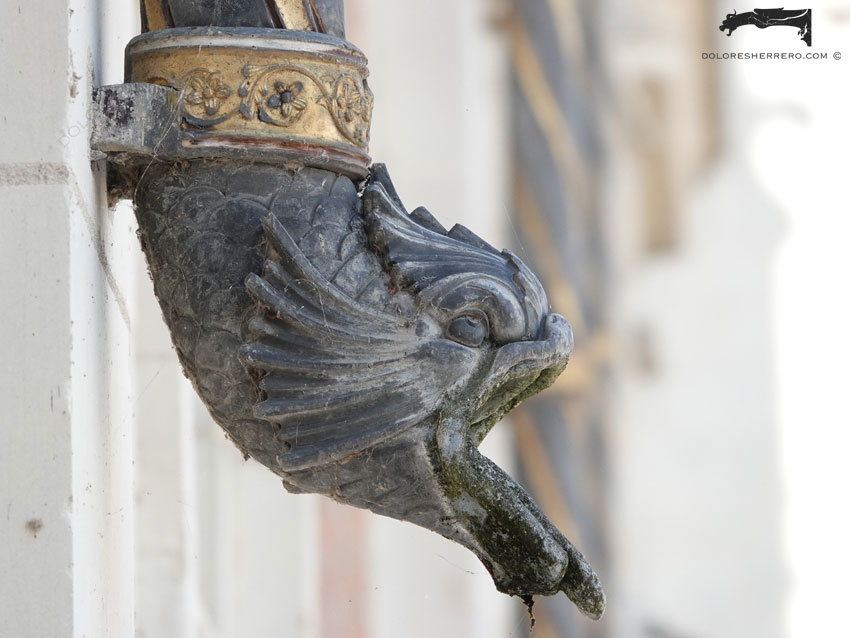
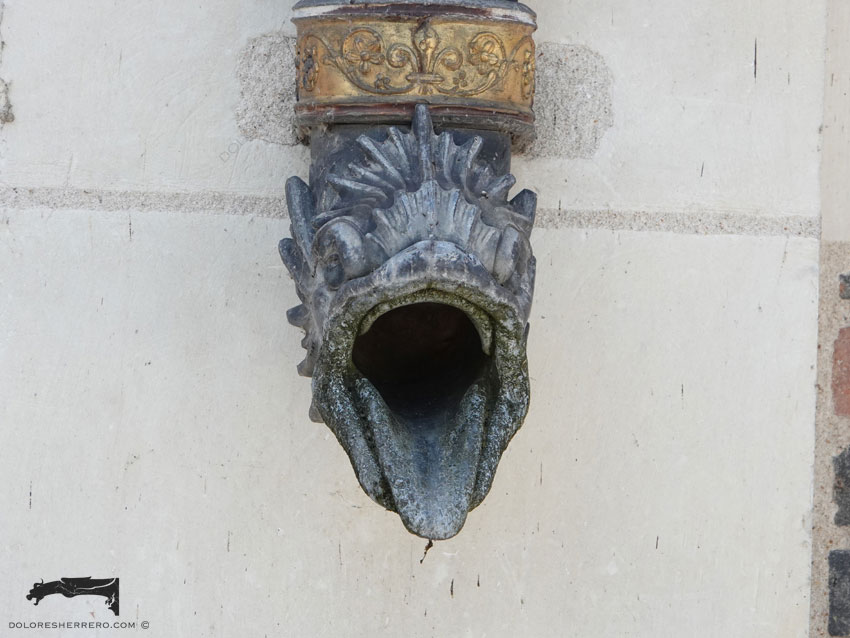
As in the courtyard, a metal dragon or fantastic creature can be observed, with scales, a protruding tongue, and a feathered head. It is positioned at the end of the wall conduits that channel the water.
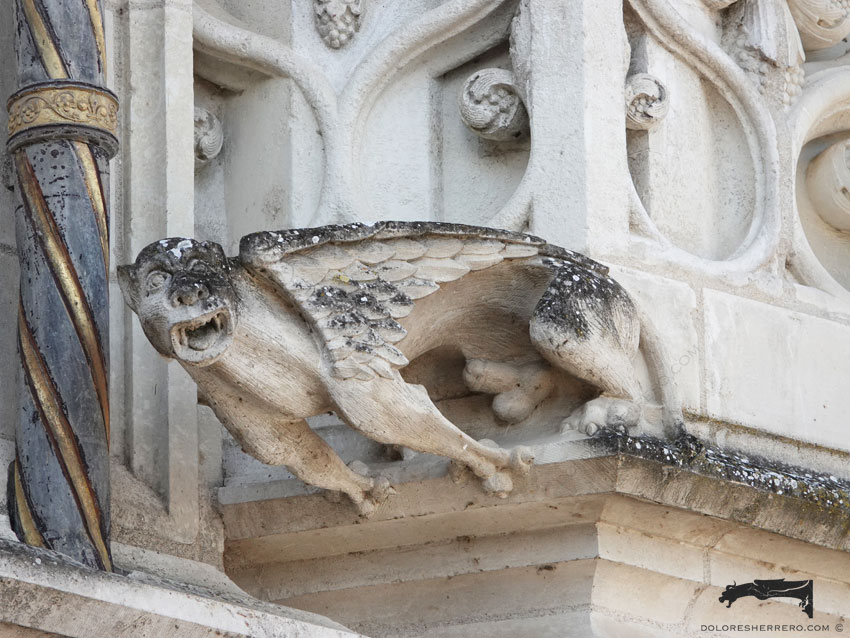
Gargoyle Representing an Animal Monster
Within this typology, a hybrid can be observed: a winged dog with a fierce expression (showing its fangs and tongue) and visible genitalia.
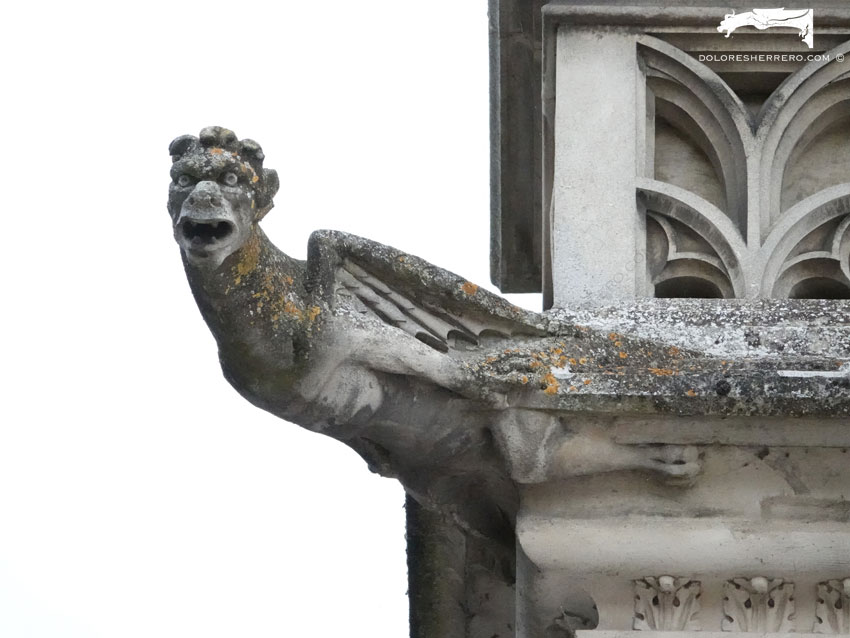
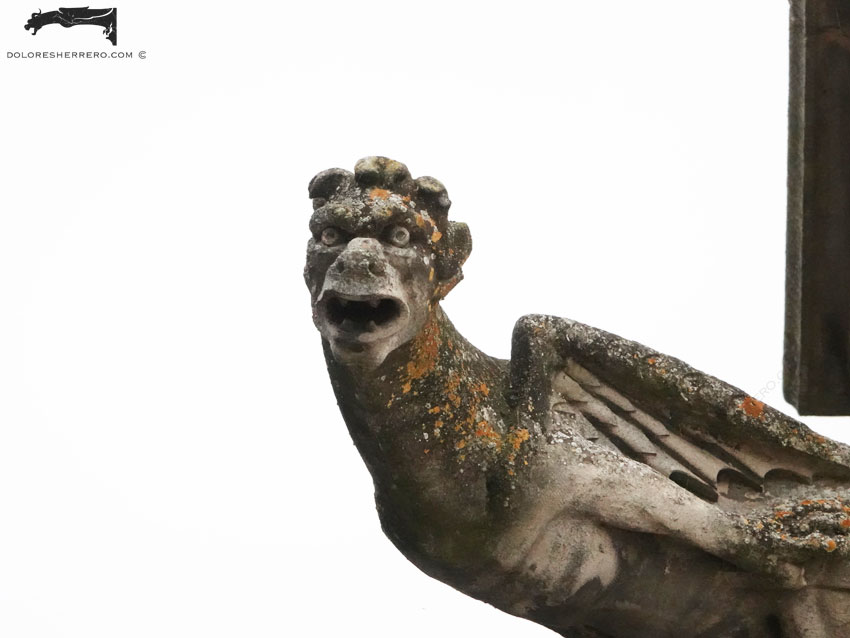
Gargoyle Representing a Demon
This is a particularly striking gargoyle of high sculptural quality. It represents a winged demon with a marked trachea and a dragon-like body. It has membranous wings, eyes with pupils, fangs, and a fierce expression.
Gargoyles Representing Human Figures
Four figures make up this typology. They are outstanding gargoyles that merit close examination for their interest both formally and thematically.
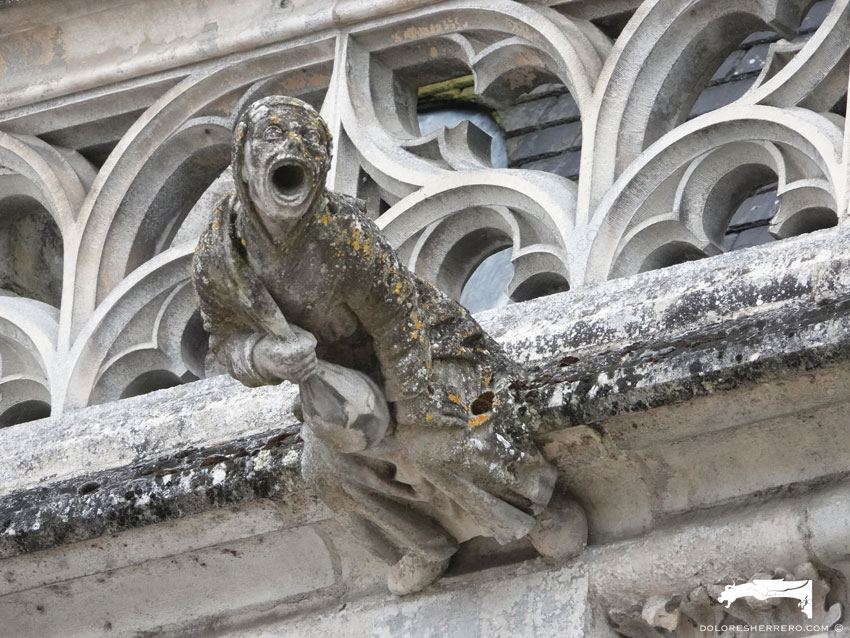
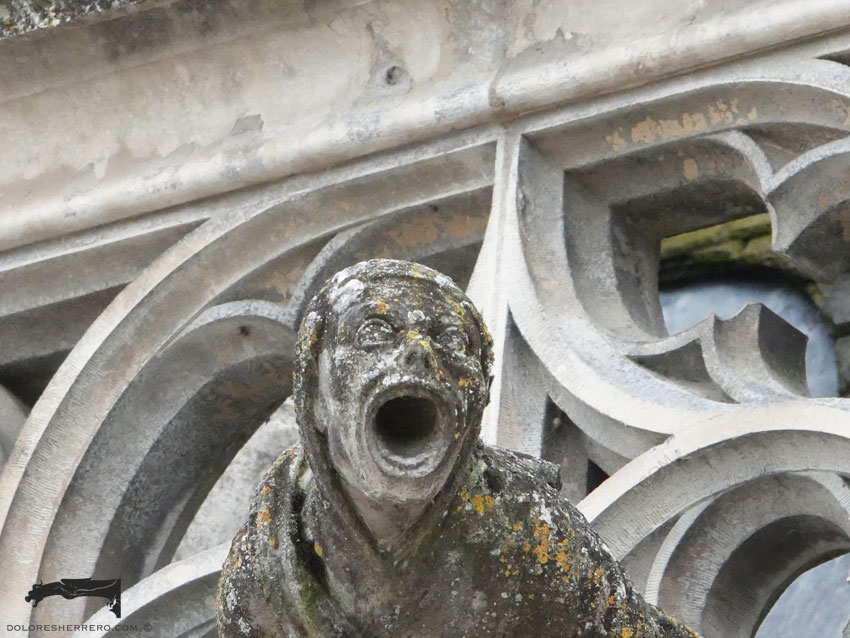
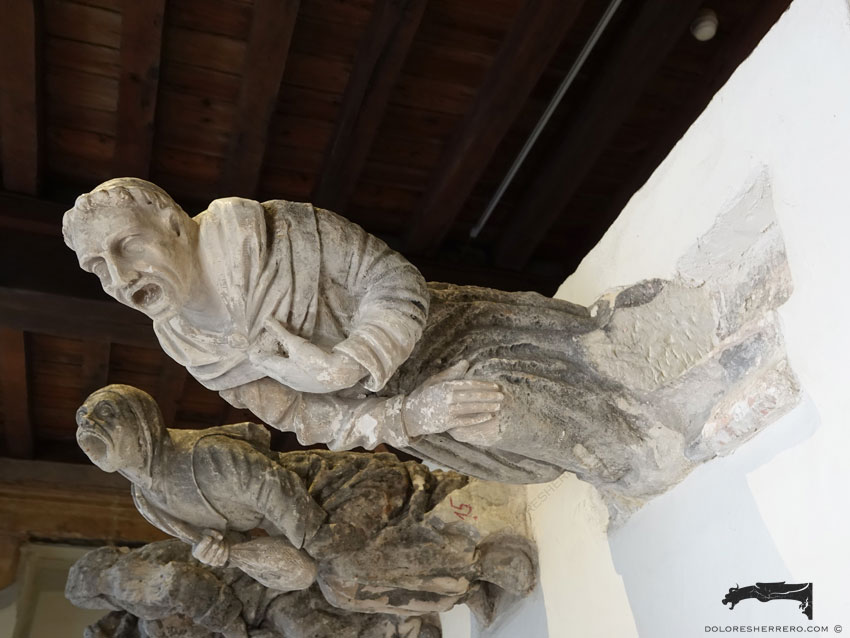
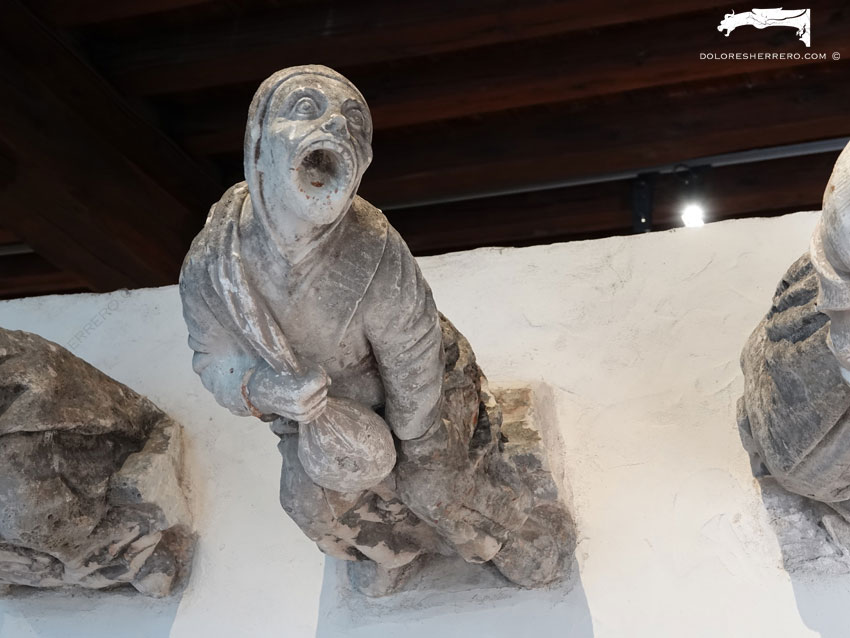
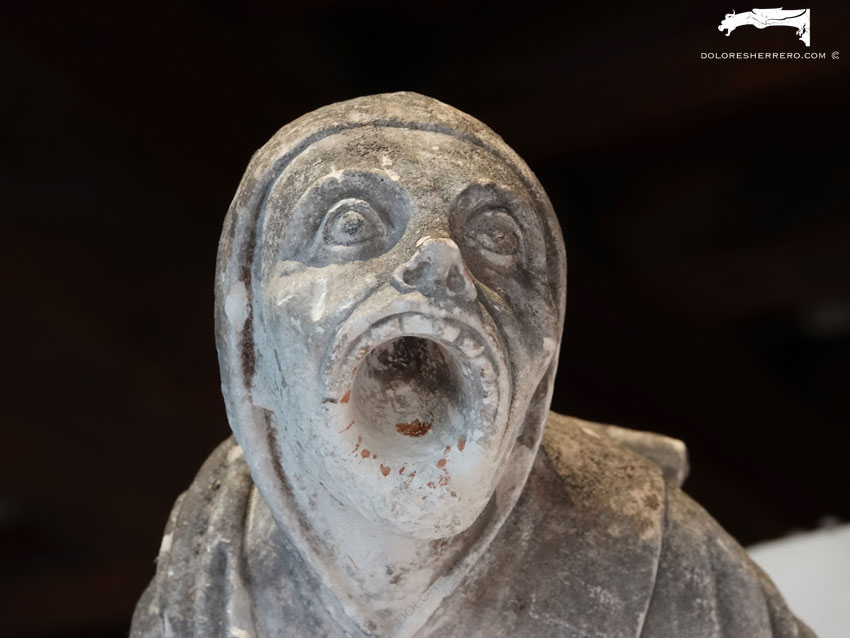
The first figure represents a man holding a sack in his right hand, with his left hand resting on his left leg. At first glance, the sack appears to be a bundle; however, it could also be interpreted as a miser’s sack. He wears medieval clothing and displays a highly expressive gesture, as if shouting.
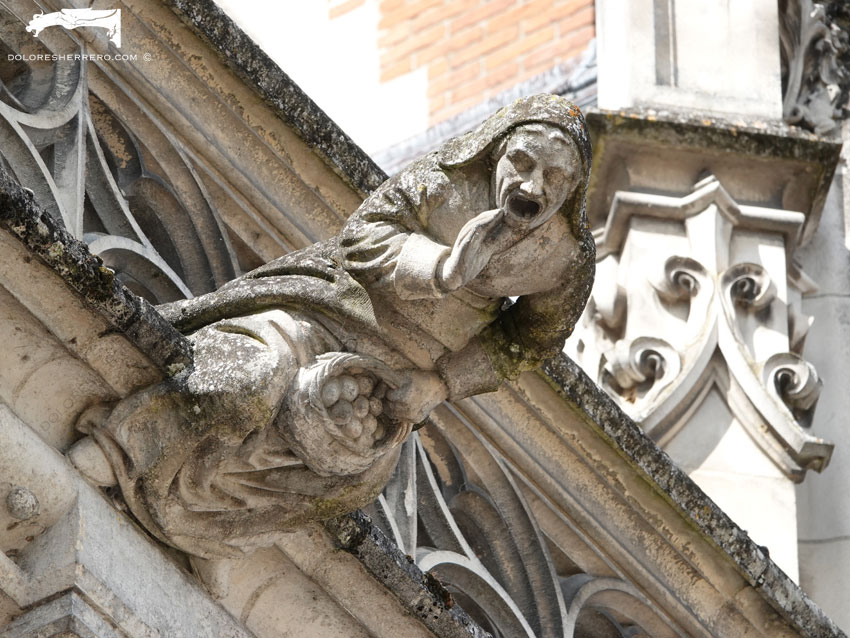
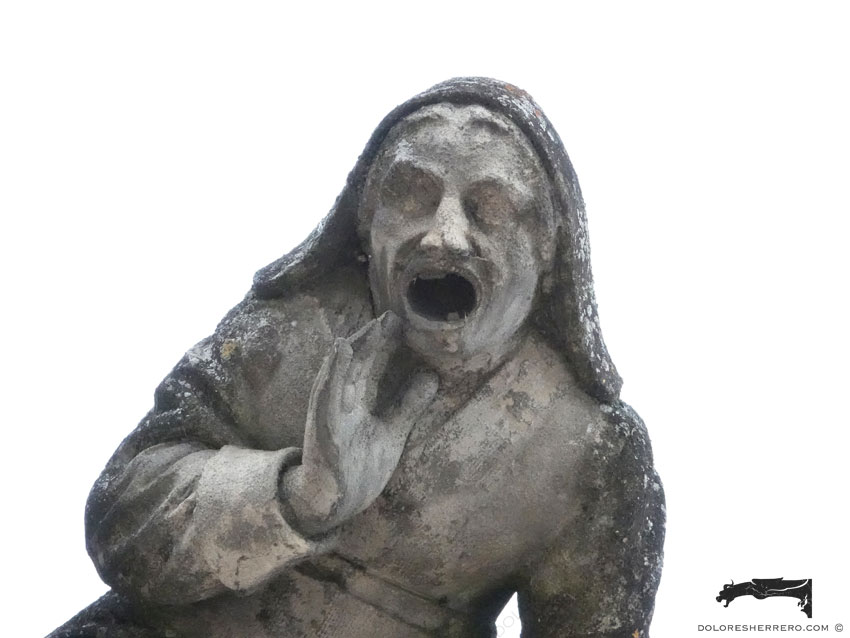
The next figure represents a woman holding a basket of eggs or fruit in her left hand. She is depicted as a street vendor in medieval attire, bringing her right hand to her mouth in a calling gesture to advertise her goods; a gargoyle of great expressiveness.
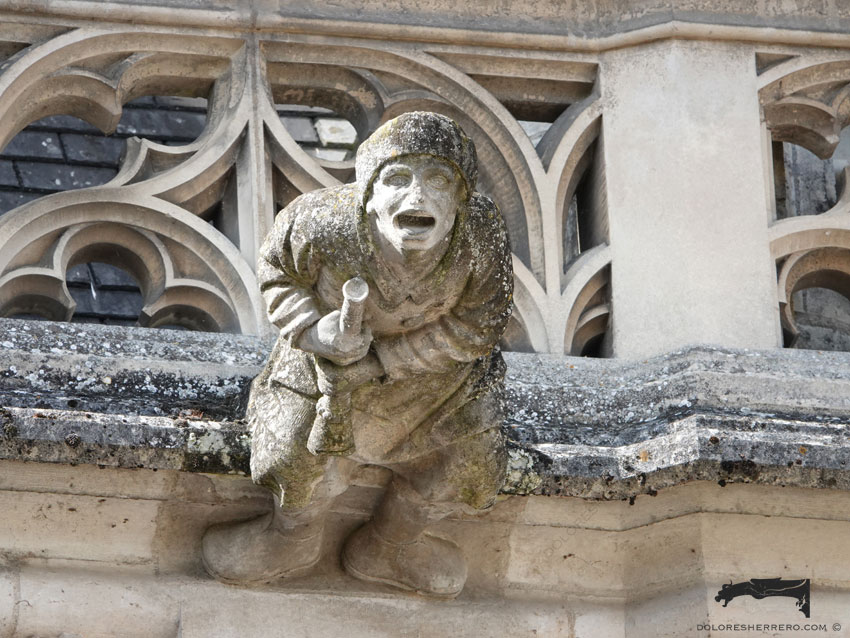
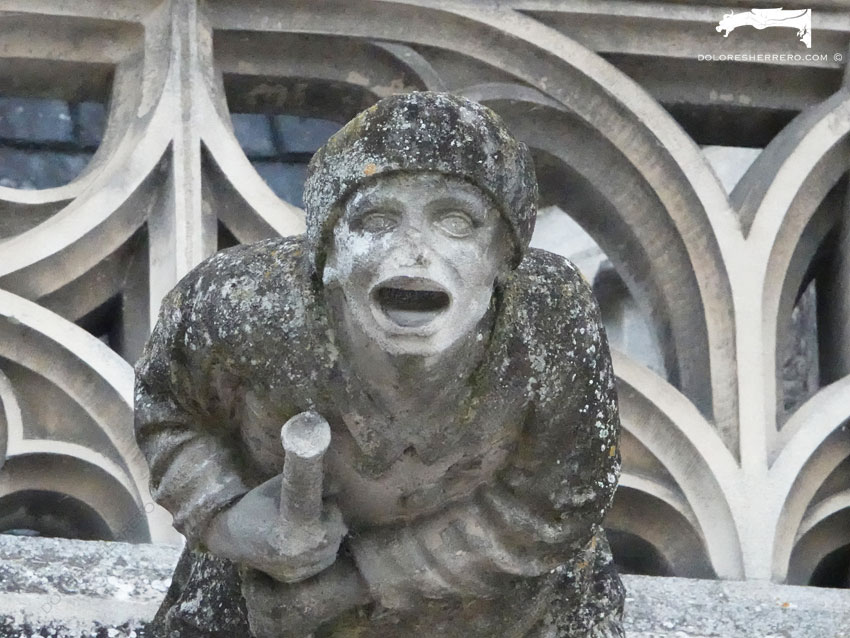
The third figure represents a man holding a staff between his legs, which may suggest a physical impairment. He wears medieval attire, with a belt, and likewise displays an expressive gesture.
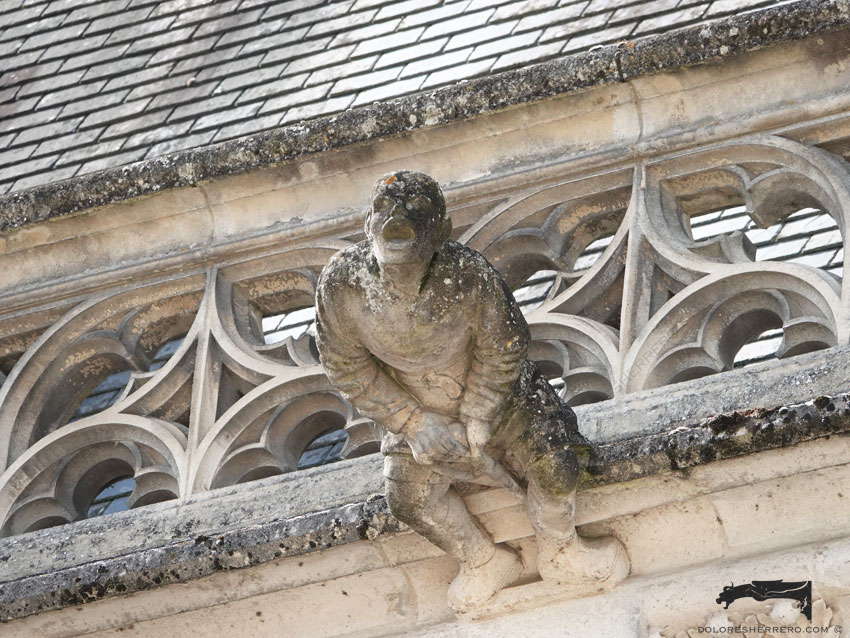
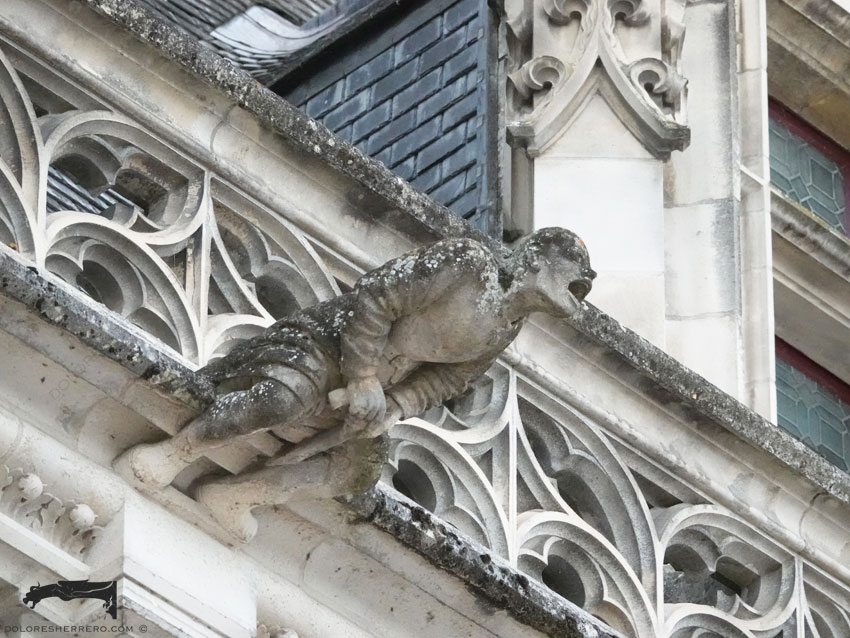
Finally, a man is depicted holding a firearm with both hands, dressed in soldier’s attire.
Gargoyles of the Museum of the Château Royal de Blois
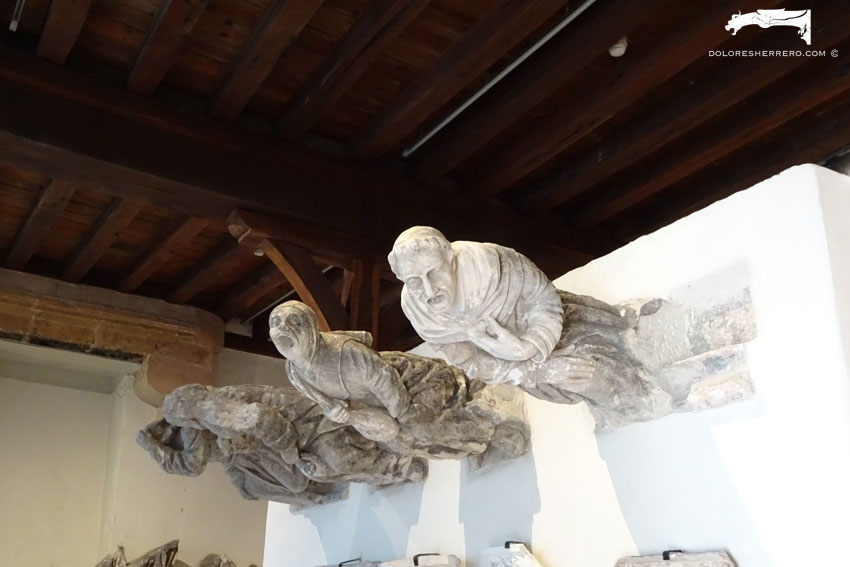
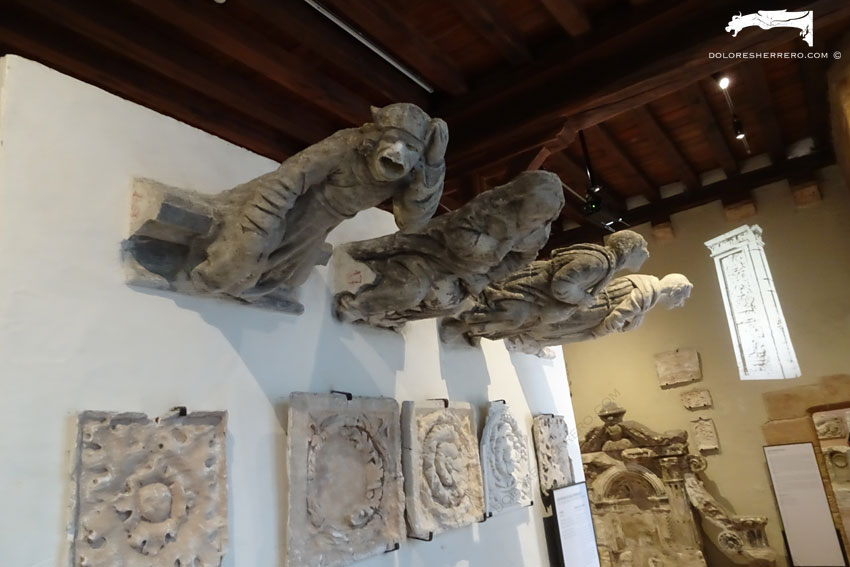
Finally, the gargoyles preserved in the castle museum are examined.
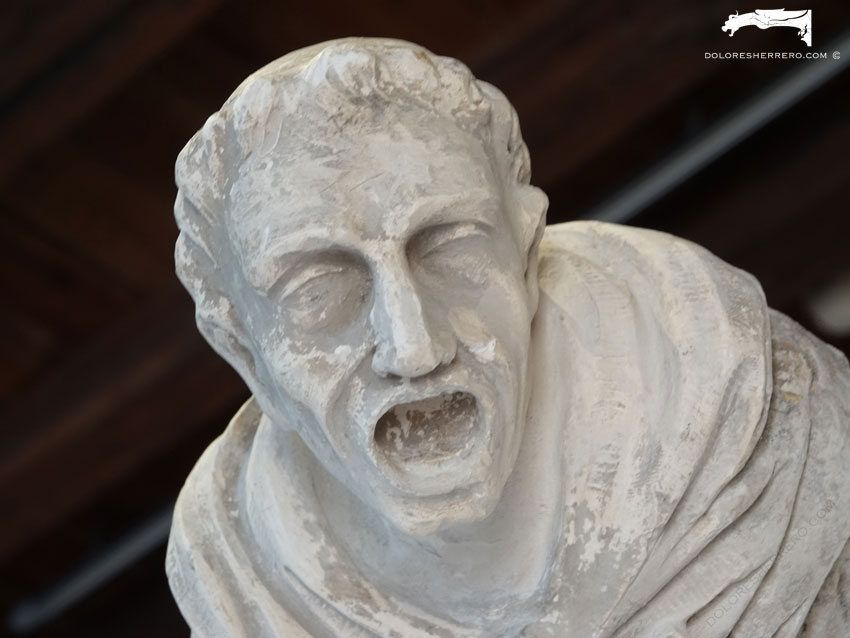
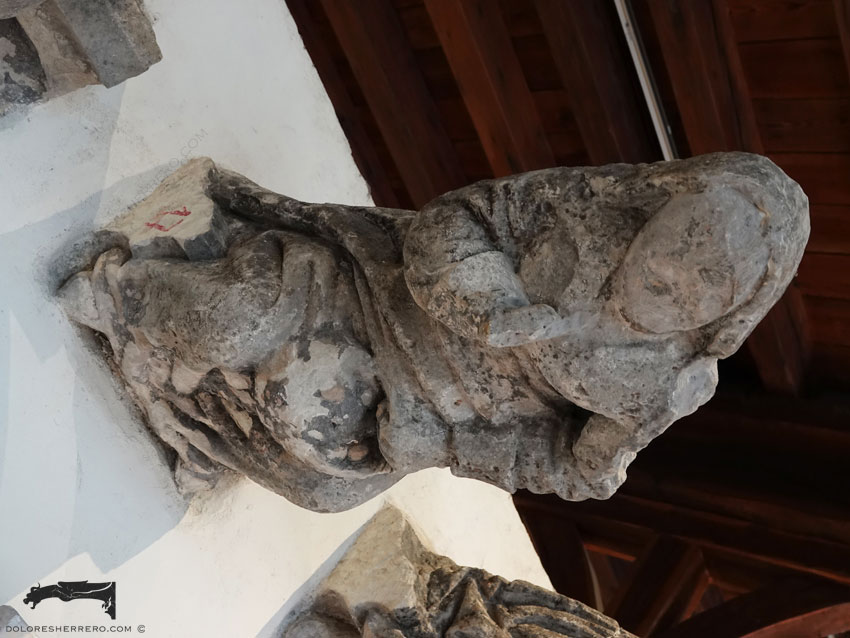
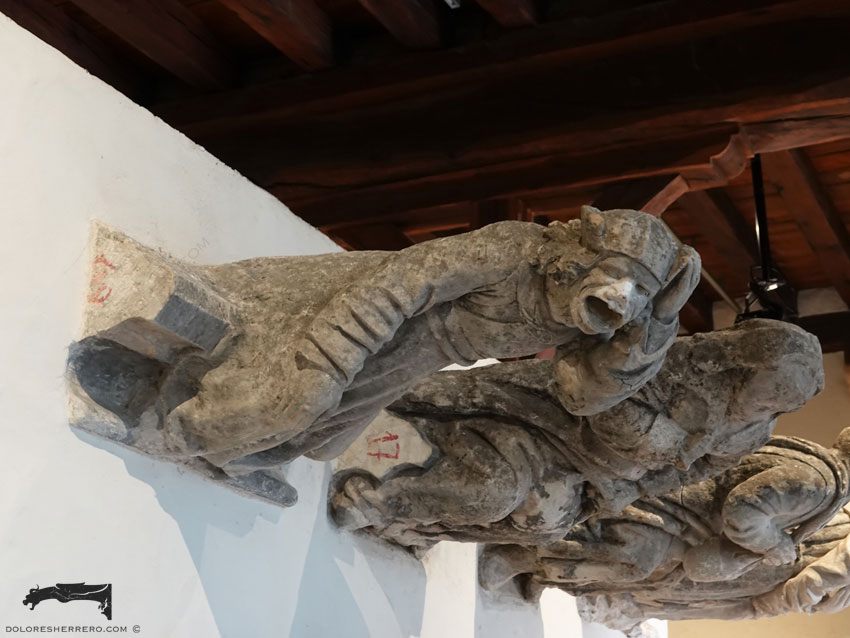
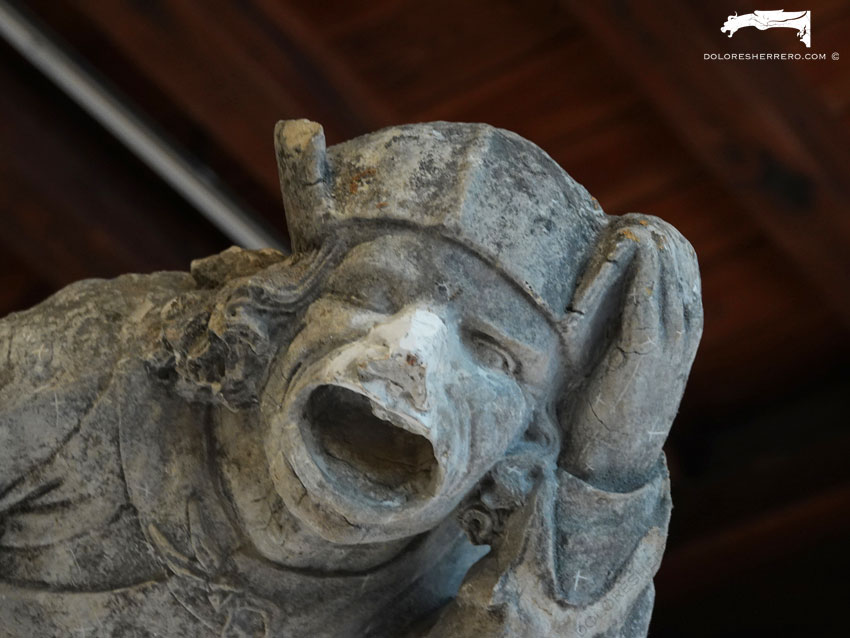
This space brings together some human figures already documented, along with others presented here for the first time, among which a dog and two monstrous animal creatures (winged dogs) can be identified.
-
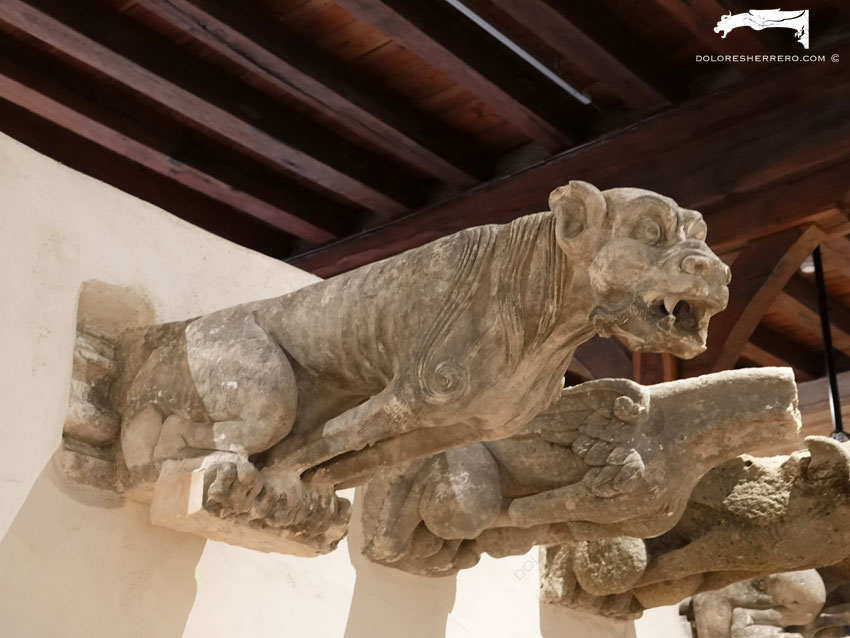
- Dog
-
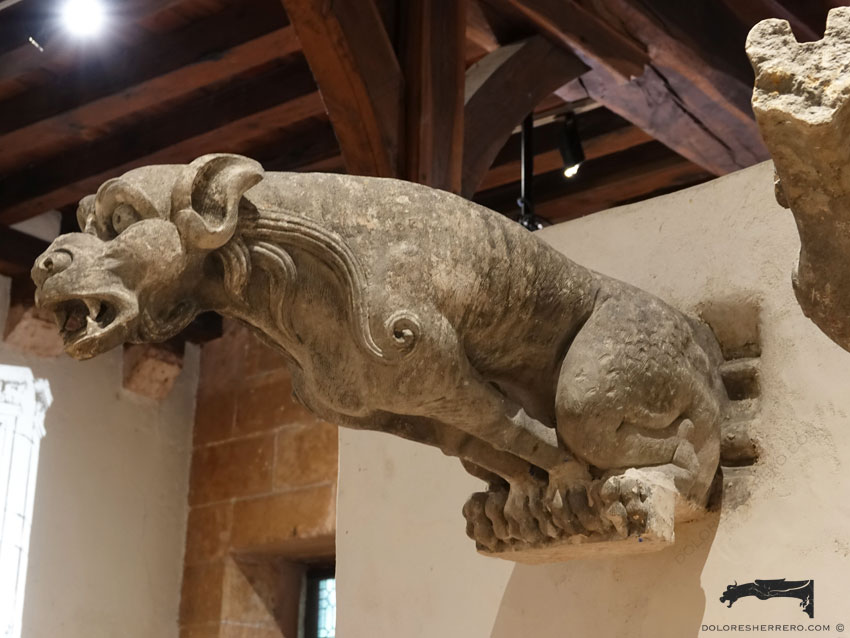
- Dog
-
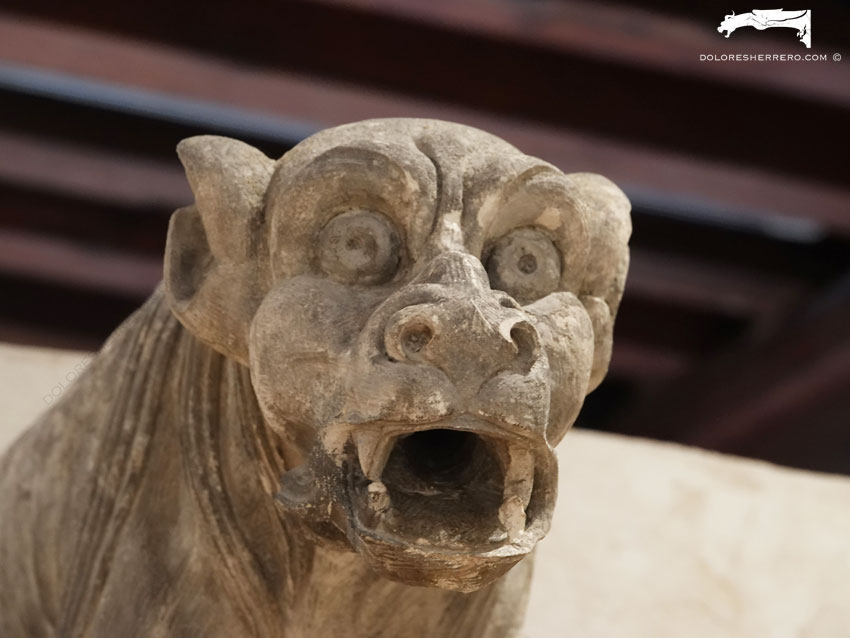
- Dog
-
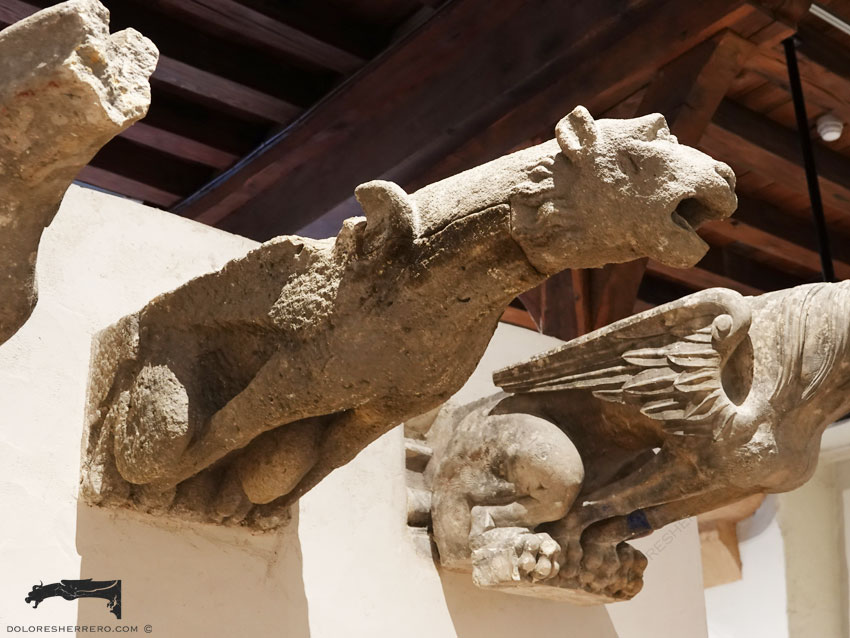
- Animal monster
-
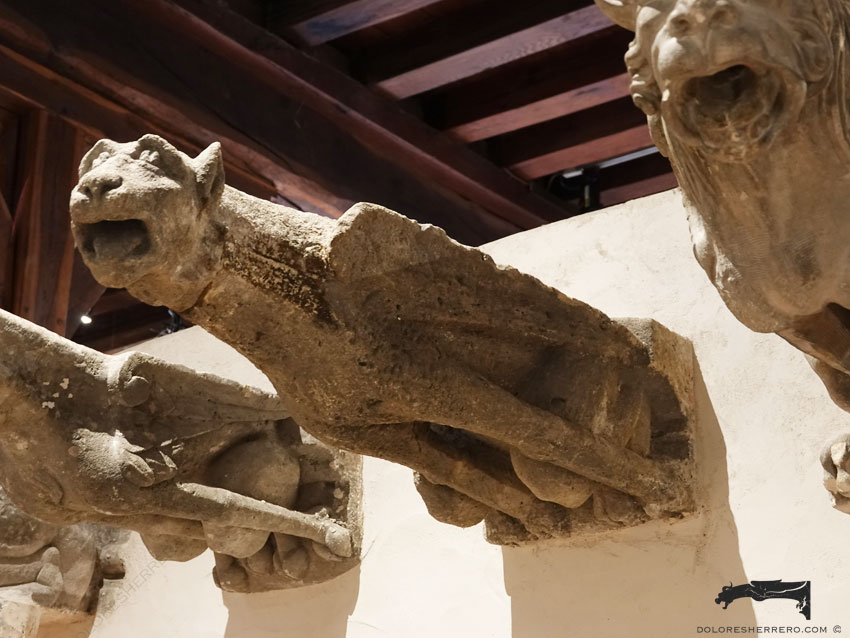
- Animal monster
-
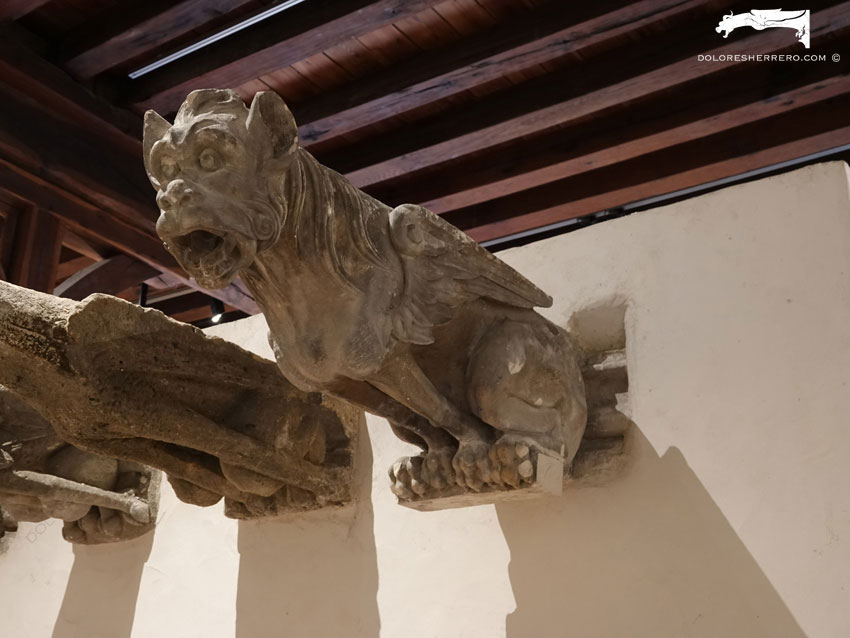
- Animal monster
-
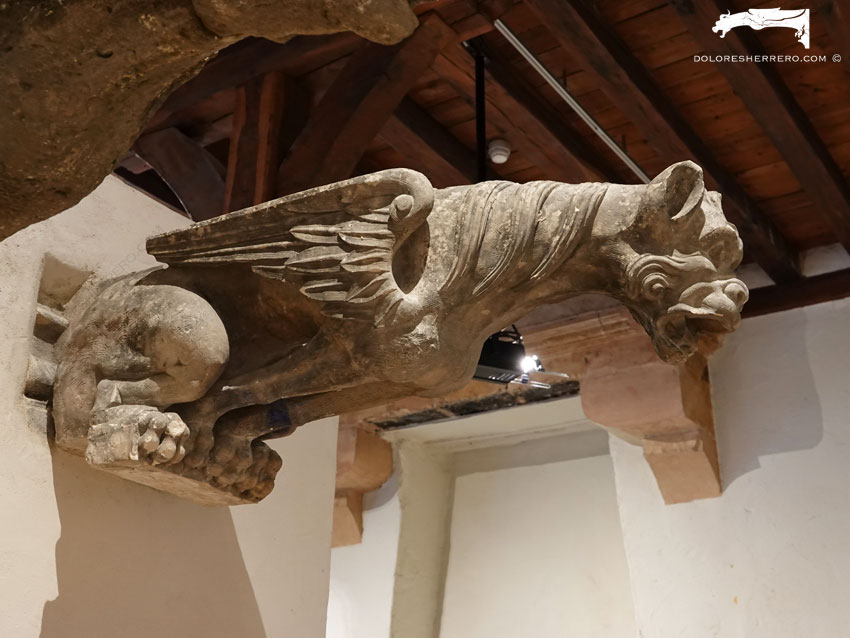
- Animal monster
-
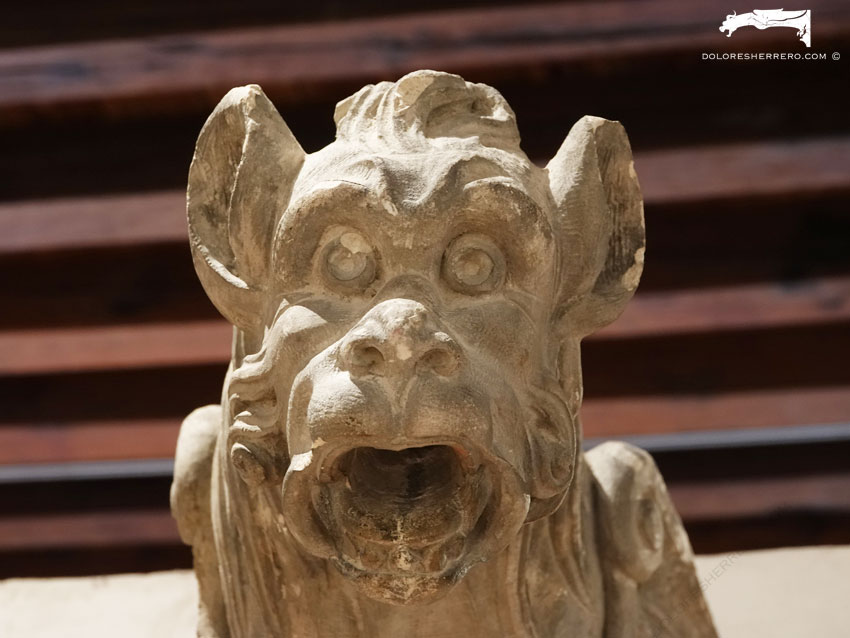
- Animal monster
Other Grotesques or Chimeras
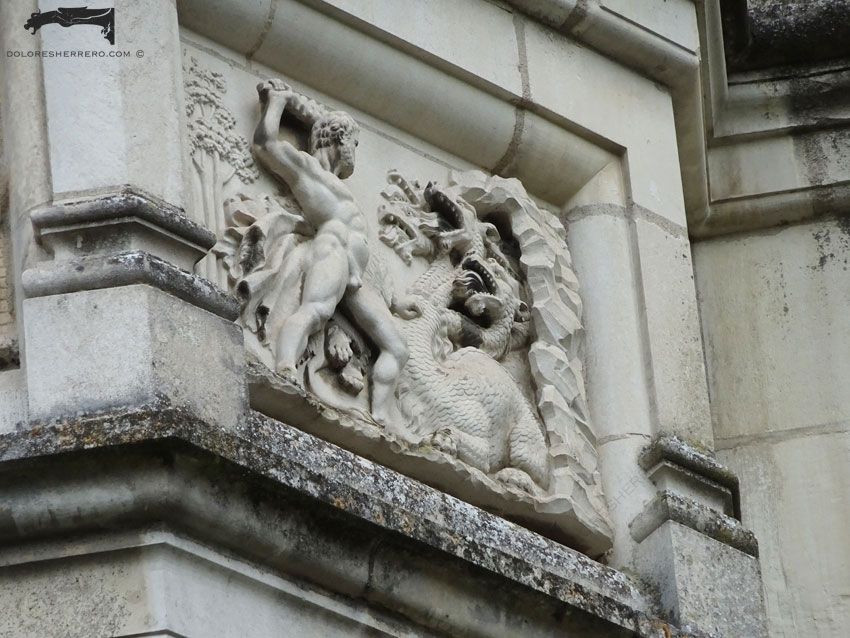
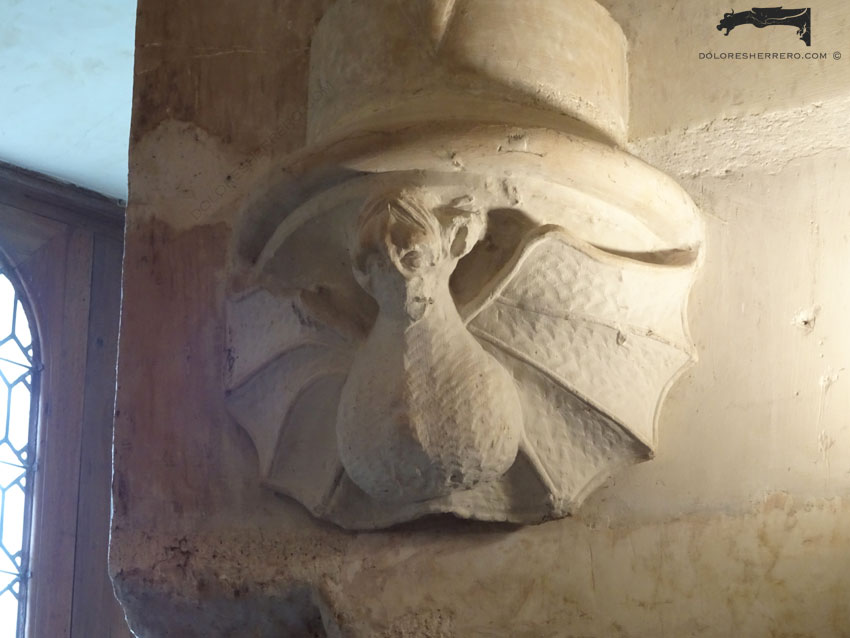
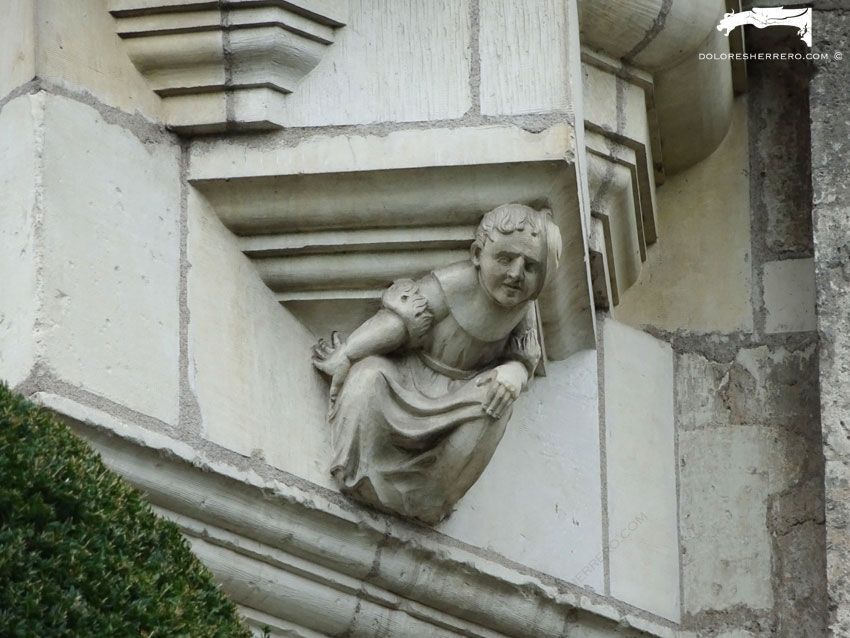
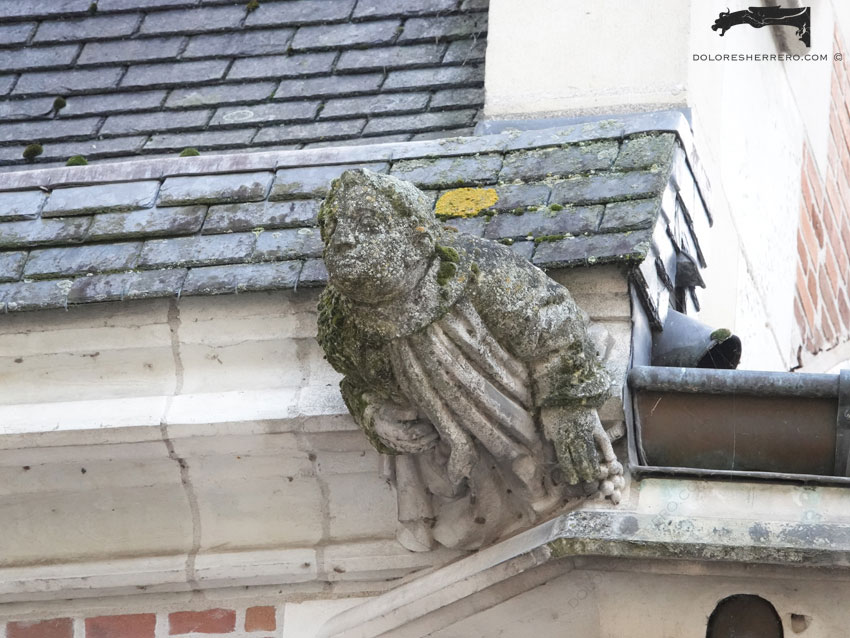
A notable variety of grotesques or chimeras is recorded in the castle, displaying a diverse range of subjects: an angel playing a musical instrument (aulos), a monk, a contortionist, a man with his hand on his face, the struggle of Hercules with the Lernaean Hydra, a bat, a child with a tilted hat, and another monk.
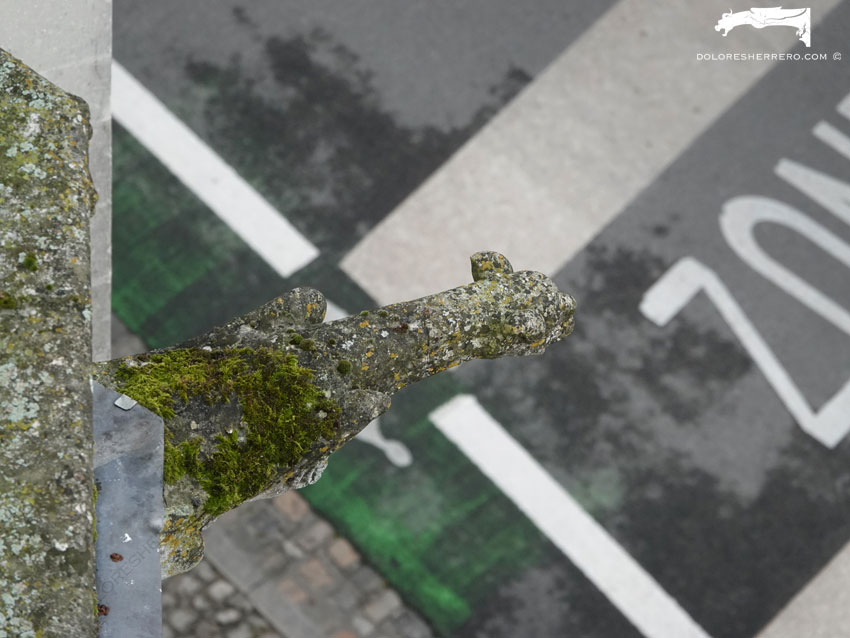
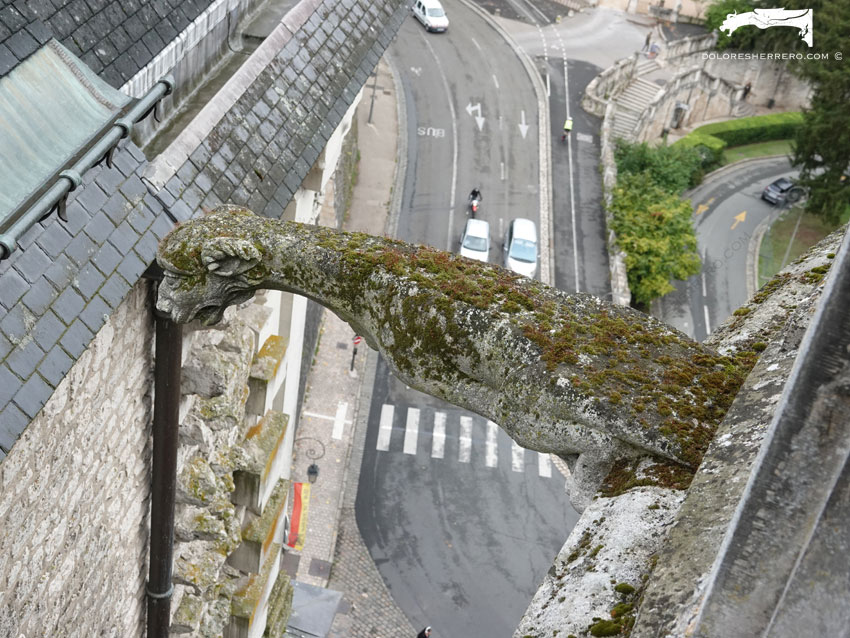
Additionally, some chimeras resembling gargoyles can be identified, in which the absence of a water spout is clearly observable; one of them represents a dog, with a marked trachea, oval and slightly bulging eyes, teeth, and decorated ears.
Finally, a corbel with vegetal decoration stands out.
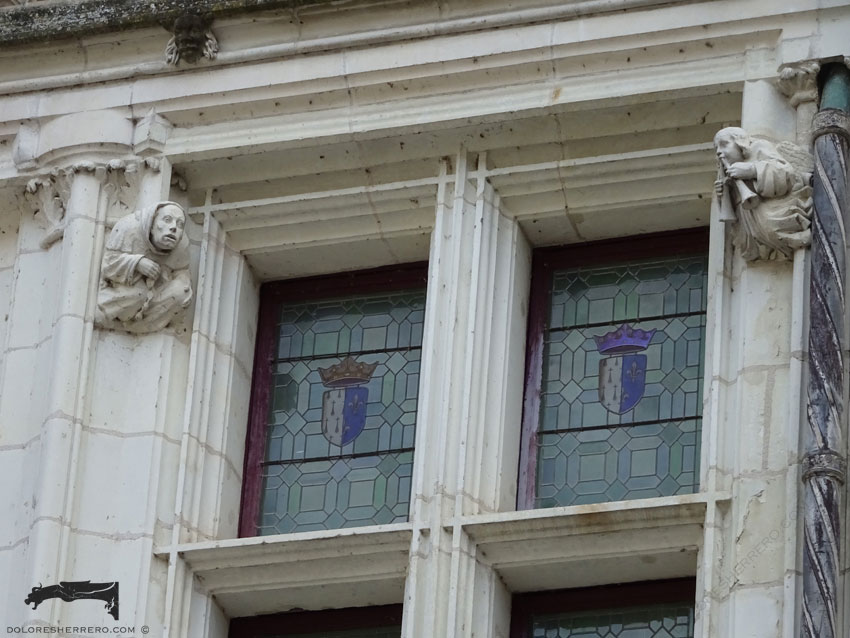
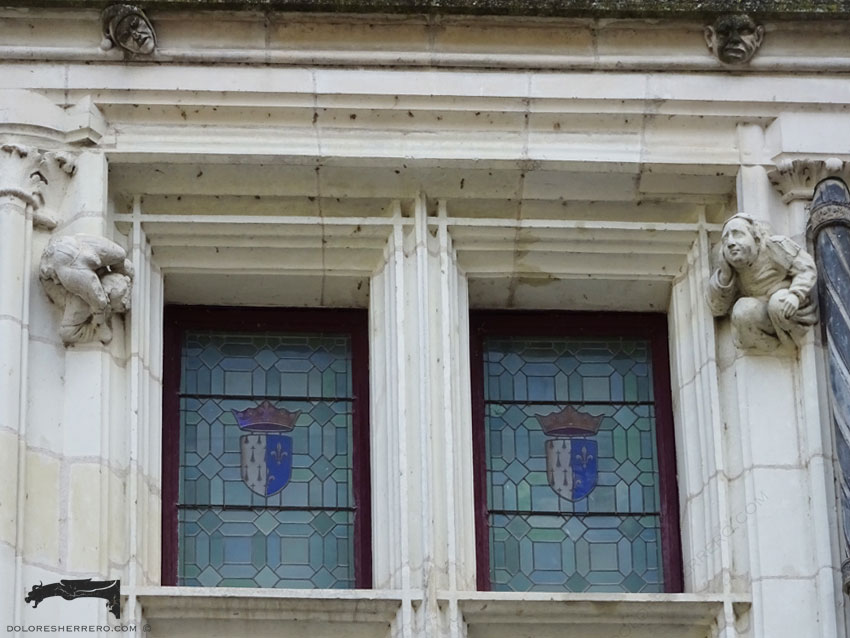
-
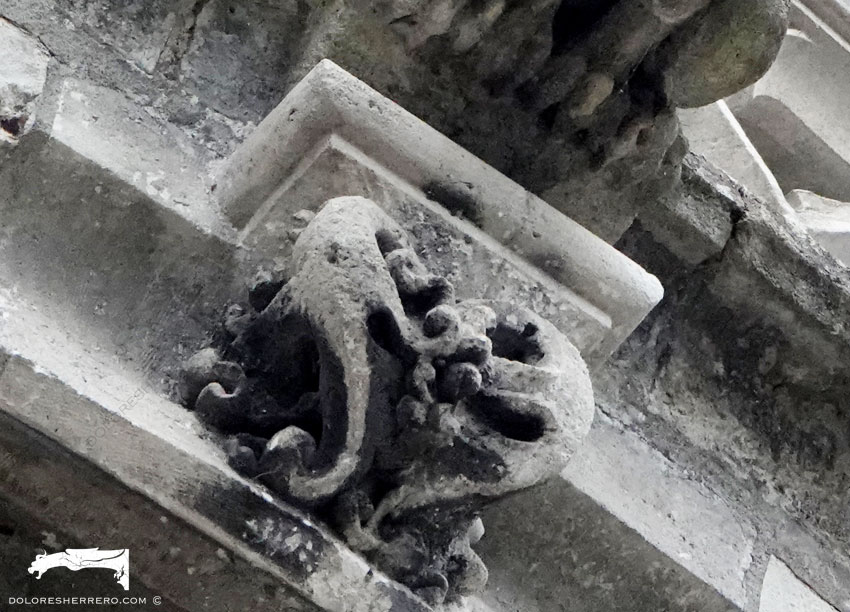
- Corbel
In conclusion, the sculptural quality and thematic richness of the castle’s gargoyles stand out above all.
Overall, the animal and monstrous gargoyles appear as solid and well-defined figures, with a remarkable level of detail in the carving, evident in decorative elements such as spirals and in features such as the trachea and the treatment of the fur. A sense of dynamism is also observed in their postures, with tilted heads and a distinctive positioning of the limbs.
The demonic figures are robust and imposing, with an expressiveness marked by fierce gestures and an unsettling character, accentuated by the presence of clearly defined pupils.
However, it is the human gargoyles that attract the greatest interest. They stand out for the quality of their carving, with careful execution of heads and bodies, as well as for the richness of their garments and their folds. These are dynamic and expressive figures, endowed with great plasticity, whose subject matter is particularly original in its depiction of professions and distinctive characters.
Taken as a whole, this constitutes a repertoire of gargoyles of notable artistic interest, set within an architectural complex of great historical significance. The Château Royal de Blois and its surroundings—where the Cathedral of Saint-Louis also stands out—offer a privileged setting for the observation of these sculptures, which invite the viewer to look beyond the cornices in order to appreciate the richness of these stone figures.
Doctor of Art History and researcher specializing in the study of gargoyles.
I am Dolores Herrero Ferrio, and my thesis, “An Approach to the Study of Gargoyles of Gothic Cathedrals in Castilla and León”, is dedicated to the study of these fascinating figures.
If you like gargoyles and art history, you will also enjoy my book, “The Gargoyle and Its Iconography,” a book I have written with great care for those interested in the world of gargoyles.
I have created my own Encyclopedia of Gargoyles, a Gargopedia to share with you, where you will discover all the secrets and wonders of these enigmatic sculptures.
I hope you enjoy this Gargopedia as much as I have enjoyed creating it, and remember that each gargoyle has a story to tell, and here you will discover them all.
 The Exceptional Gargoyles of the West Facade of Salamanca Cathedral
 The Gargoyles of the University of Alcalá de Henares: A Sculptural Legacy of Madrid, Spain’s Heritage
 The Elusive Gargoyles of the Meirás Towers in A Coruña, Spain
 The Gargoyles of Oviedo Cathedral in Spain: Guardians of an Asturian Treasure
 Gargoyles of Cahors Cathedral, France: Moss-Covered and Evocative