As we saw in the first entry devoted to the anthropomorph figure, this is one of the most frequently represented types in gargoyles.
In this second entry, we shall address its interesting symbolism.
Symbolism of the Anthropomorphic Figure in Gargoyles
Let us recall that anthropomorphic figures are semi-human beings: animals that possess human physical features or display elements identifying them as men or women, such as clothing.
We know that the monster, a category that includes the anthropomorphic figure, is linked to mythology, which, since Antiquity, has left a legacy of monstrous beings across different cultures. Nevertheless, as Ressot states in his research, “what is monstrous for one culture may not be so for another. Each society creates a mythology for its own use, and our purest monsters are found in myths”. It is different communities that create and disseminate myths, which is why their symbolism is so important. Although to us they may seem beings of pure fantasy, for those who created them they were real; through them, they explained the world and the human being in an attempt to understand the meaning of life and death.
According to Wittkower, “monsters—composite beings, half human, half animal—play a role in the thought and imagery of all peoples and all ages. Everywhere, the monster has been credited with the powers of a god or with the diabolical forces of evil. Monsters play their part in mythologies and tales, in superstitions and omens”.
The anthropomorphic figure has been represented in all the arts and has been the subject of various theories and interpretations concerning its symbolism.
As a monster, its negative character is evident in the view of certain classical authors, such as Horace (1st century BC), who states in his Ars Poetica: “If a painter chooses to join a horse’s neck to a human head and make multicoloured feathers grow everywhere upon a medley of limbs, so that what is a beautiful woman above ends below in an ugly dark fish, my friends, try to restrain your laughter at such a display (…) Painters and poets have always had the prerogative of daring anything. We know this, and we both ask and grant the same licence. But not to the point of joining the tame with the wild, or making serpents unite with birds and sheep with tigers”.
Vitruvius (1st century BC), referring to the decoration of interlacing motifs with grotesques, states: “Today, on plastered surfaces, monstrosities are painted rather than representations of real things”; and he refers to inventions such as “slender stems with heads of men and animals joined to the middle of the body, and other monsters”.
Continuing with other theories and interpretations, in the Middle Ages monstrous creatures were identified with infidel peoples. Zumthor states that certain French chansons de geste associated the Saracens with men who had dog’s heads, beaks, or mouths in their navels. Foreigners, barbarians, and people of other races were endowed with a monstrous appearance. Nevertheless, Wittkower reminds us that deformities and hybridisations fulfilled a function in the thought and imagination of peoples.
For Dante, animals with human heads or torsos are symbols of evil and of Satan. Among them are satyrs, centaurs, and sirens, also symbols of excessive sexuality.
In connection with this idea, we should recall the gargoyles representing demonic figures with sagging breasts. As we saw when discussing this subject, demons with women’s breasts appear at the end of the Middle Ages, at a time when woman symbolised curse and guilt. Kenaan-Kedar states that female monsters with the head and body of a beast and the breasts of a woman represent the devouring nature of woman.
Nor should we forget, as we saw in the entry on symbolism, the idea related to the intimidating function of gargoyles on cathedrals and churches: gargoyles representing anthropomorphic figures that could symbolise sinners transformed into animals after having fallen into sin; condemned souls punished for their faults and likewise forbidden to enter the temples. This theory is similar to the idea of Sébastien Brant (15th–16th centuries), who speaks of monsters as testimonies of divine will, in the form of warnings or punishments.
Also related to this is an interesting artistic source mentioned by Mariño Ferro, found on the portal of Oloron-Sainte-Marie (France). It depicts a half-naked man transformed into an animal with bird’s legs and a monkey-like face because of his desire for a prostitute; in other words, punished for his lust.
A fascinating and enigmatic creature, the anthropomorphic figure is present in all the arts. Belonging to the monstrous imagination that forms part of our psyche, it reproduces our fears and fantasies. Although representations of anthropomorphic figures in art are innumerable, those found in gargoyles are sublime; one might even say unsurpassable. Terrifying, disturbing, expressive, or fantastic, these gargoyles reveal the sculptor’s creativity, the human psyche, and its attraction to the monster.
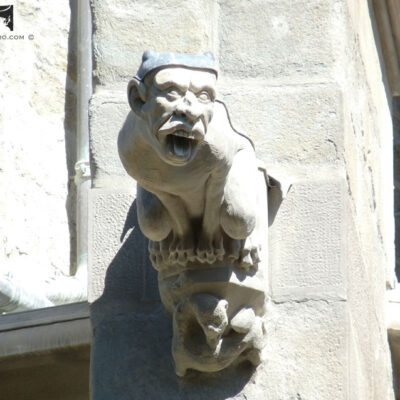
Gallery of Anthropomorphic Gargoyles
-
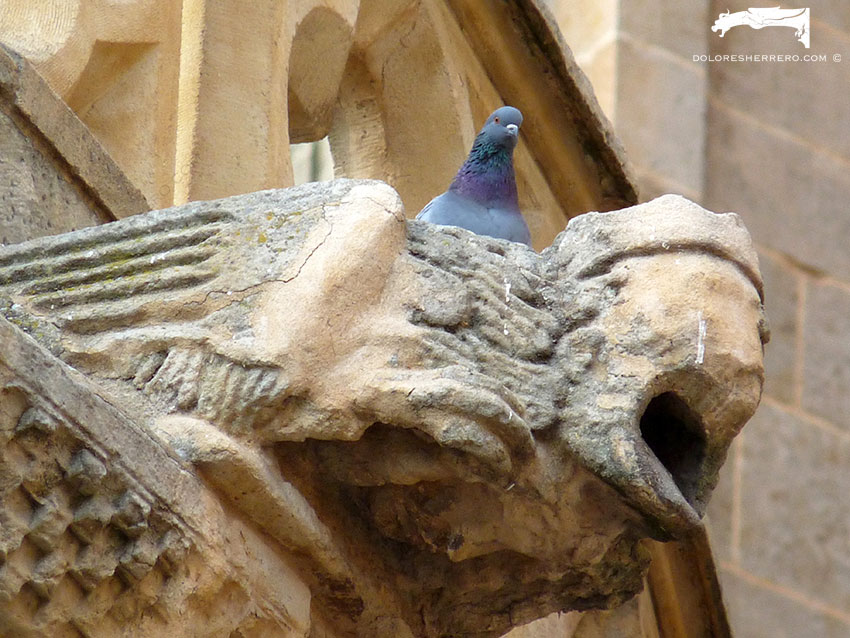
- Old Cathedral of Salamanca (Spain)
-
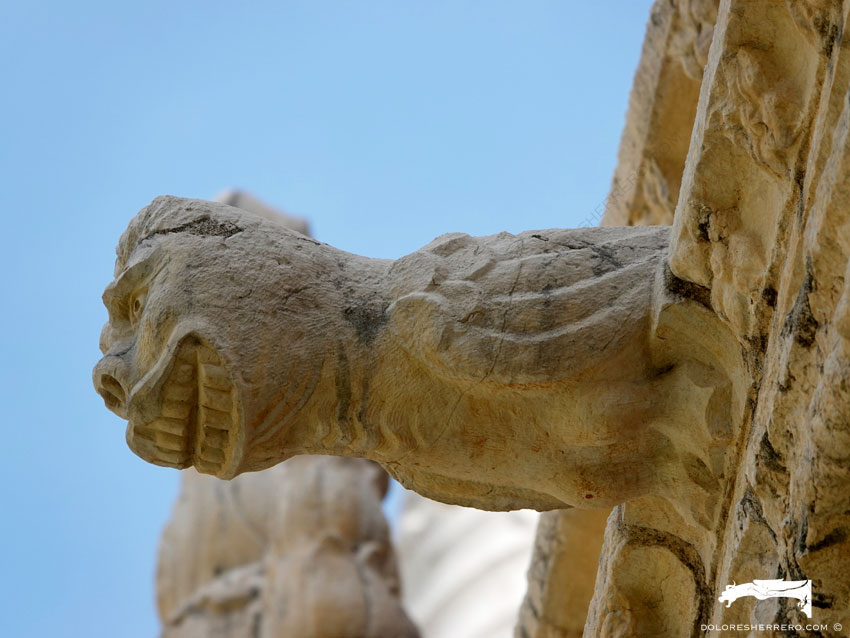
- Jerónimos Monastery in Lisbon (Portugal)
-
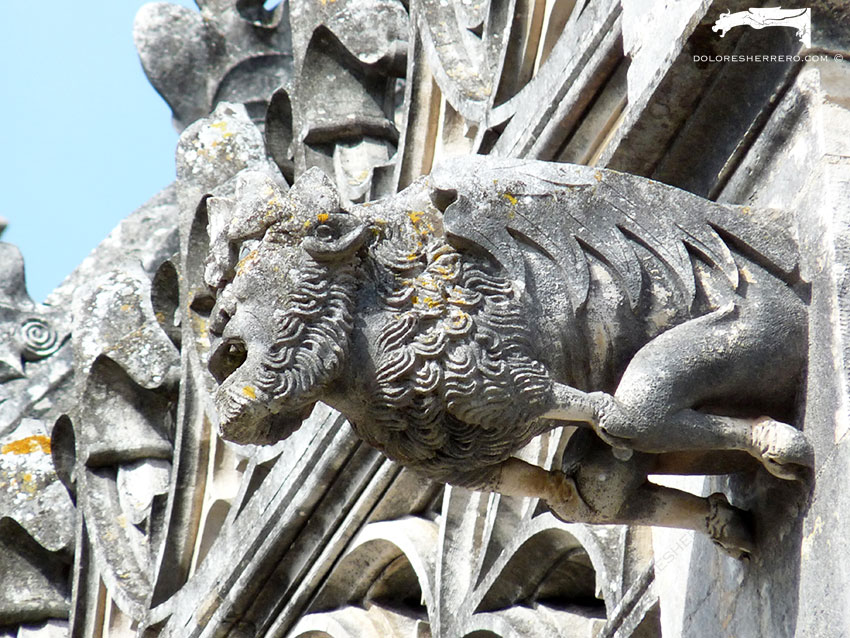
- Batalha Monastery (Portugal)
-
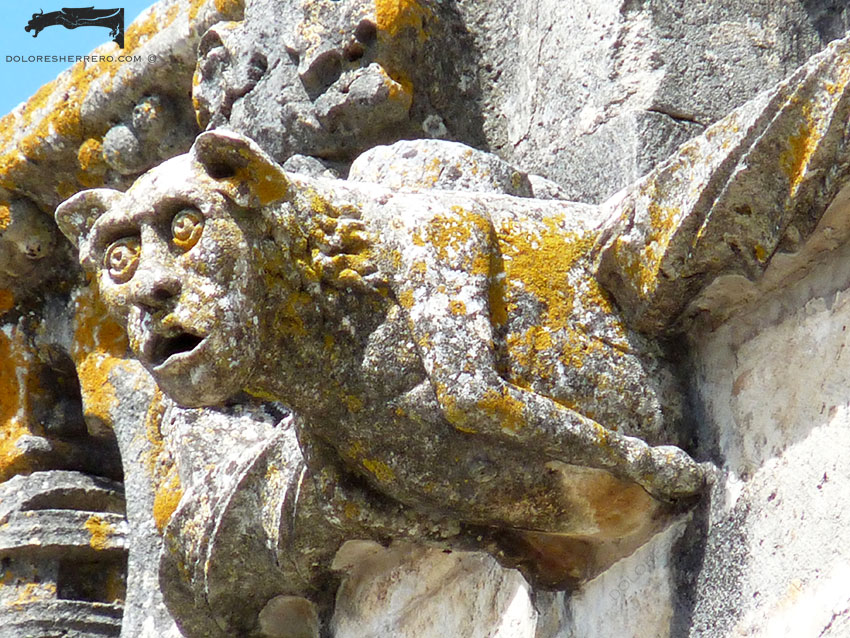
- Convent of Christ in Tomar (Portugal)
-
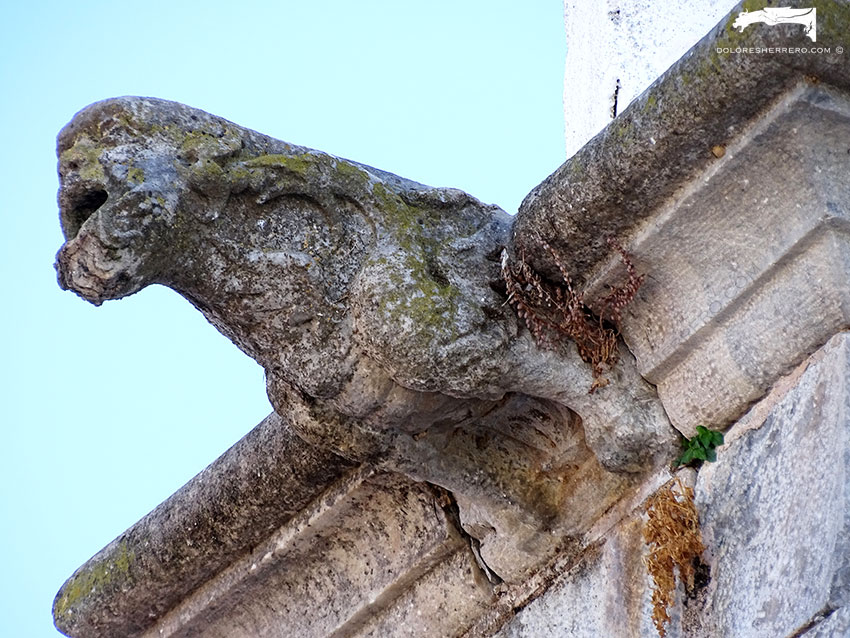
- Church of Santa María Magdalena in Olivenza (Badajoz, Spain)
-
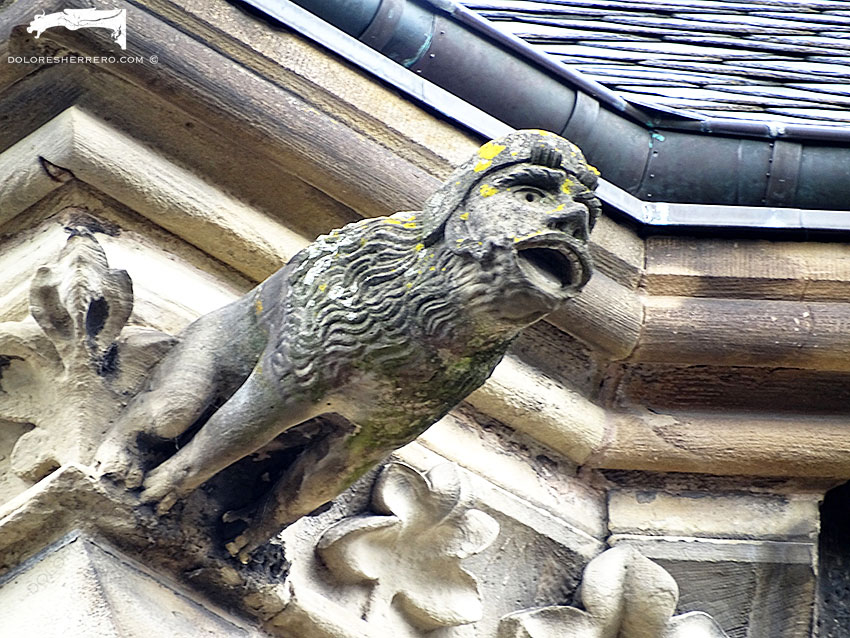
- Church of Our Lady in Trier (Germany)
-
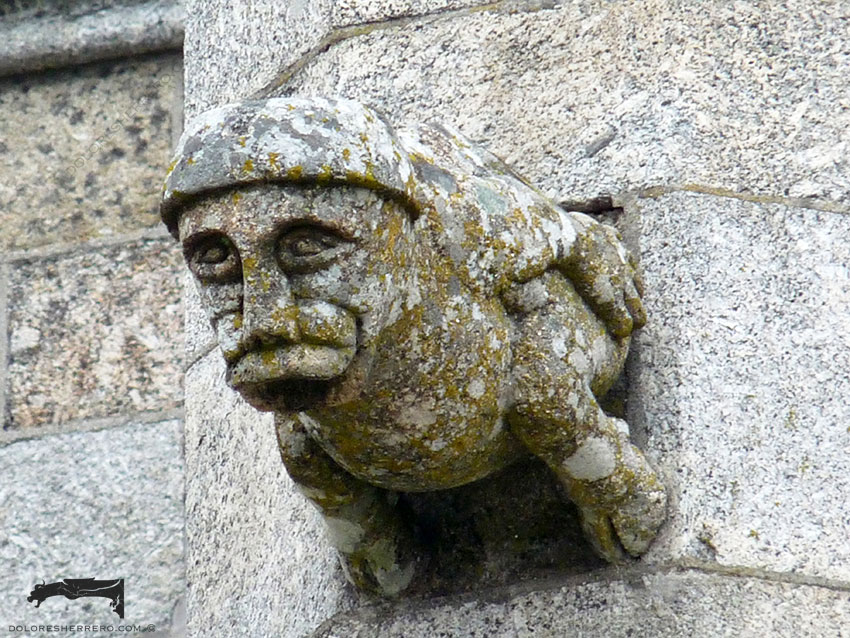
- Guarda Cathedral (Portugal)
-
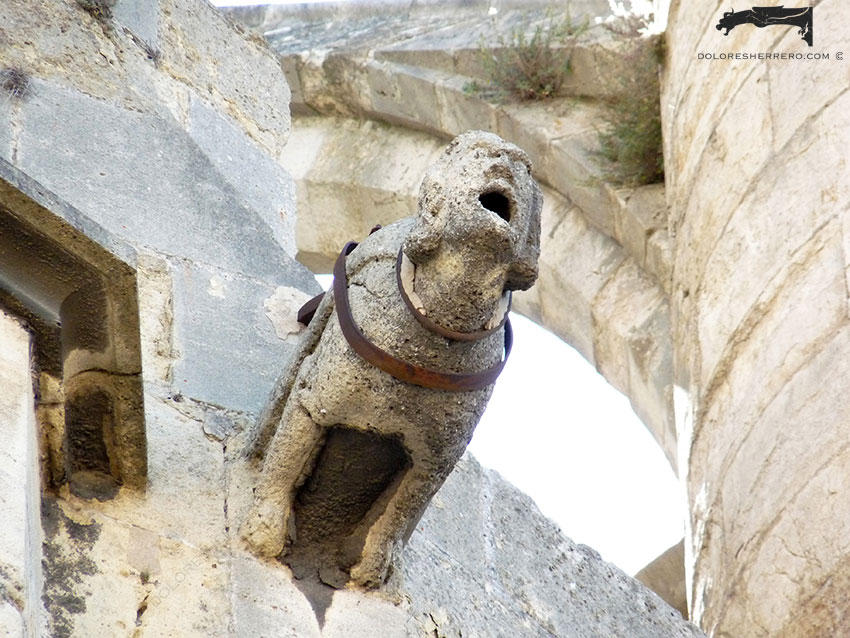
- Narbonne Cathedral (France)
-
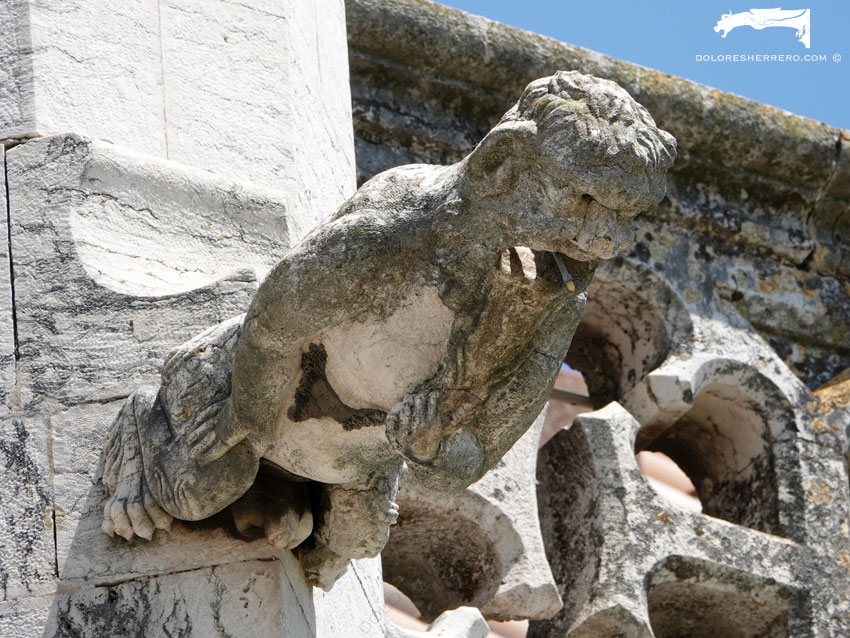
- Jerónimos Monastery in Lisbon (Portugal)
-
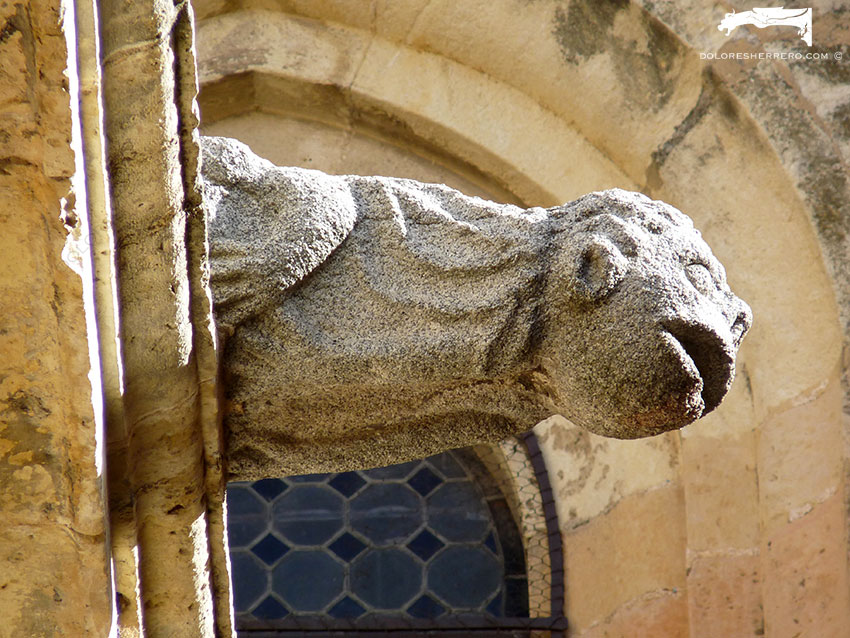
- Segovia Cathedral (Spain)
-
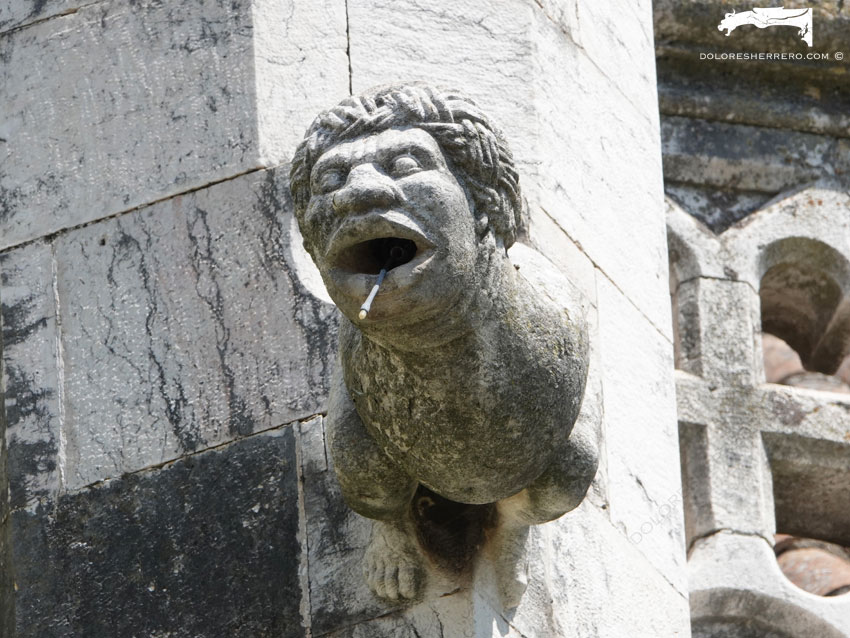
- Jerónimos Monastery in Lisbon (Portugal)
-
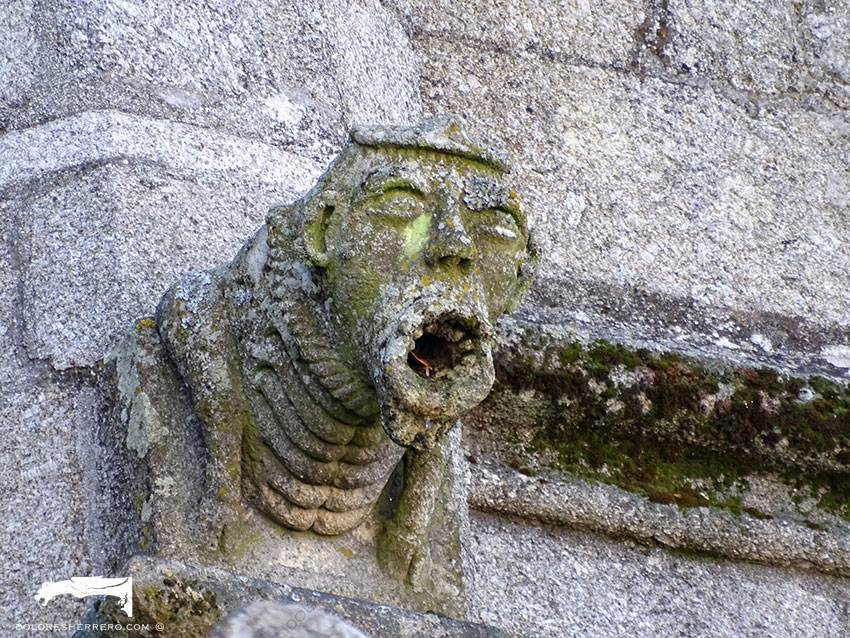
- Guarda Cathedral (Portugal)
-
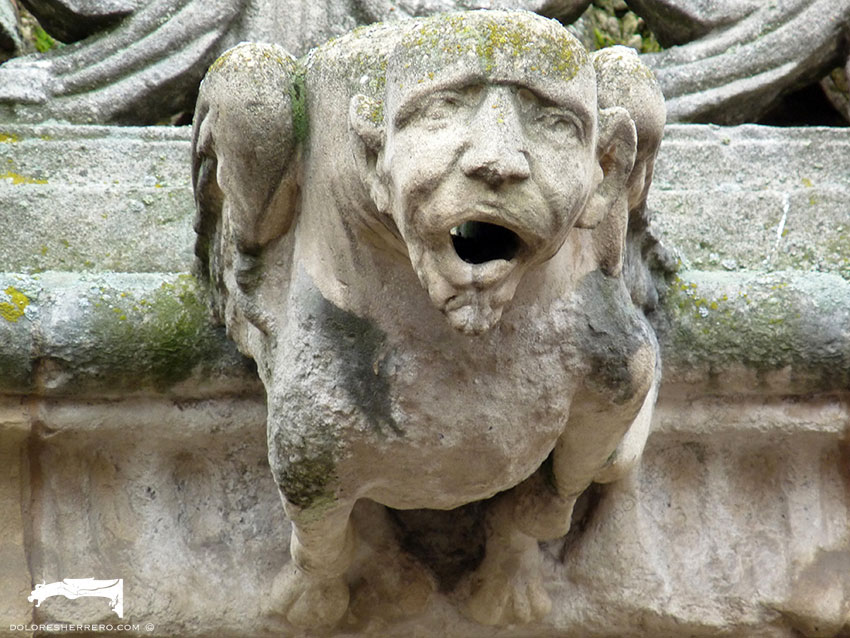
- Casa de las Conchas (Salamanca, Spain)
-
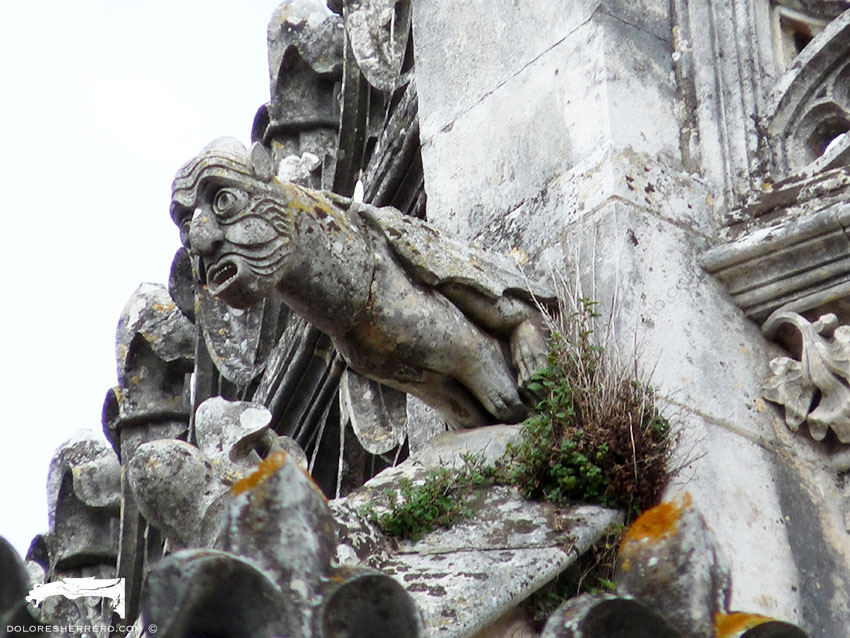
- Batalha Monastery (Portugal)
Bibliography
FERNÁNDEZ RUIZ, B., De Rabelais a Dalí. La imagen grotesca del cuerpo, Valencia, Universitat de València, 2004.
GOMBRICH, E. H., El sentido del orden. Estudio sobre la psicología de las artes decorativas, Madrid, Editorial Debate, S. A., 1999.
KAPPLER, C., Monstruos, demonios y maravillas a fines de la Edad Media, Madrid, Ediciones Akal, S. A., 1986.
KENAAN-KEDAR, N., Marginal Sculpture in Medieval France. Towards the deciphering of an enigmatic pictorial language, Hants (England) and Vermont (USA), Scolar Press and Ashgate Publishing Company, 1995.
KLEIN, F., Mitos, Leyendas y Fábulas, Alcalá la Real (Jaén), Alcalá Grupo Editorial y Distribuidor de Libros (Colección “El Transeunte” nº 5, coord.: R. Ceballos Atienza y F. Toro Ceballos), 2007.
MARIÑO FERRO, X. R., El simbolismo animal. Creencias y significados en la cultura occidental, Madrid, Ediciones Encuentro, 1996.
REBOLD BENTON, J., Holy Terrors. Gargoyles on medieval buildings, New York, Abbeville Press, 1997.
RESSOT, J. P., Apología de lo monstruoso. Una lectura de la obra de Ramón J. Sender, Huesca, Instituto de Estudios Altoaragonses (Diputación de Huesca), 2003.
WITTKOWER, R., La alegoría y la migración de los símbolos, Madrid, Ediciones Siruela, S. A. Biblioteca de Ensayo 53, 2006.
ZUMTHOR, P., La medida del mundo. Representación del espacio en la Edad Media, Madrid, Ediciones Cátedra, S. A., 1994.
This entry was originally published in October 2019 and updated in July 2026.
Doctor of Art History and researcher specializing in the study of gargoyles.
I am Dolores Herrero Ferrio, and my thesis, “An Approach to the Study of Gargoyles of Gothic Cathedrals in Castilla and León”, is dedicated to the study of these fascinating figures.
If you like gargoyles and art history, you will also enjoy my book, “The Gargoyle and Its Iconography,” a book I have written with great care for those interested in the world of gargoyles.
I have created my own Encyclopedia of Gargoyles, a Gargopedia to share with you, where you will discover all the secrets and wonders of these enigmatic sculptures.
I hope you enjoy this Gargopedia as much as I have enjoyed creating it, and remember that each gargoyle has a story to tell, and here you will discover them all.
 Gargoyles of El Burgo de Osma Cathedral (Spain): Four Exceptional Sculptures
 Demons and Monsters in the Gargoyles of the Cloister of León Cathedral
 Gargoyles with Anthropomorphic Figures: Part One
 Gargoyles and the Representation of the Devil: Part FourGárgolas y la representación del demonio: Parte IV