In today’s entry, we address the theme of the bicephalous figure in gargoyles. In order to enter the world of this monstrous creature, we shall begin by broadly explaining the significance of beings with two or more heads or with a multiplication of bodily members.
Gargoyles and the Multiplication of Features in the Monstrous Imagination
With regard to the multiplication of limbs or features in art, Gombrich states that such accumulation intensifies the terrifying character of the represented figures, as occurs with the seven-headed Hydra or Cerberus. This theory is related to the need to protect places and buildings, a concept that has existed since Antiquity, as demonstrated, for example, by the guardian bulls of Assyria (2150–612 BC), which flanked the entrances to cities and palaces and possessed five legs in order to appear complete from every angle. In general, these figures were intended to assume terrible and demonic forms so as to appear more dangerous and threatening, functioning as apotropaic images, an issue already discussed in relation to the symbolism of gargoyles.
The prophetic books constitute a fundamental source of monsters in the history of art, and within them we find abundant examples of beings with multiplied heads or limbs. In Daniel’s vision of the four beasts, these are described as a lion with eagle’s wings, a bear, a leopard with four wings and four heads, and a fourth beast with ten horns and another small horn that emerged, endowed with eyes and a mouth (Dan. 7:1–9). The most complete source, however, is found in the Book of Revelation: the red dragon with seven heads, seven diadems, and ten horns — Satan — against whom Michael and his angels will fight (Rev. 12:3–10 and 20:1–7); the beast rising from the sea, with ten horns bearing ten diadems and seven heads with blasphemous titles, resembling a leopard, with bear’s feet and lion’s jaws; and another beast, at the service of the former, with two lamb’s horns that spoke like a serpent (Rev. 13:1–13). Likewise, we find the vision of the four living creatures covered with eyes, the Tetramorph (Rev. 4:6–9).
In his Inferno, Dante mentions several mythological beings, such as Cerberus (Inferno, Canto VI, 21–24). His work is also an indispensable source for demonic iconography: “With open wings a dragon lay […] leaving scorched whoever stood before it” (Inferno, Canto XXV, 21–24); or “… and a serpent with six feet leaps upon one…” (Inferno, Canto XXV, 48–51). Particularly magnificent is the description of Lucifer: “My mind was seized with wonder there, / for he had three faces upon his head. / One in front, and that was red; / the other two were joined to this one / above each shoulder / and met together at the crest […] Beneath each face spread two great wings […] bat-like they were, and lacked all feathers, / yet they flapped continuously […] tears flowed from six eyes / mingling with bloody froth. / With each mouth he crushed a sinner, / grinding them like flax, / punishing all three alike” (Inferno, Canto XXXIV, 36–57). This association between the multiplication of features and limbs and the demonic realm is also linked to the figure of the gastrocephalus, which we discussed in a previous entry.
In his research, Baltrušaitis notes that the sources that have continually nourished fantasy, legends, and monsters derive from Classical Antiquity, Islam, and the Far East, such as the multi-headed Sumerian genies or the Hittite demon of Tell Halaf with two lion jaws, originating from Phoenicia, India, and Egypt. This suggests that, throughout history in the West, such images were repeatedly reinterpreted and adapted. This idea can be observed, for example, in certain monsters such as the multi-armed figures of Eastern divinities, as well as in the accounts of Saint Isidore concerning men with numerous hands, or Marco Polo’s descriptions of the idols of the island of Zipangri with multiple faces and hands.
The image of the bicephalous figure may be linked to the god Janus Bifrons, the divinity who simultaneously observes East and West. Some identify him with the sun, and he is represented with two faces as lord of both gates of heaven because he opens and closes the day. He is commonly depicted with a key in one hand and a staff in the other, indicating that he presides over and guards doors and pathways. He possesses two faces because he exercises dominion over sea, sky, and earth. Everything opens and closes according to his will, and he alone turns the world upon its poles.
Among bicephalous beings, the double-headed eagle stands out in particular, a monstrous and chimerical figure frequently represented in gargoyles. Monreal Casamayor notes that antecedents of the two-headed eagle already existed among the peoples of Asia Minor, such as the Hittites, as early as 2000 BC. The Hittites regarded this bird as a symbol of sovereignty, and the double-headed eagle became a figure widely employed in the decorative arts. According to this author, it was probably introduced into Europe through the Crusaders, who adopted it from the Muslims, among whom it was already known, before later passing into Christian heraldry with its distinguished and stylised design. In heraldry, the two-headed eagle is used as the emblem of certain empires: the imperial eagle, symbol of royalty.
Gargoyles with Bicephalous Figures in Architecture
The following examples present gargoyles depicting bicephalous figures. In Spain, remarkable examples survive that are truly worth contemplating.
-
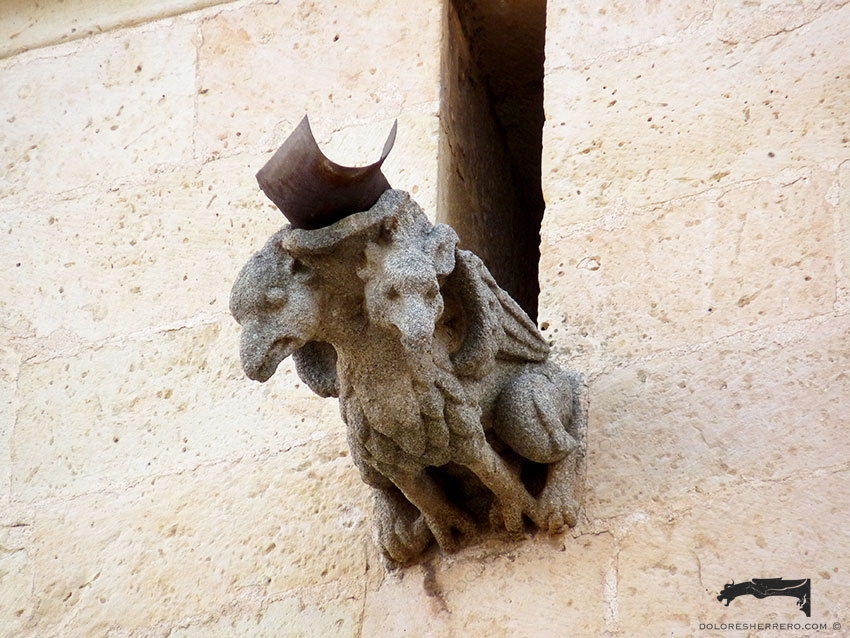
- Segovia Cathedral (Spain)
-
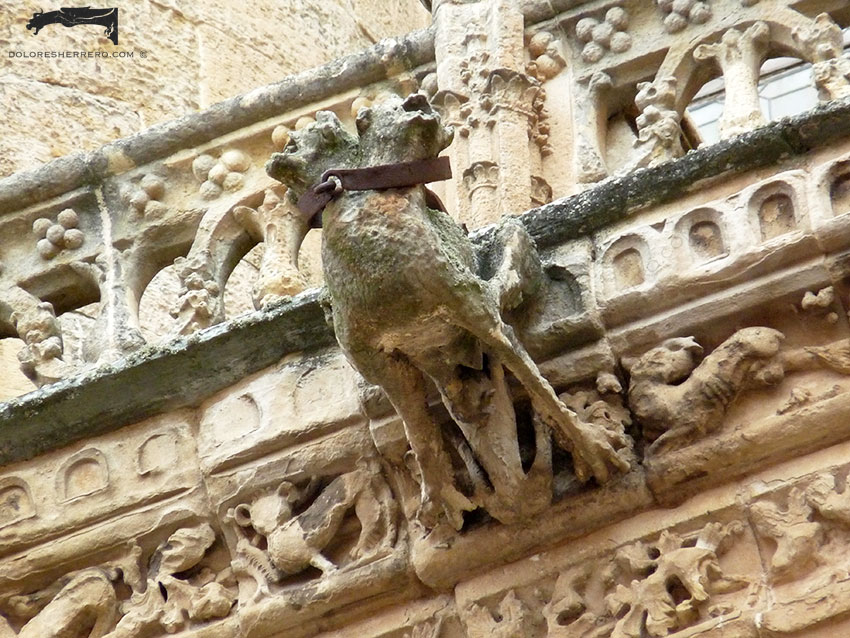
- New Cathedral of Salamanca (Spain)
-
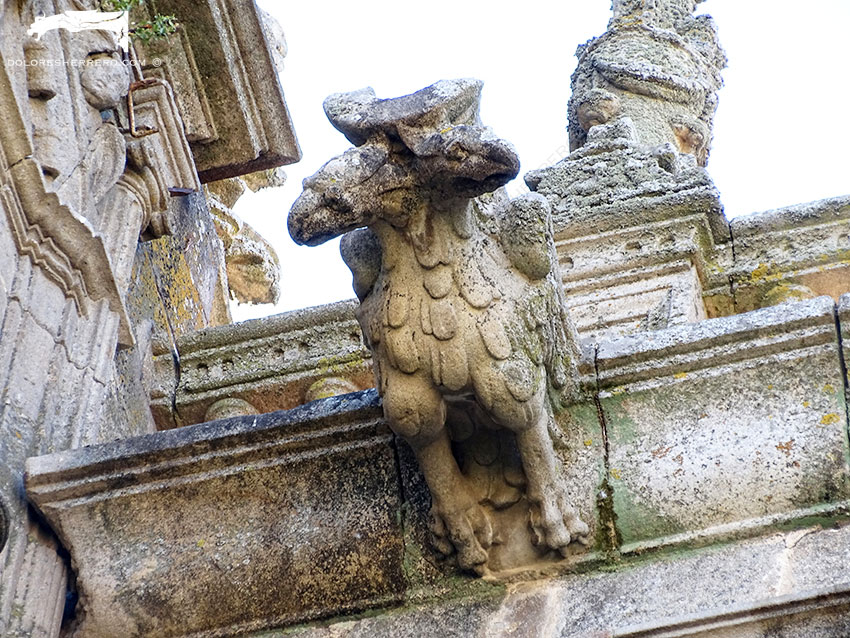
- Plasencia Cathedral (Spain)
-
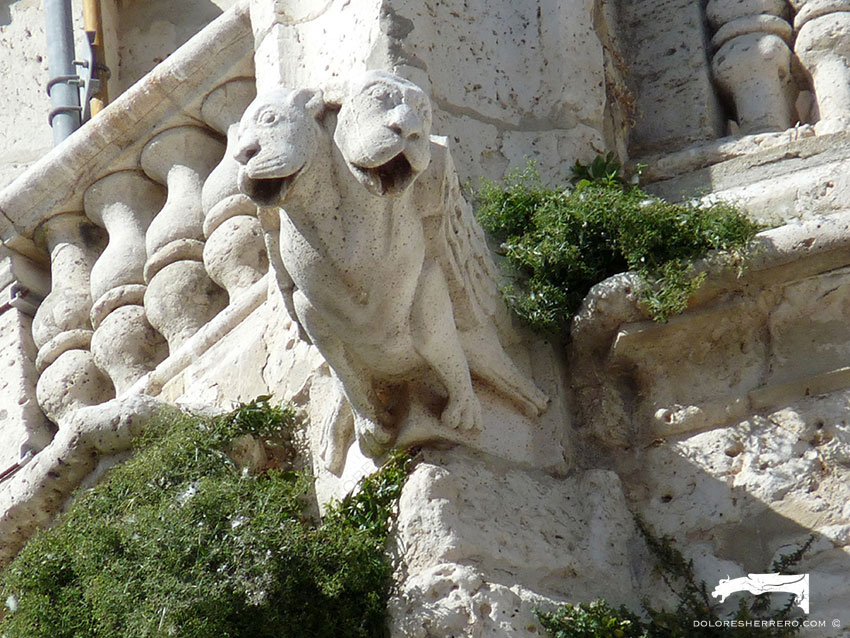
- Palencia Cathedral (Spain)
-
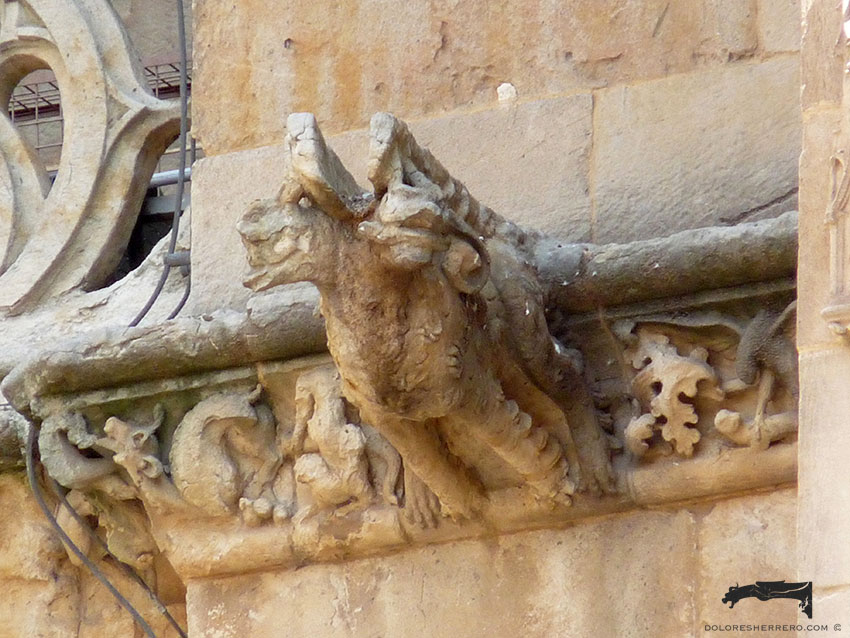
- New Cathedral of Salamanca (Spain)
-
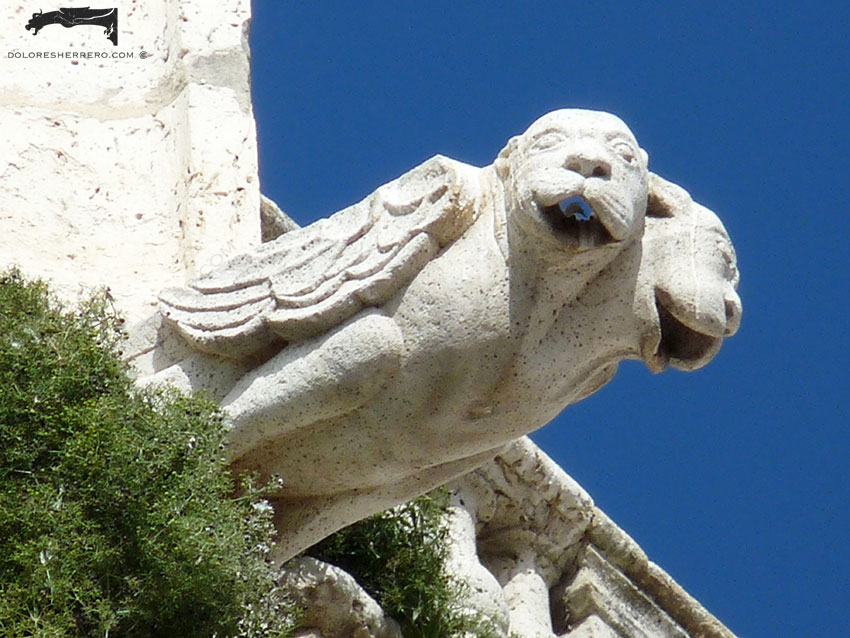
- Palencia Cathedral (Spain)
-
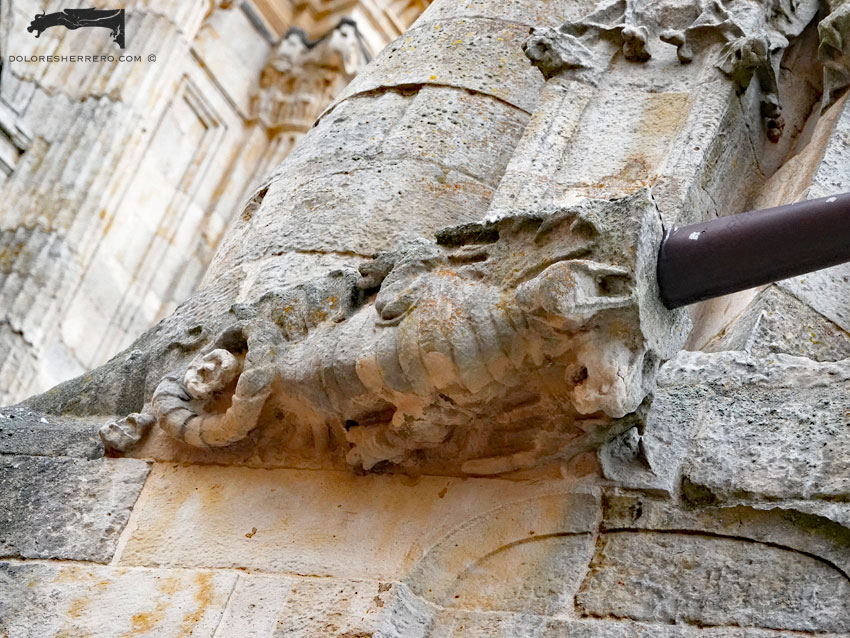
- New Cathedral of Salamanca (Spain)
-
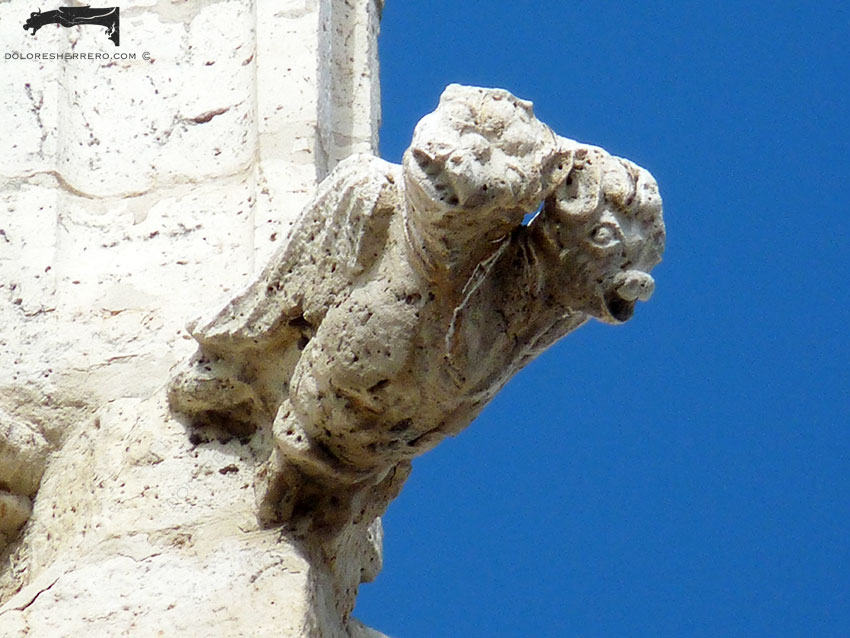
- Palencia Cathedral (Spain)
-
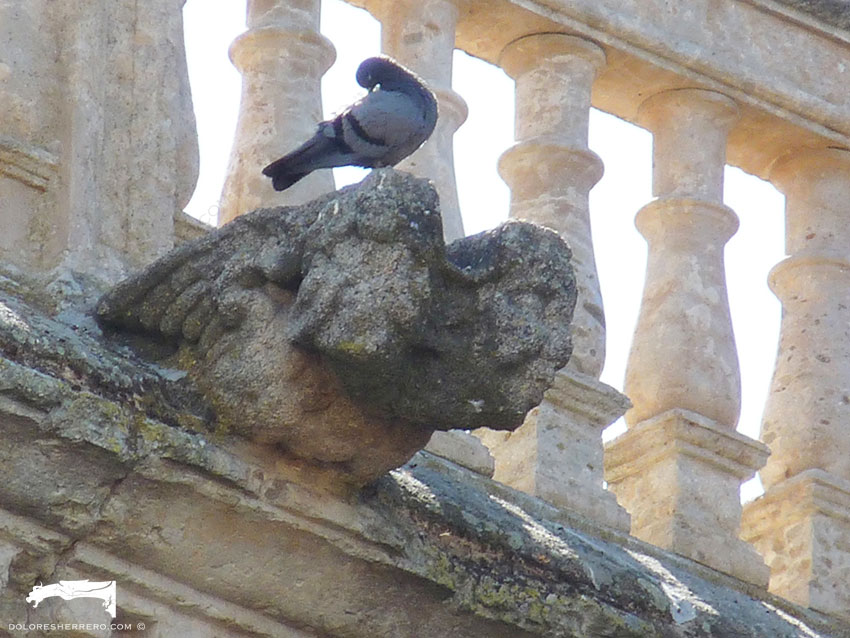
- Ciudad Rodrigo Cathedral (Spain)
-
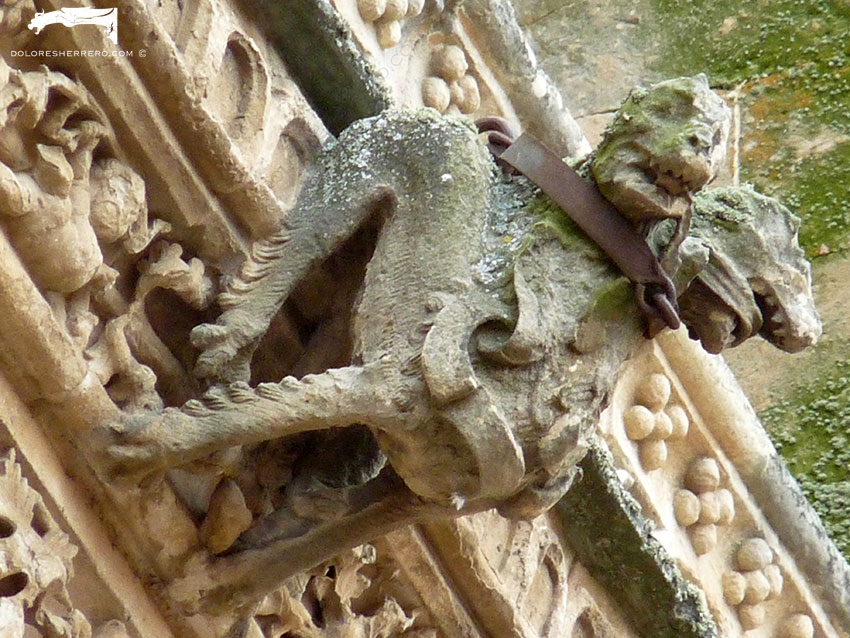
- New Cathedral of Salamanca (Spain)
-
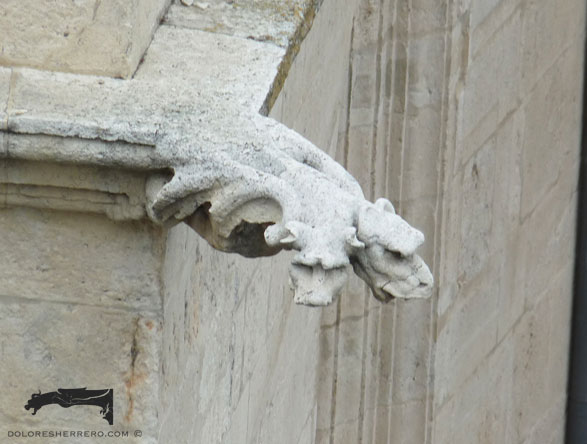
- Burgos Cathedral (Spain)
-
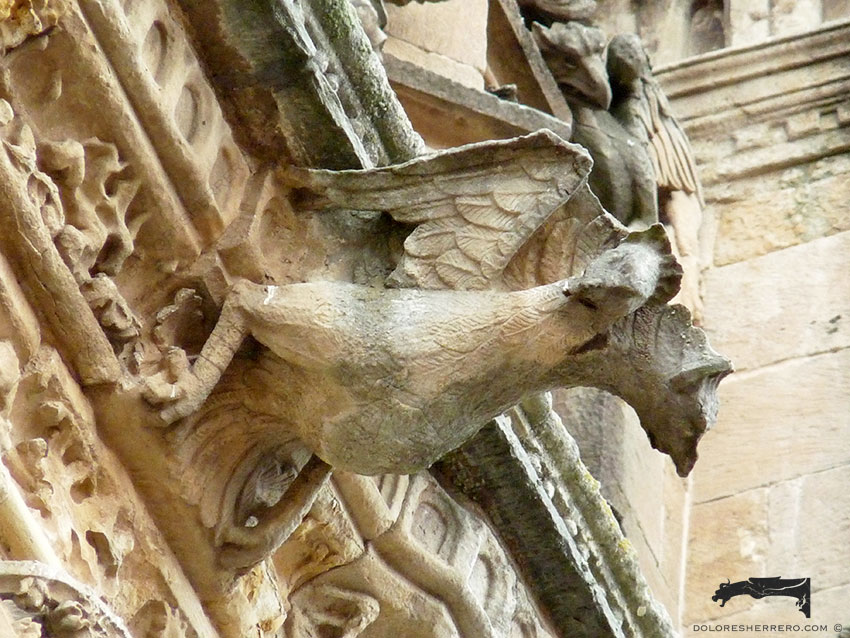
- New Cathedral of Salamanca (Spain)
-
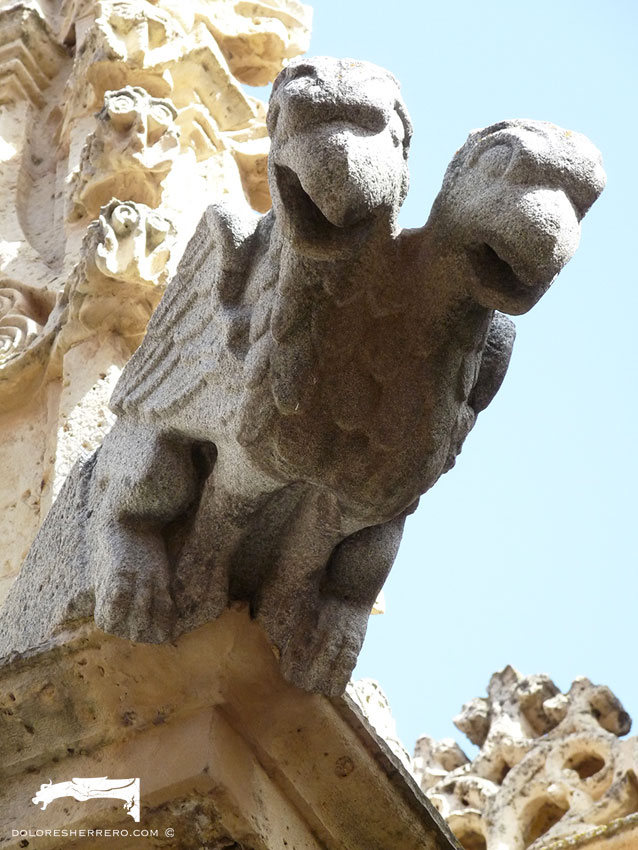
- Segovia Cathedral (Spain)
-
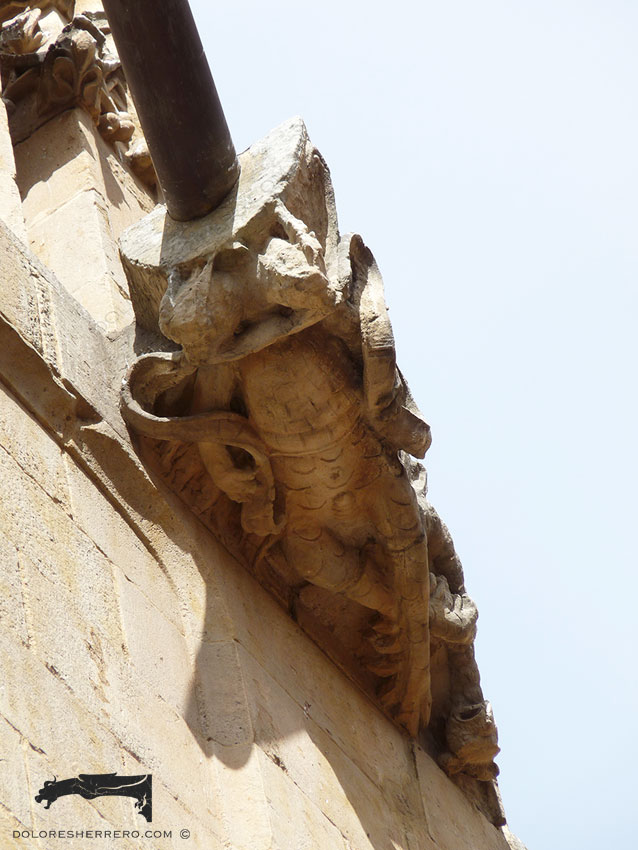
- New Cathedral of Salamanca (Spain)
-
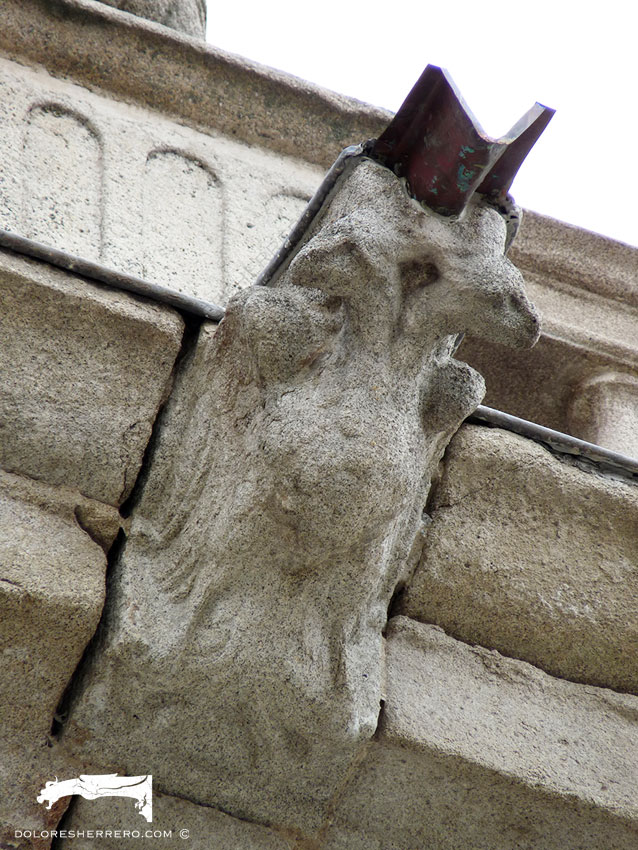
- Ávila Cathedral (Spain)
-
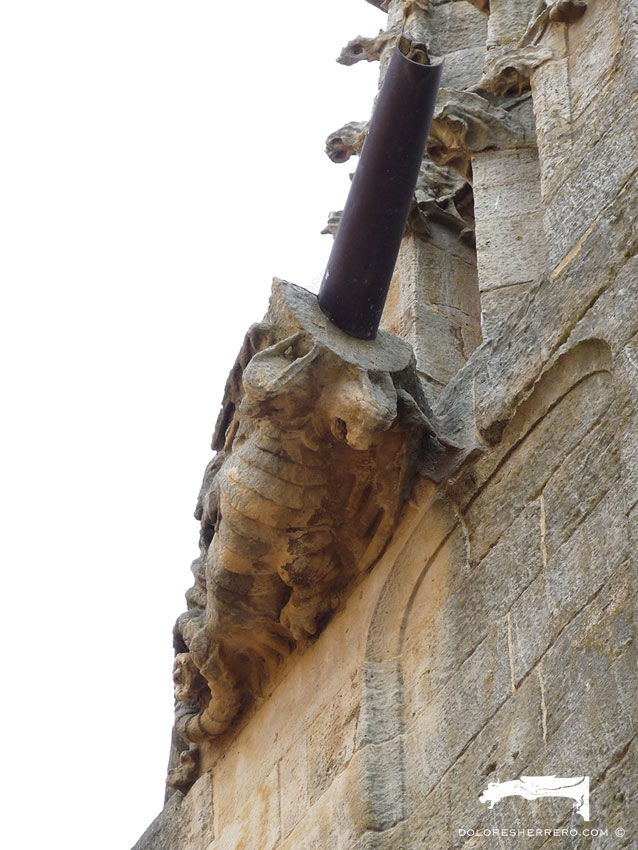
- New Cathedral of Salamanca (Spain)
Bibliography
ALIGHIERI, D., Comedia. Infierno, traducción, prólogo y notas de A. Crespo, Barcelona, Editorial Seix Barral, S. A. Biblioteca Formentor, 2008.
BALTRUŠAITIS, J., La Edad Media fantástica. Antigüedades y exotismos en el arte gótico, Madrid, Ediciones Cátedra, S. A., 1987.
GOMBRICH, E. H., El sentido del orden. Estudio sobre la psicología de las artes decorativas, Madrid, Editorial Debate, S. A., 1999.
MONREAL CASAMAYOR, M., “De sermone heráldico II: el águila”, Emblemata, nº 12, 2006, pp. 289-329.
NOËL, J. F. M., Diccionario de Mitología Universal, Vol. II, Barcelona, Edicomunicación, S. A., 1991.
This entry was originally published in July 2019 and updated in May 2026.
Doctor of Art History and researcher specializing in the study of gargoyles.
I am Dolores Herrero Ferrio, and my thesis, “An Approach to the Study of Gargoyles of Gothic Cathedrals in Castilla and León”, is dedicated to the study of these fascinating figures.
If you like gargoyles and art history, you will also enjoy my book, “The Gargoyle and Its Iconography,” a book I have written with great care for those interested in the world of gargoyles.
I have created my own Encyclopedia of Gargoyles, a Gargopedia to share with you, where you will discover all the secrets and wonders of these enigmatic sculptures.
I hope you enjoy this Gargopedia as much as I have enjoyed creating it, and remember that each gargoyle has a story to tell, and here you will discover them all.
 Gargoyles on the Eastern Side of the New Cathedral of Salamanca (Spain): An Unusual and Exquisite Ensemble
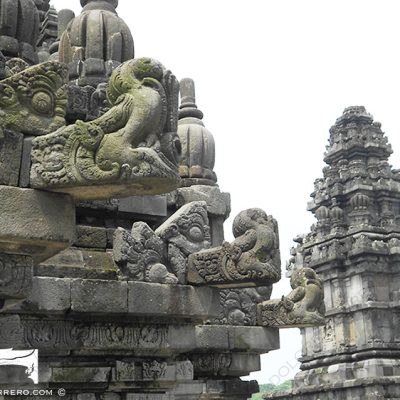 Gargoyles of Indonesia: Mythical Faces in Traditional Asian Architecture
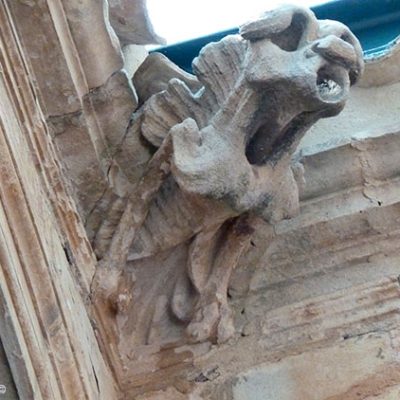 Gargoyles on the University of El Burgo de Osma (Soria, Spain): Tradition and Art in Stone
 Gargoyles of the Burghers’ Lodge in Bruges (Belgium)
 Gargoyles Shaped Like Animal Monsters