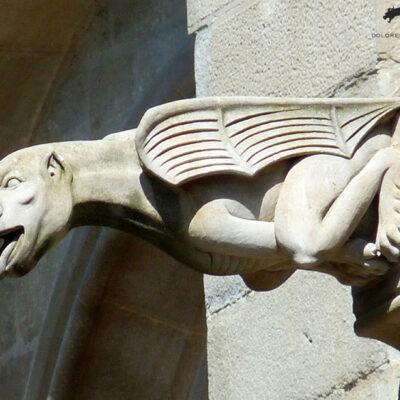
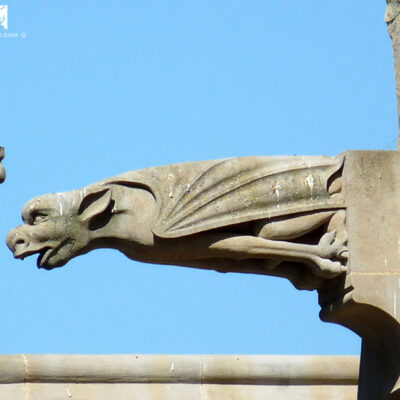
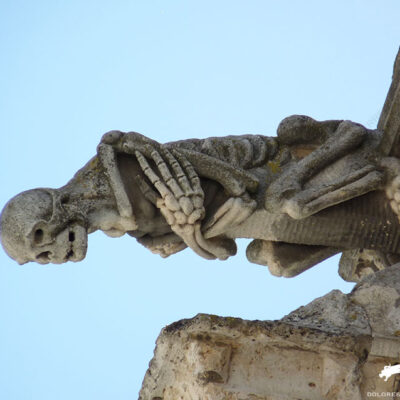
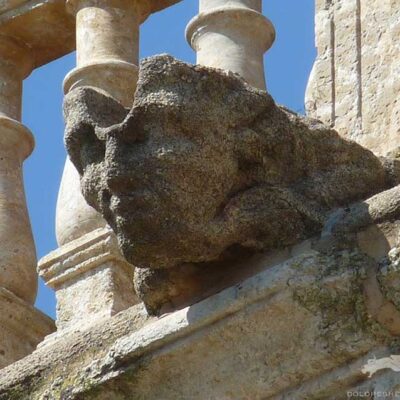
Generally, in gargoyles, water discharge is channelled through the mouths of the beings and creatures depicted in them. This contributes to their frequent expressiveness, with widely open mouths and, at times, exaggerated gestures conveying laughter, cries or pain.
Doccioni: Bearers of Elements and Conductors of Water
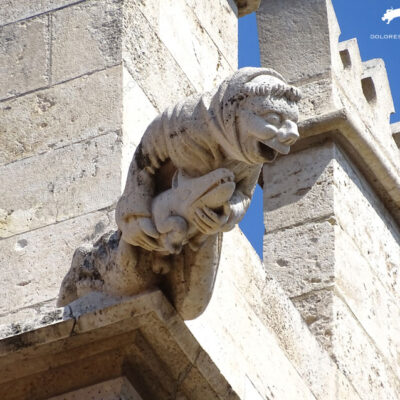
However, this is not always the case. Occasionally, gargoyles are found in which the water is discharged through an object or a secondary figure accompanying the main figure. This is the case with doccioni, human figures—usually standing and shown full-length—that carry either a vessel on their shoulders or an animal from whose mouth the jet of water emerges. By depicting actions that involve bodily movement (pouring water or bearing an animal), these figures display notable sculptural quality and artistic refinement.
-
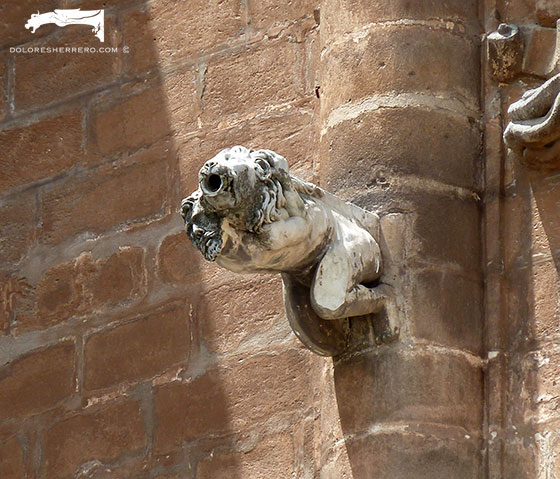
- Sevilla Cathedral (Spain)
-
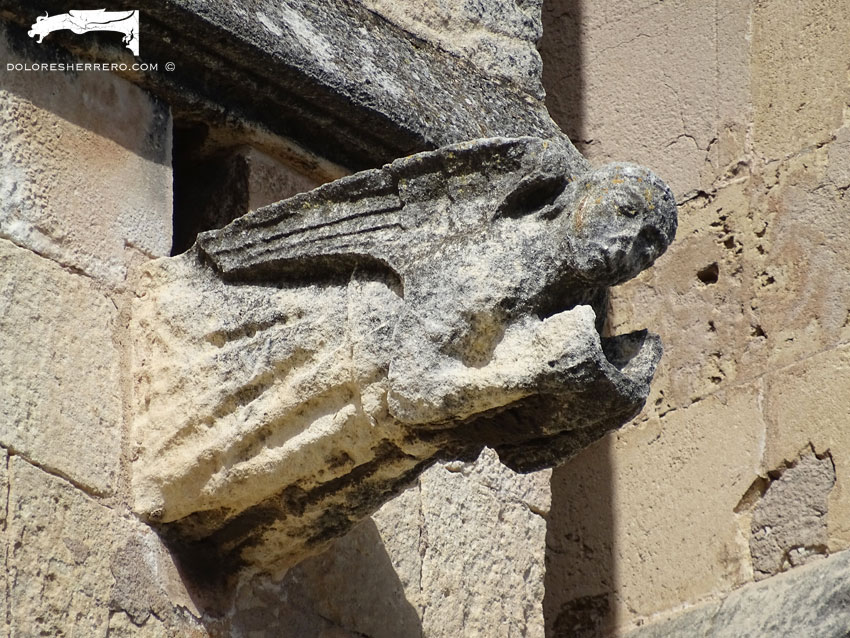
- Palma de Mallorca Cathedral (Spain)
-
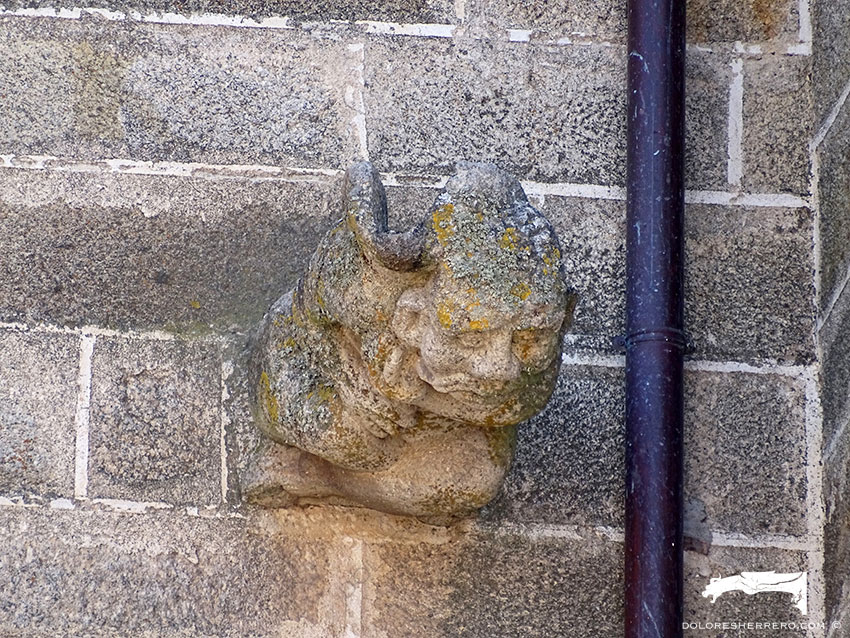
- Coria Cathedral (Spain)
-
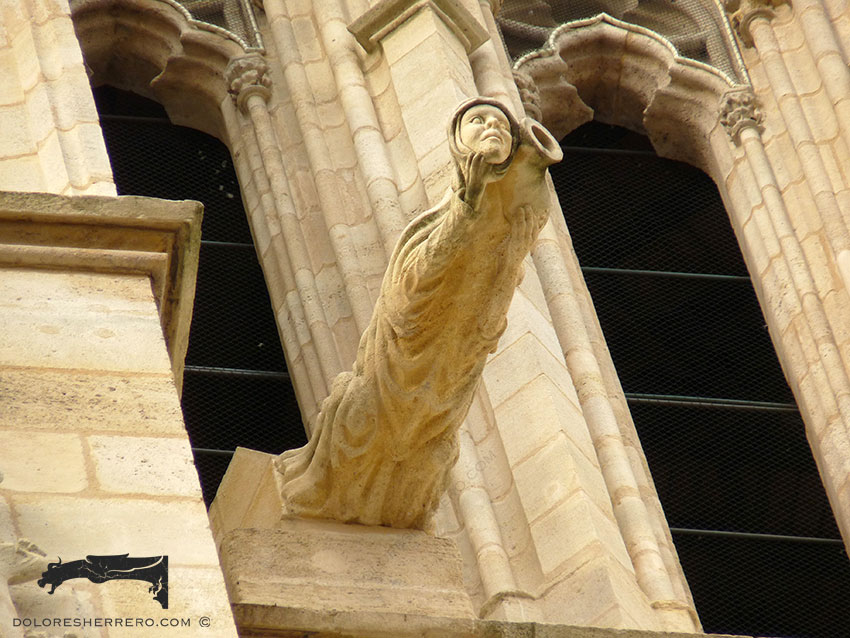
- Bordeaux Cathedral (France)
-
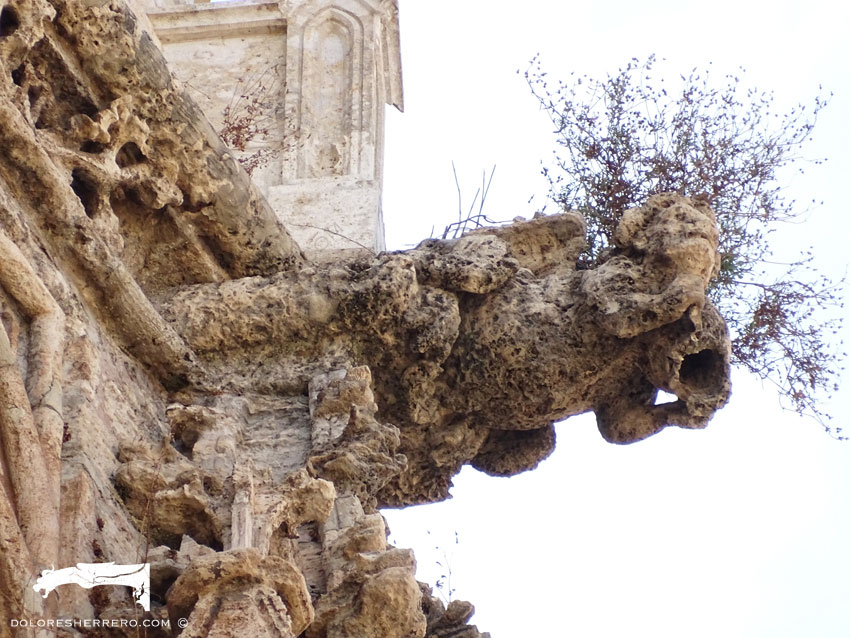
- Valencia Cathedral (Spain)
-
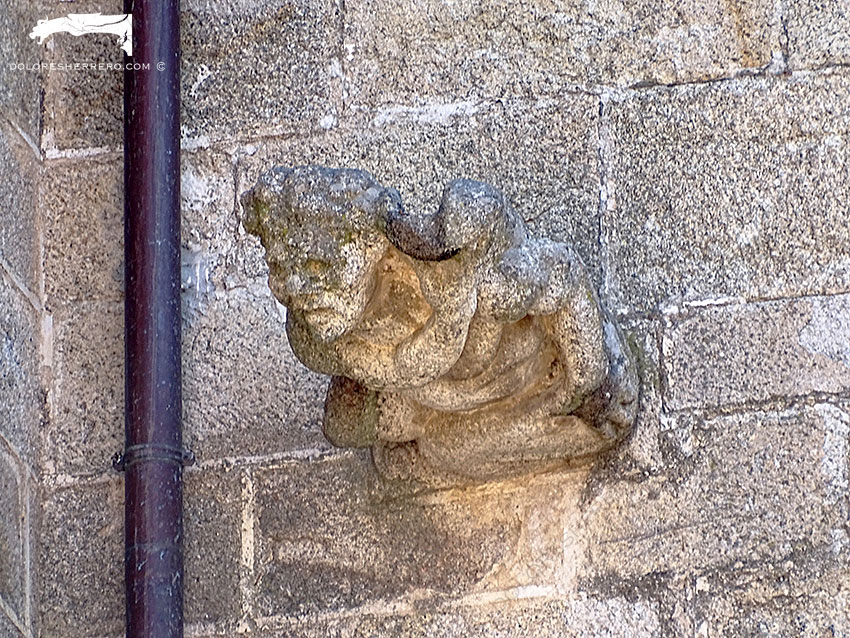
- Coria Cathedral (Spain)
-

- Jerónimos Monastery in Lisbon (Portugal)
-
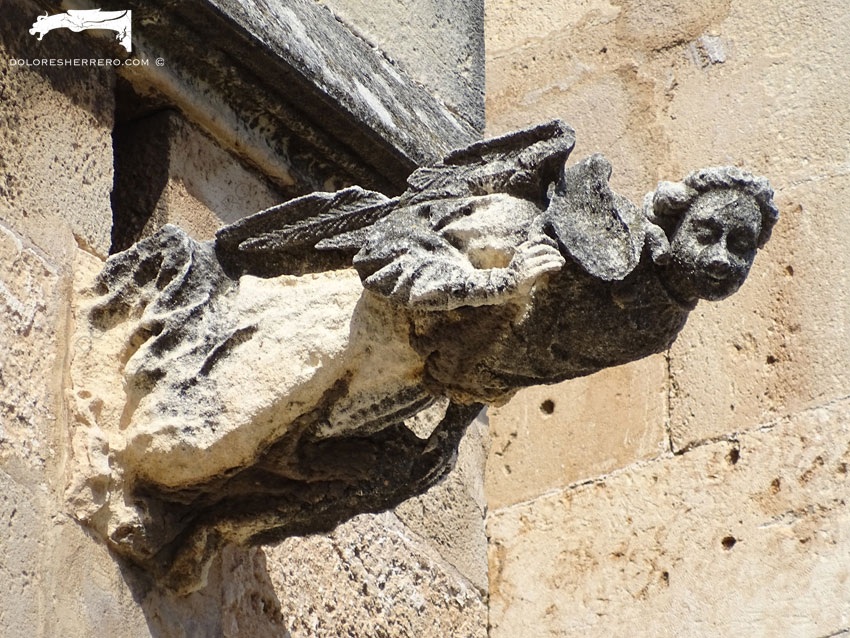
- Palma de Mallorca Cathedral (Spain)
-
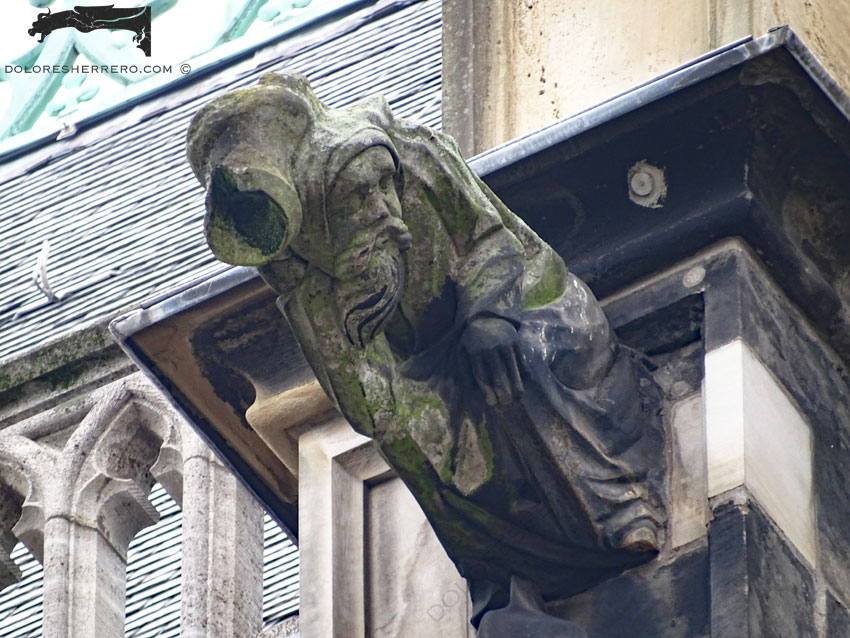
- Aachen Cathedral (Germany)
-
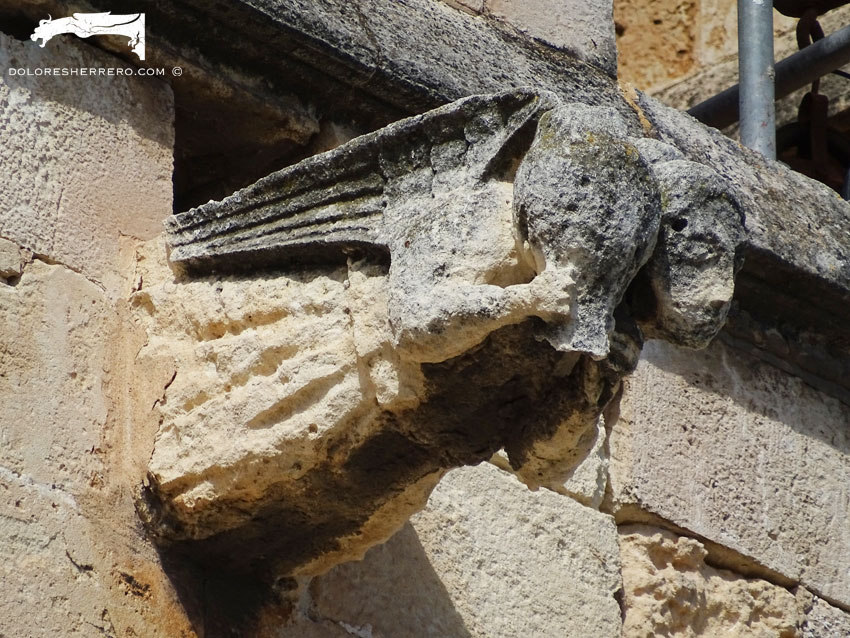
- Palma de Mallorca Cathedral (Spain)
-
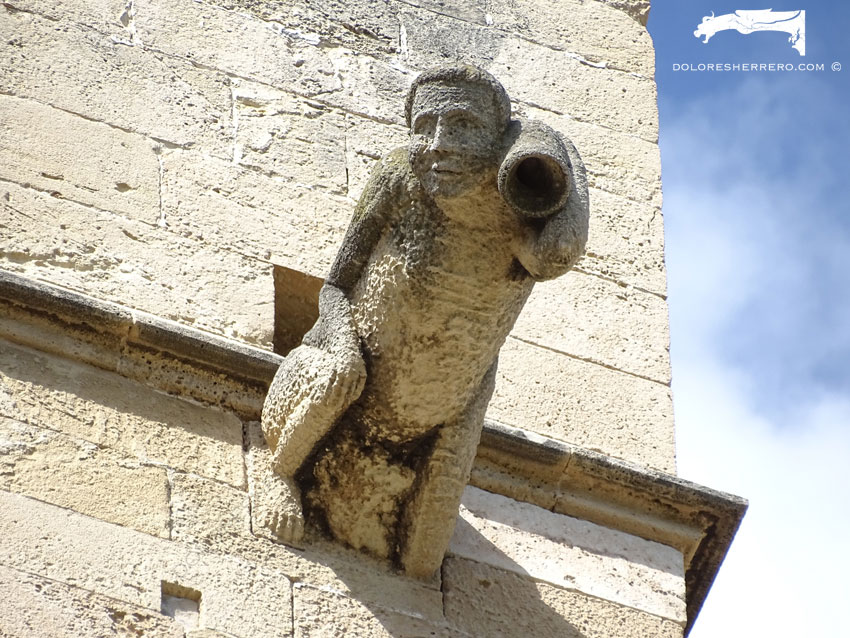
- Palma de Mallorca Cathedral (Spain)
-
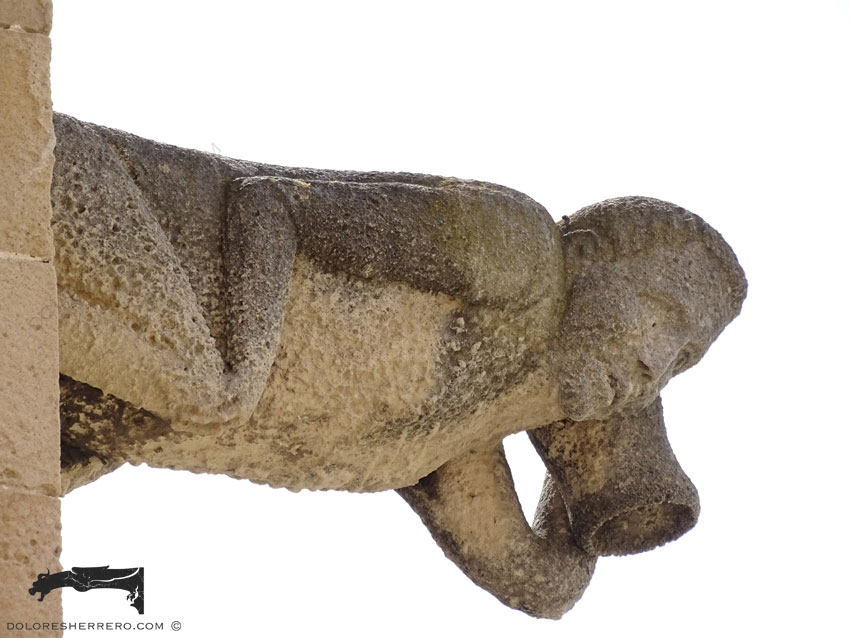
- Palma de Mallorca Cathedral (Spain)
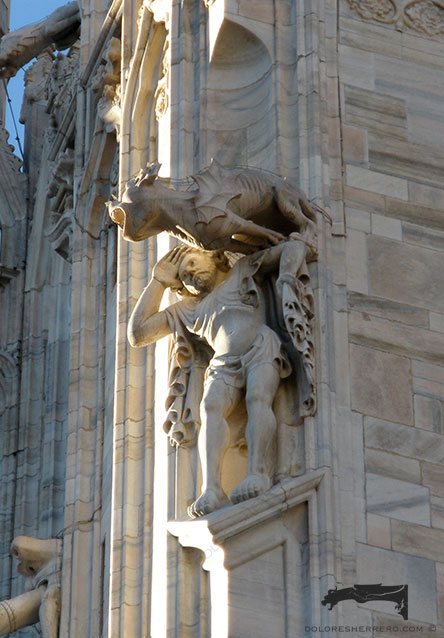
Milan Cathedral (Italy). Photograph: Lola Custodio
The Discharge of Water through the Anus in Gargoyles
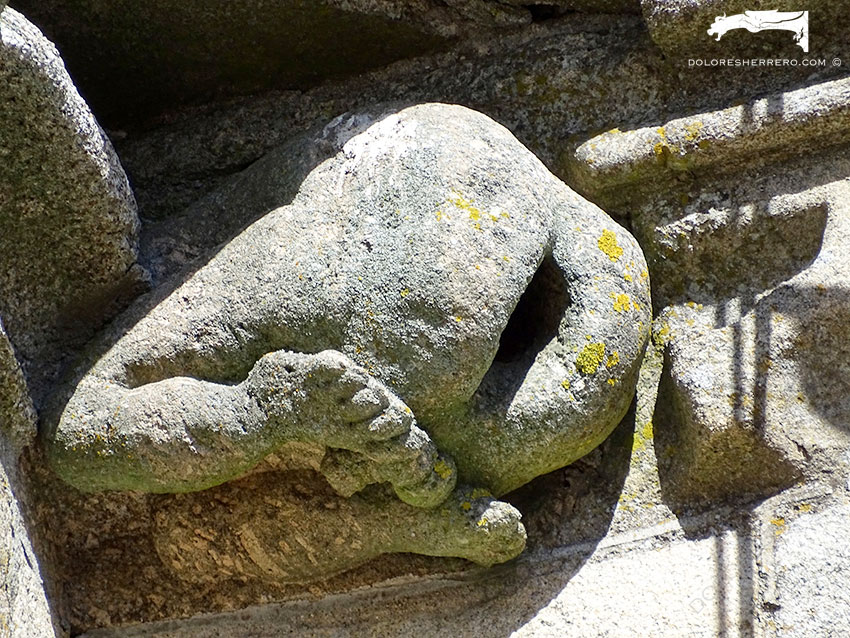
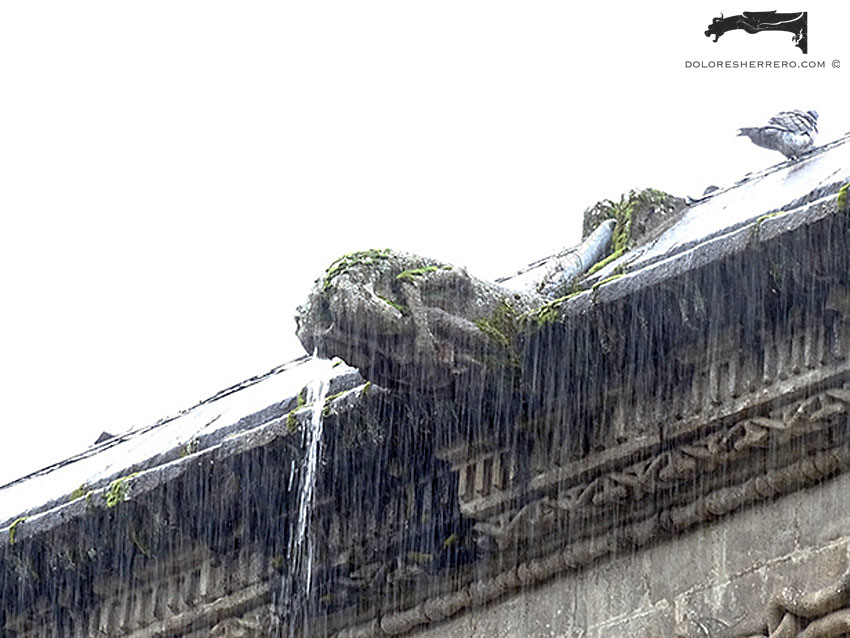
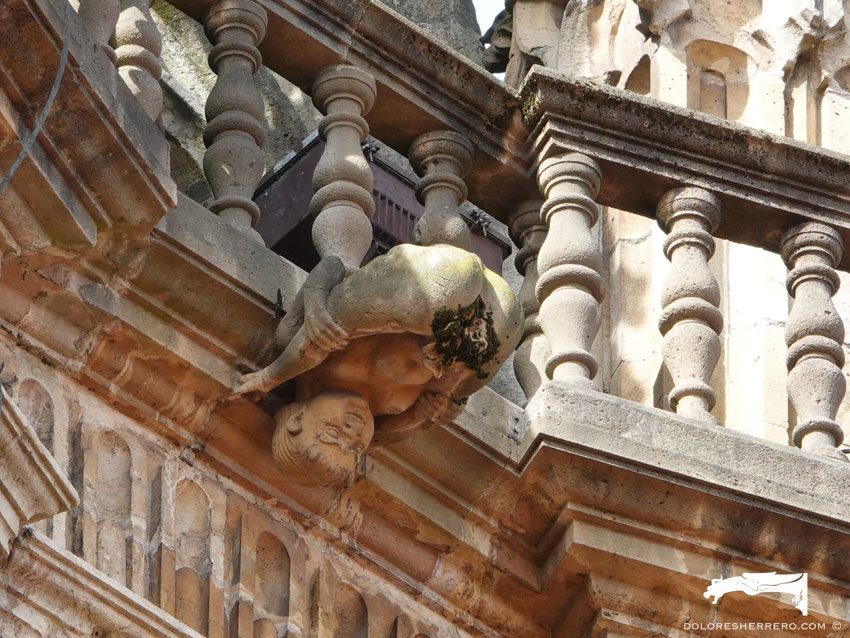
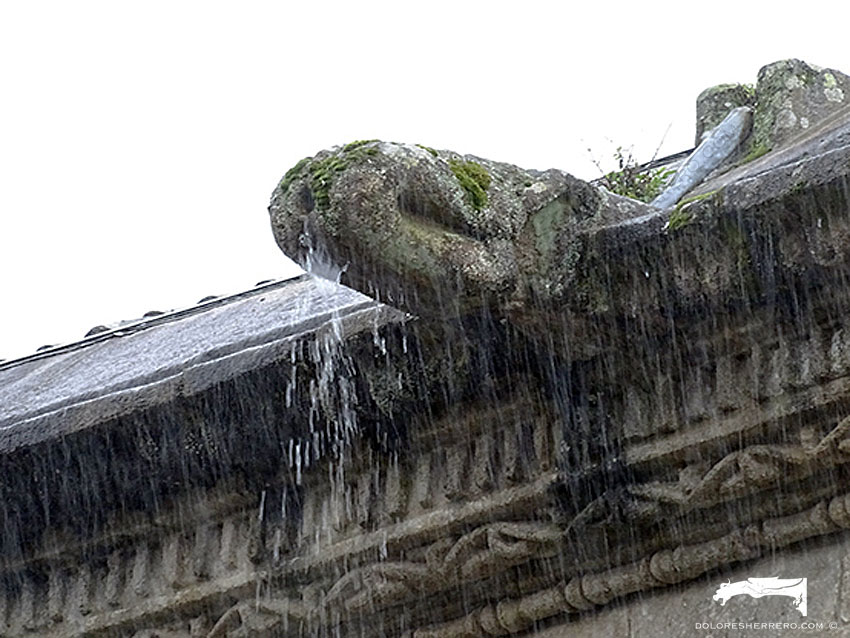
On the other hand, in some cases the drainage is located in other parts of the body. This refers to those gargoyles that depict figures exposing the anus, through which water is expelled, in a clear allusion to the act of defecation. There are various interpretations of their symbolism. Rebold Benton questions whether this represents an attempt to ward off the devil from the church or, alternatively, whether it reflects a form of medieval “mischief”.
In his research on marginal art, Michael Camille argues that, of all aspects of medieval culture, the diffusion of scatology—with its constant play with excrement in texts and images—is perhaps one of the most difficult for us to understand today. The margins of manuscripts are indeed filled with such representations. “What are we to make of a knight defecating in a squatting position, whose excrement is ceremoniously carried to a lady in an elegant French Book of Hours?”, the author asks.
The first idea that must be dismissed is that this practice reflects an innocent anal obsession, similar to that observed in childhood. More importantly, however, we must abandon modern and post-Freudian conceptions that associate excrement with decay, infection or death. Medieval mentality did not regard faecal matter as dirt or as something out of place, in Freudian terms. Excrement had its own place within the order of things: it was not yet something hidden, but a reality present in everyday life, flowing through the streets and whose smell was omnipresent; it formed part of the cycle of life, death and rebirth, as Camille notes.
Kenaan-Kedar states that the bodily postures of marginal figures are even more daring than their expressions, particularly in those in which men and women expose their buttocks to the viewer—a gesture made even more provocative when they appear naked and display their genitals. Bare buttocks broke the conventions of official art, disregarding traditional modes of representing medieval figures in order to achieve a deeper reality through the deliberate distortion and simplification of form. Although this gesture must also have carried allegorical and metaphorical meaning, its impact was immediate and could hardly be misunderstood. The dialogue between these figures and the official canon may be compared to the confrontation between two texts: an interaction between the canonical and the popular.
Villaseñor Sebastián notes that the gesture of separating the buttocks with the hands to expose the anus has long been used as a means of warding off the devil. The same author recounts the case of Gerber Kart, who was imprisoned in 1436 in Constance for publicly exposing his buttocks, a gesture considered shameful. This act may also be interpreted as a sign of blasphemy or insult. According to this author, another association linked to the anus in medieval culture is homosexuality, which was then regarded as the sin of sodomy against nature. Historical documentation indicates that both in the Fuero Real and in Las Partidas of Alfonso X, as well as in legislation enacted by the Catholic Monarchs in 1497, sodomy was punished with death. Some representations of Hell depict the avaricious man with a purse hanging from his neck, penetrated anally by the tail of a demon, thereby establishing a symbolic connection between Hell and anal penetration. As can be seen, all these interpretations may be extended to gargoyles as manifestations of marginal art.
Some of these figures adopt clearly contortionist postures. Their meaning has already been addressed in a previous entry. It is worth recalling, however, that Le Goff points out that contortionists, together with prostitutes, constituted archetypes of a gestural practice associated with demonic possession, and that during the thirteenth century they were considered outcasts.
-
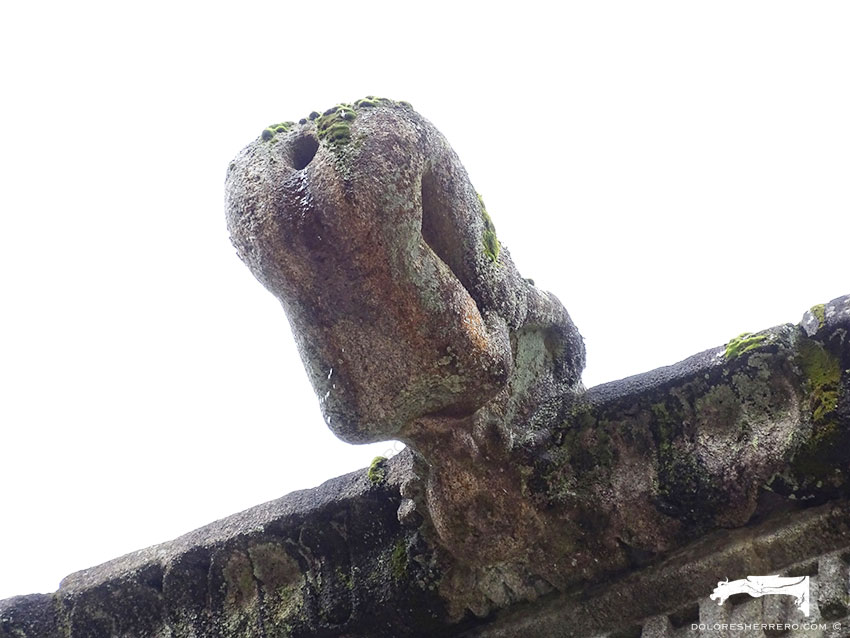
- Royal Hospital in Santiago de Compostela (Spain)
-
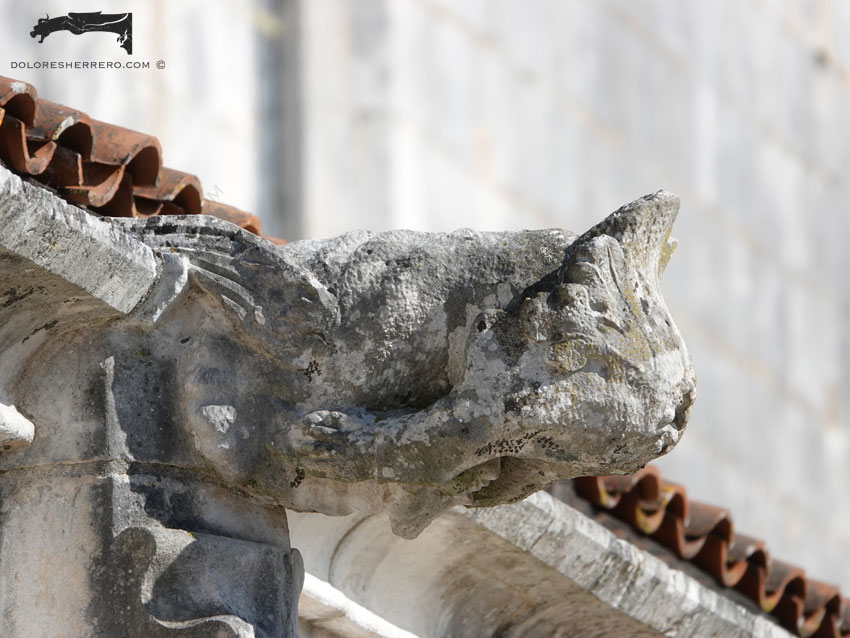
- Alcobaça Monastery (Portugal)
-
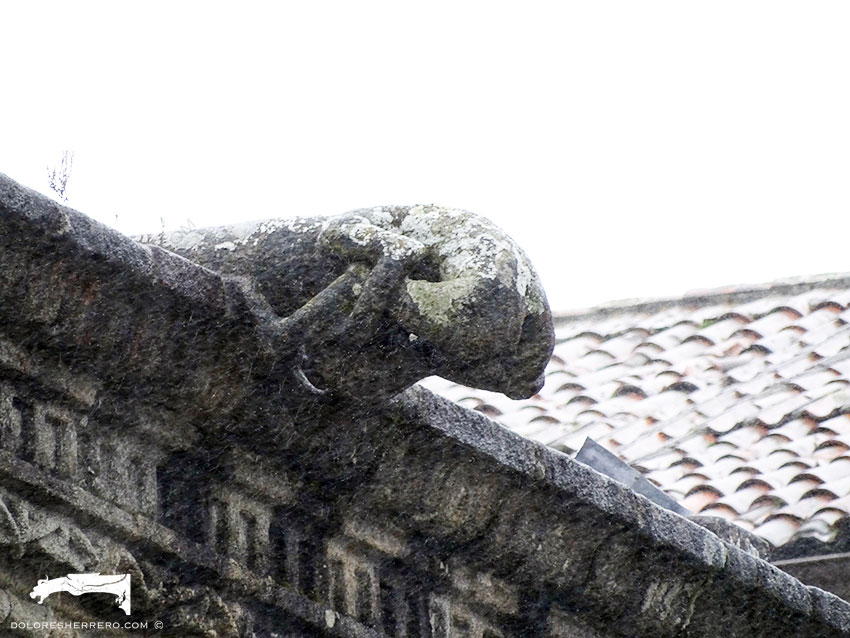
- Royal Hospital in Santiago de Compostela (Spain)
-
- Guarda Cathedral (Portugal)
-
- Royal Hospital in Santiago de Compostela (Spain)
-
- Oviedo Cathedral (Spain)
-
- Royal Hospital in Santiago de Compostela (Spain)
-
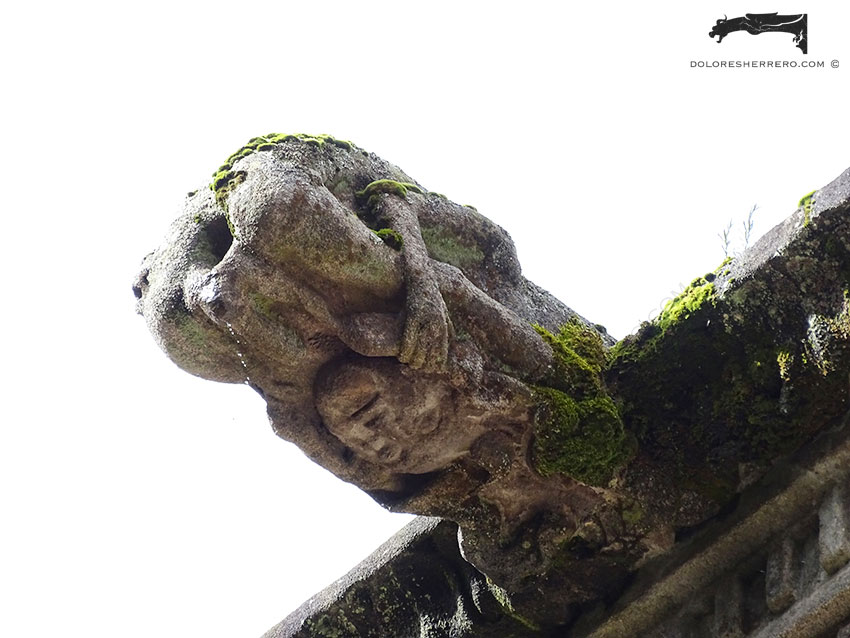
- Royal Hospital in Santiago de Compostela (Spain)
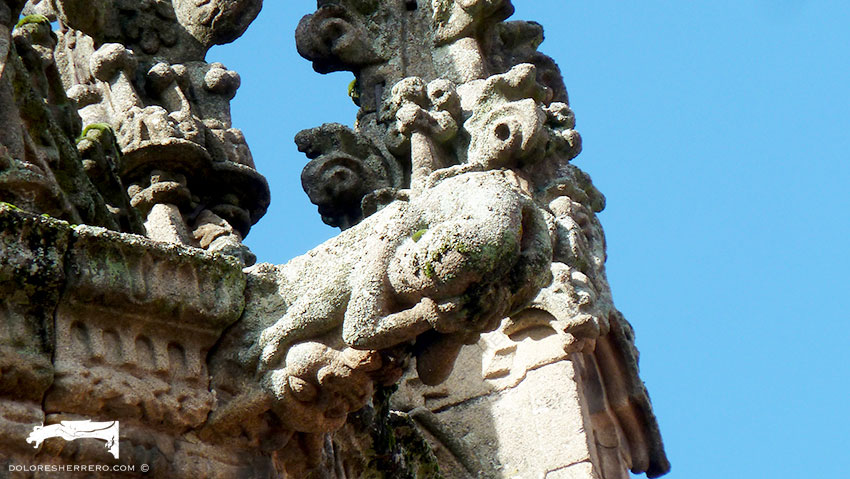
Braga Cathedral (Portugal)
Gargoyles that are striking and, for many, even grotesque, endowed with a symbolism and a tradition that today may shock and even provoke rejection. Nevertheless, they form part of our history, linked to a specific period—the Middle Ages—with its own traditions, ways of life, morality and religiosity.
We must not forget that, as Fossier points out, the Middle Ages were a period of extremes. And indeed they were: a time in which what was positive was expressed with notable intensity (goodness, mysticism, devotion), while what was negative reached equally pronounced levels (suffering, cruelty, obscenity).
For some, it was a barbaric and terrible age; for others, profoundly suggestive. As Jacques Le Goff stated, “the beautiful Middle Ages did indeed exist”. In this sense, the flourishing Europe of the twelfth and thirteenth centuries cannot be overlooked.
A period that bequeathed us an extraordinary historical and artistic heritage, of which gargoyles constitute a particularly significant example.
Bibliography
CAMILLE, M., Image on the Edge. The Margins of Medieval Art, London, Reaktion Books Ltd., 2008.
FOSSIER, R., Gente de la Edad Media, Madrid, Santillana Ediciones Generales, S. L., 2007.
KENAAN-KEDAR, N., Marginal Sculpture in Medieval France. Towards the deciphering of an enigmatic pictorial language, Hants (England) and Vermont (USA), Scolar Press and Ashgate Publishing Company, 1995.
LE GOFF, J., Una larga Edad Media, Barcelona, Ediciones Paidós Ibérica, S. A., 2008.
LE GOFF, J. y TRUONG, N., Una historia del cuerpo en la Edad Media, Barcelona, Ediciones Paidós Ibérica, S. A., 2005.
REBOLD BENTON, J., Holy Terrors. Gargoyles on medieval buildings, New York, Abbeville Press, 1997.
VILLASEÑOR SEBASTIÁN, F., “Obscenidad en el margen” en I. Monteira Arias, A. B. Muñoz Martínez y F. Villaseñor Sebastián (editores), Relegados al margen. Marginalidad y espacios marginales en la cultura medieval, Madrid, CSIC (Consejo Superior de Investigaciones Científicas). Grupo de Investigación de Historia del Arte. Imagen y Patrimonio Artístico. Instituto de Historia, 2009, pp. 101-113; Iconografía marginal en Castilla. 1454-1492, Madrid, CSIC (Consejo Superior de Investigaciones Científicas). Grupo de Investigación de Historia del Arte. Imagen y Patrimonio Artístico. Instituto de Historia, 2009.
This entry was originally published in May 2019 and updated in March 2026.
Doctor of Art History and researcher specializing in the study of gargoyles.
I am Dolores Herrero Ferrio, and my thesis, “An Approach to the Study of Gargoyles of Gothic Cathedrals in Castilla and León”, is dedicated to the study of these fascinating figures.
If you like gargoyles and art history, you will also enjoy my book, “The Gargoyle and Its Iconography,” a book I have written with great care for those interested in the world of gargoyles.
I have created my own Encyclopedia of Gargoyles, a Gargopedia to share with you, where you will discover all the secrets and wonders of these enigmatic sculptures.
I hope you enjoy this Gargopedia as much as I have enjoyed creating it, and remember that each gargoyle has a story to tell, and here you will discover them all.