In this entry, we travel to Andalusia to examine one of the most historically significant towns in the province of Huelva: Aroche.
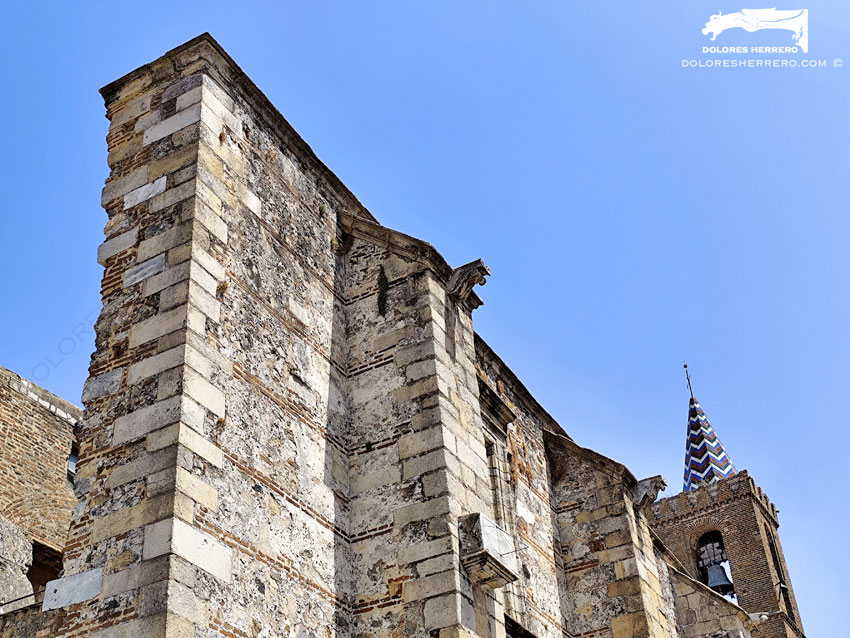
In this locality stands the Church of Nuestra Señora de la Asunción, the parish church that preserves the remarkable gargoyles analysed below.
Architecture and History of the Church of Nuestra Señora de la Asunción
Its construction extended from the 14th to the 17th century, making it an outstanding architectural monument in which several artistic traditions coexist, including Mudéjar, Gothic, and Renaissance forms. Architects such as Hernán Ruíz II, Juan de Hoces, and Diego de Riaño were involved in its design and construction.
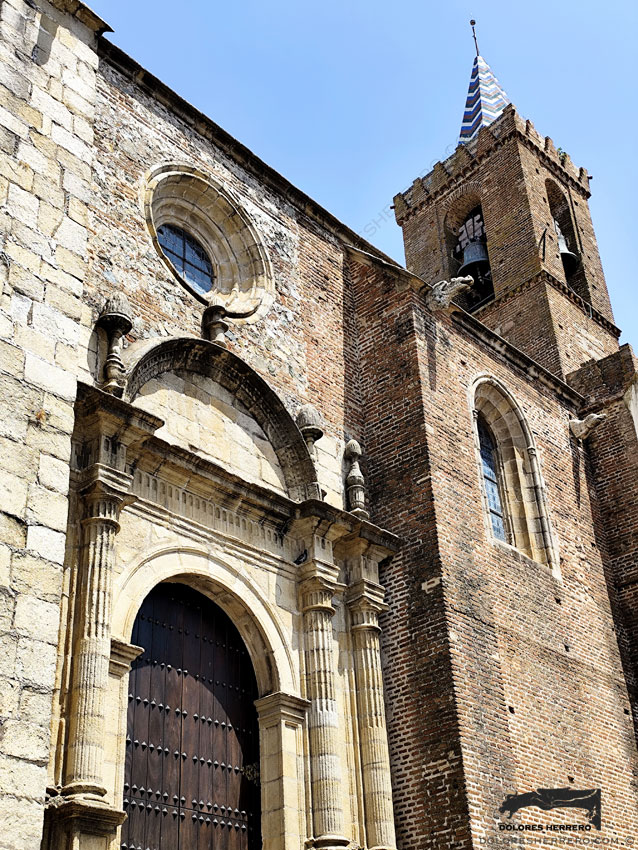
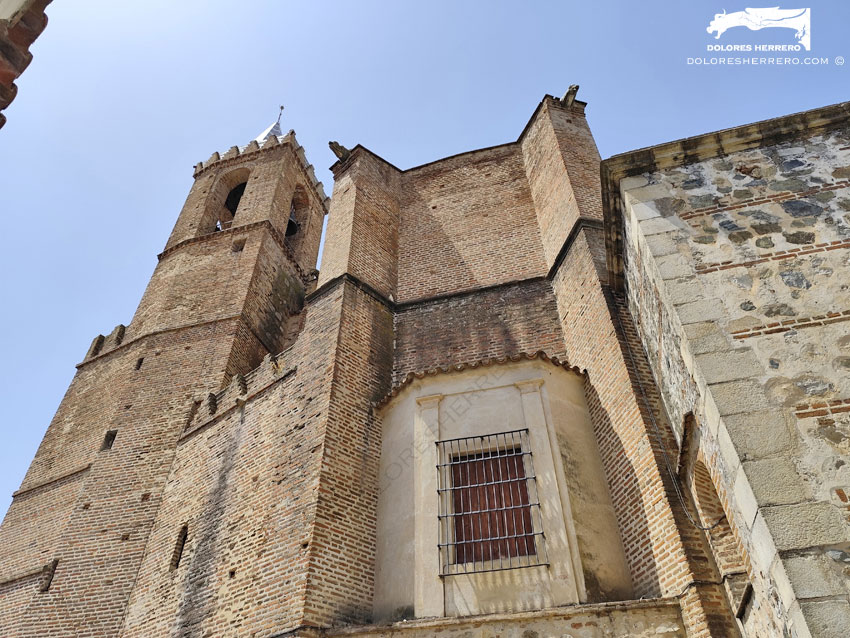
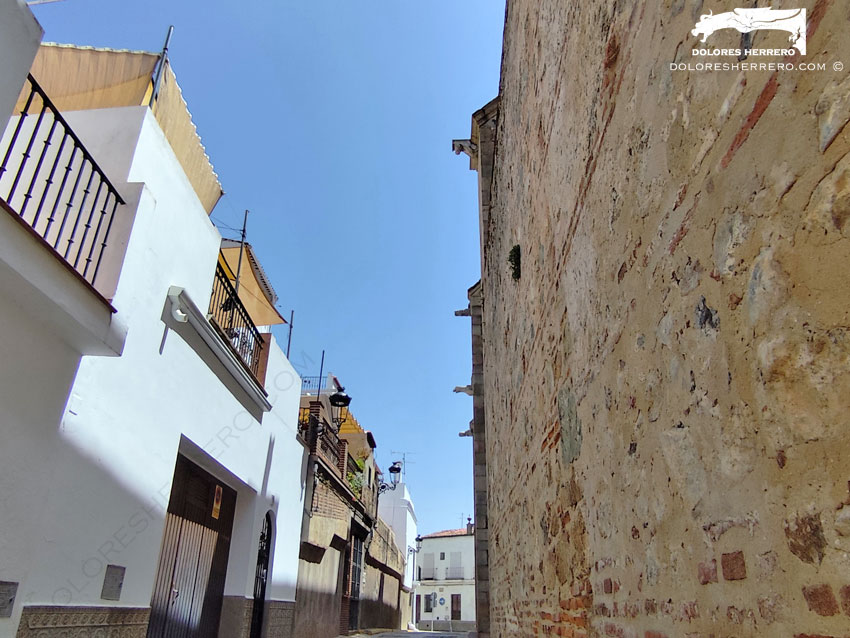
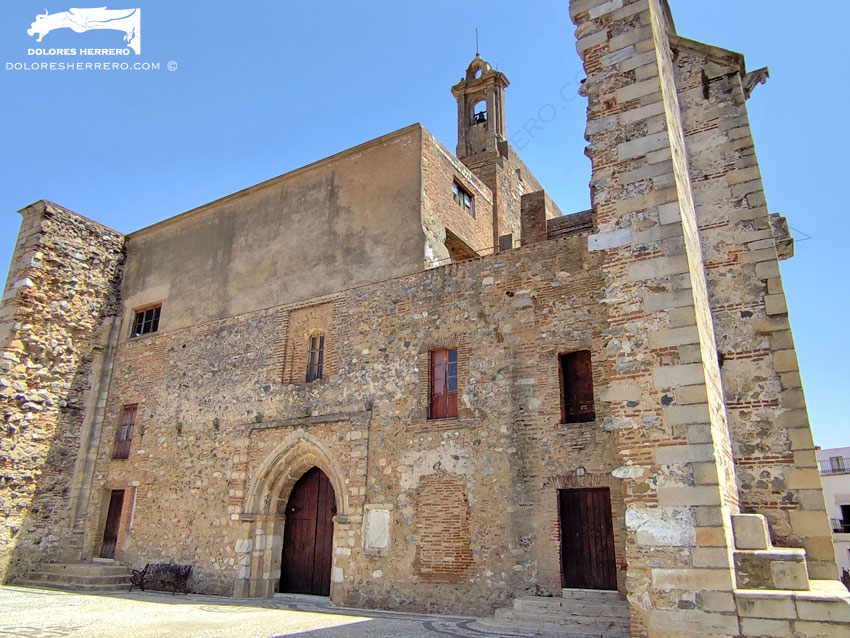
The Gargoyles of the Church
The gargoyles are of considerable interest from both a formal and a thematic perspective. They will be examined below according to typology, following the usual classification method, beginning with representations of real animals.
Gargoyles Representing Real Animals
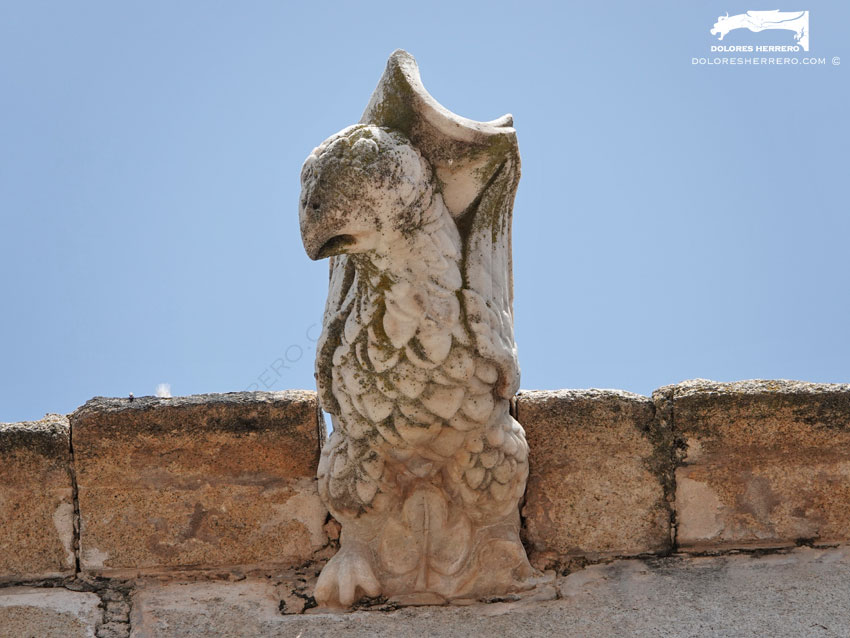
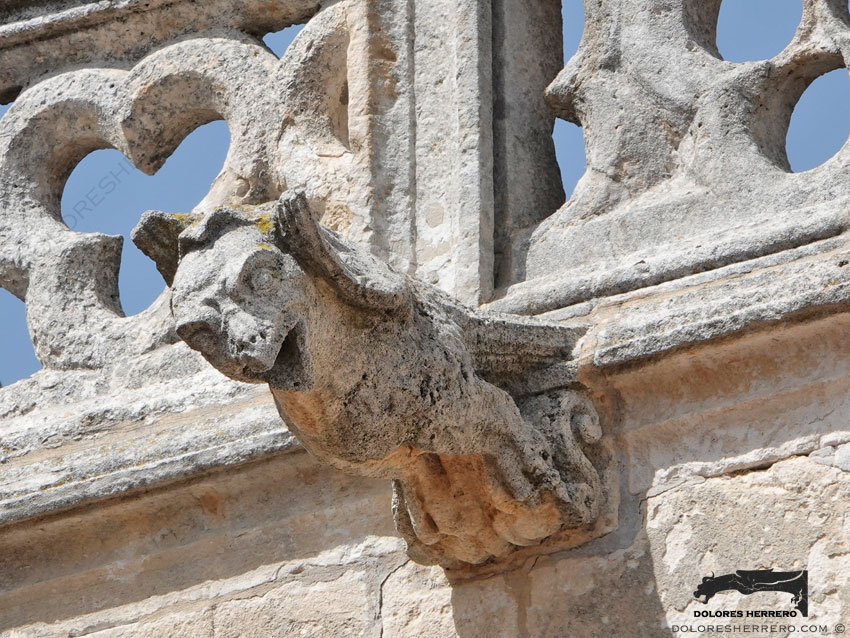
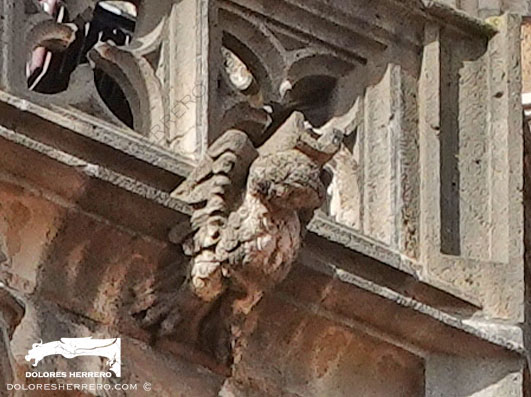
We begin with the figure of an eagle with its wings raised, a feature that can also be observed in other gargoyles, such as those of Burgos Cathedral (Spain). Beneath the figure there is an ornamental leaf, and the bird turns its head to the side, as seen in some examples at Oviedo Cathedral (Spain). In this case, however, the head turns in the opposite direction to that of the upper waterspout block, a compositional arrangement that integrates both elements—the block and the animal—into a perfectly unified sculptural form.
-
- Burgos Cathedral (Spain)
-
- Oviedo Cathedral (Spain)
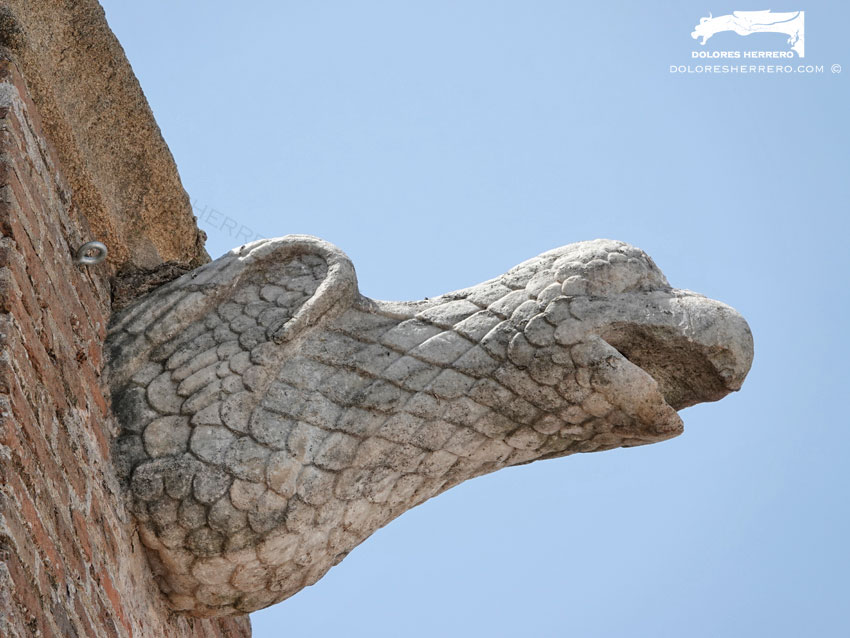
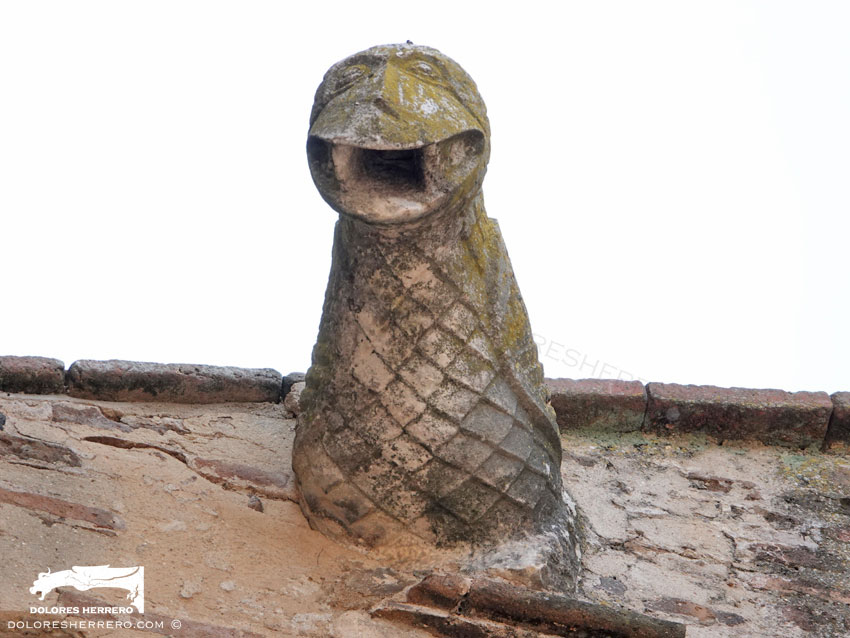
Two birds with finely detailed plumage, one of them characterized by a geometric pattern and oval eyes, complete the group of bird-shaped gargoyles of the church.
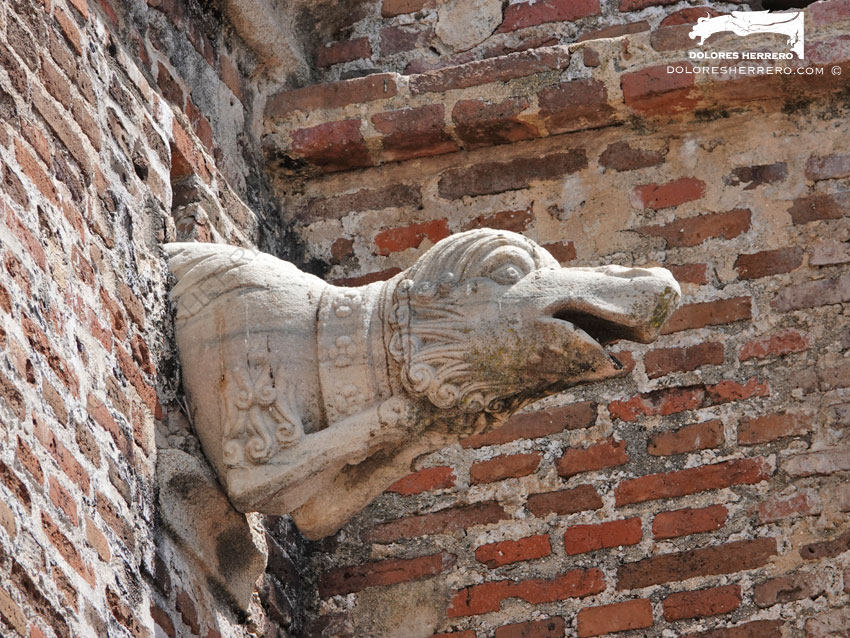
Three dog-shaped figures complete the group of real animals. The first wears a collar with a floral ornament and is a highly distinctive gargoyle due to its stylised coat, terminating in small spiral curls known as “caracolillos”; it also has defined pupils, a very elongated snout, and raises its front paws to its neck while holding a flower.
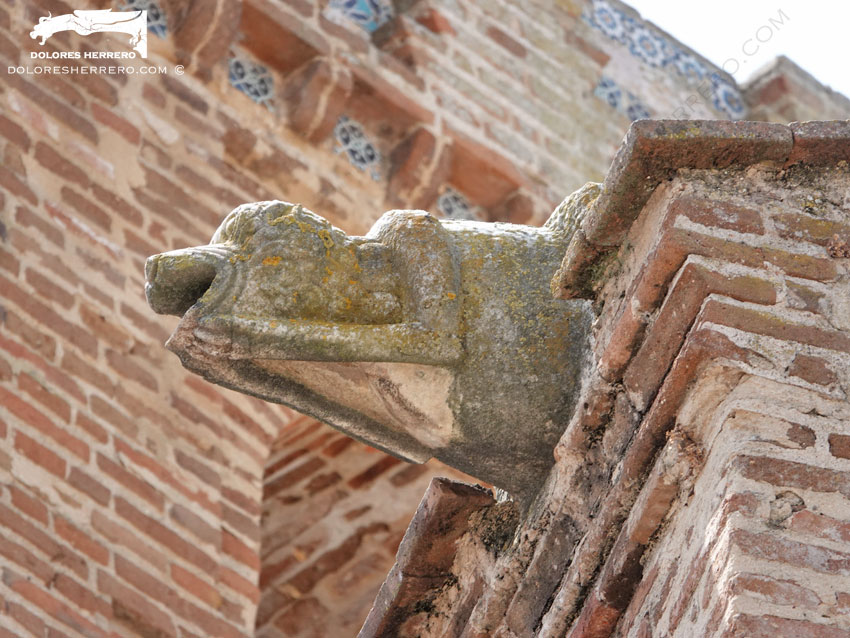
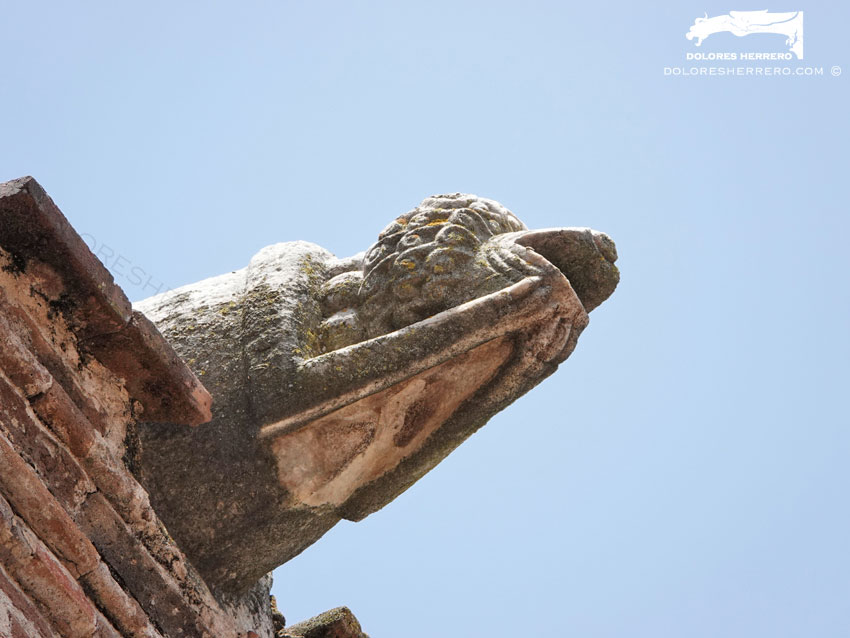
The second has folds around the mouth, or a “triple lip,” a coat that also terminates in small spiral curls (“caracolillos”), and raises its front paws to its mouth; it recalls a gargoyle from the parish church of San Pedro in Gata (Cáceres, Spain).
-
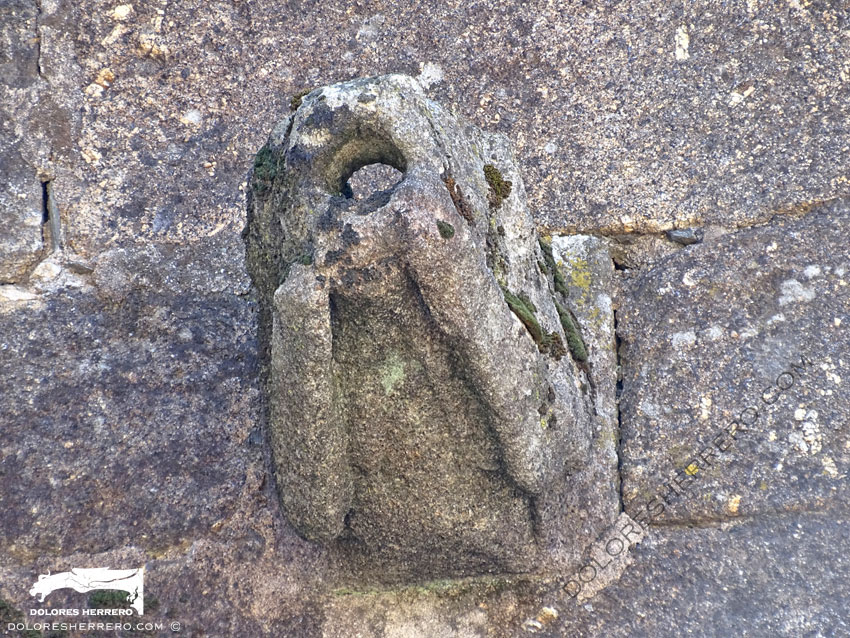
- San Pedro Parish Church, Gata (Cáceres, Spain)
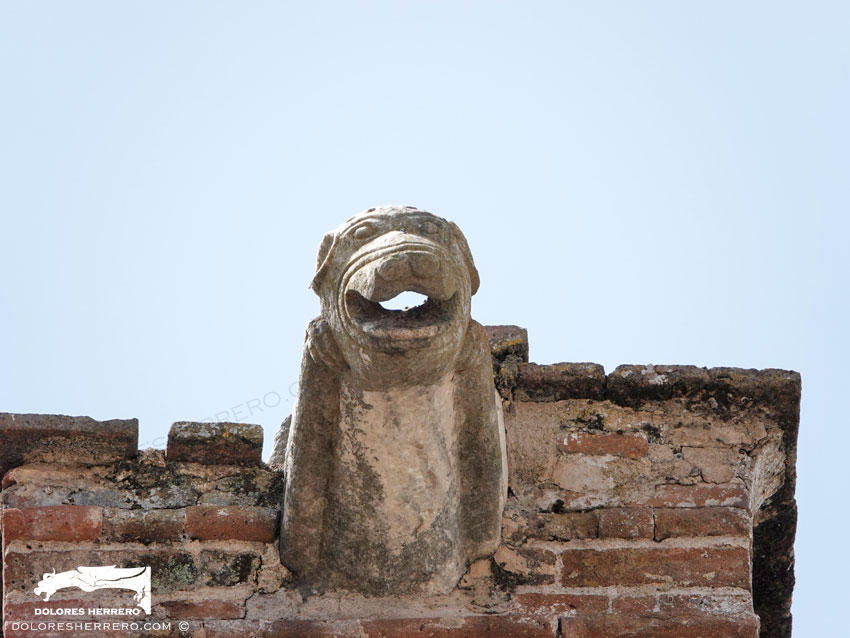
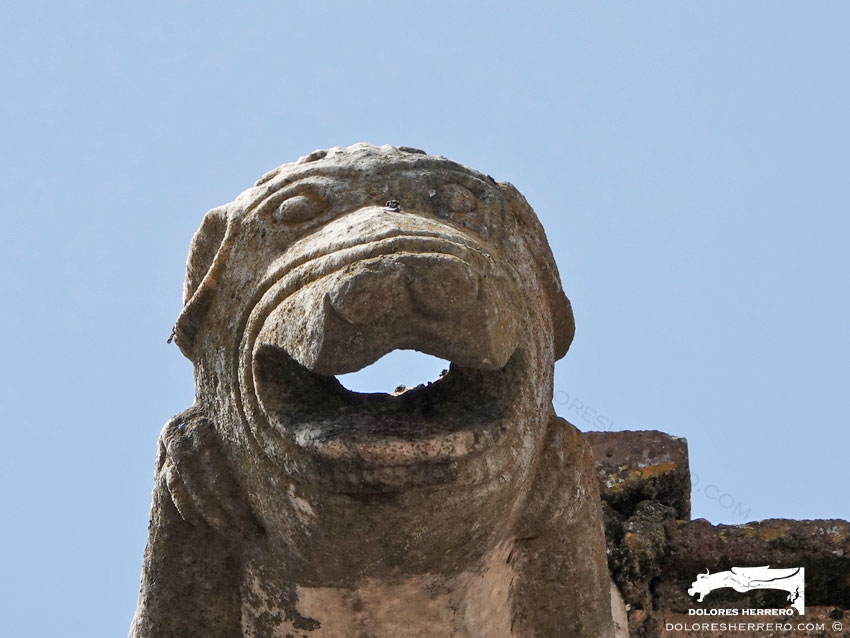
The third and final figure is a rampant dog with strongly defined folds around the mouth.
Gargoyle Representing a Demon
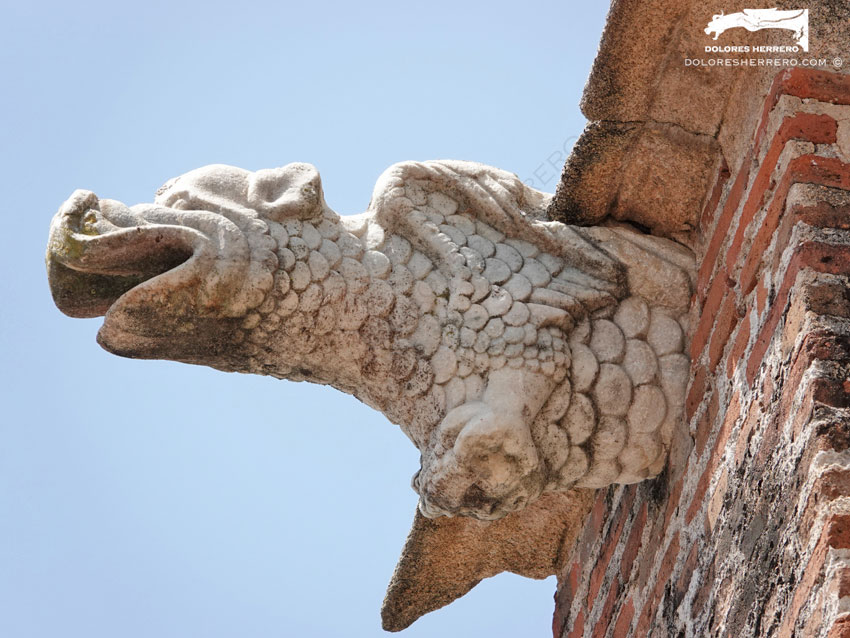
A demon with a dragon-like head and body holds a human head between its claws, possibly referring to the devil carrying away the soul of a sinner, an allusion that is sometimes found in gargoyles.
Gargoyles Representing Geometric Forms and Objects
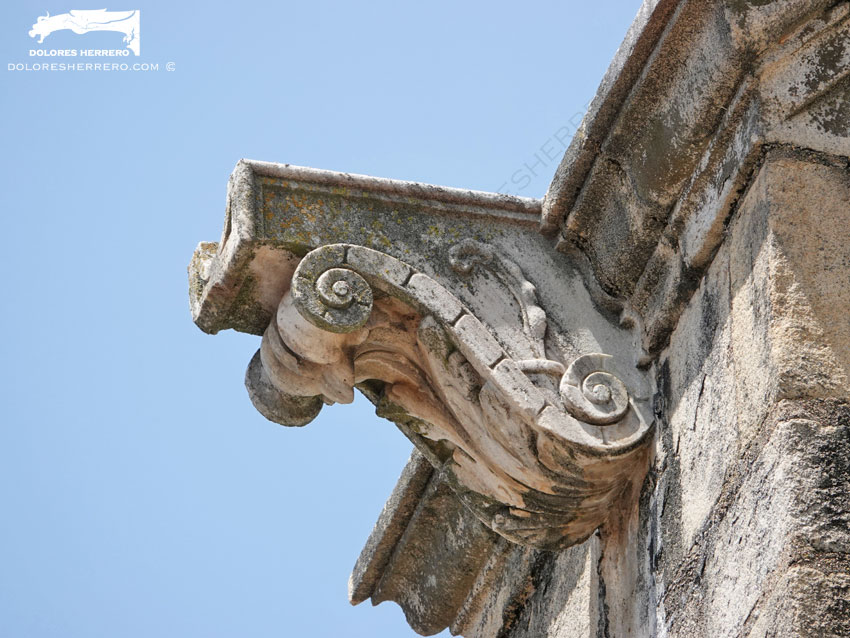
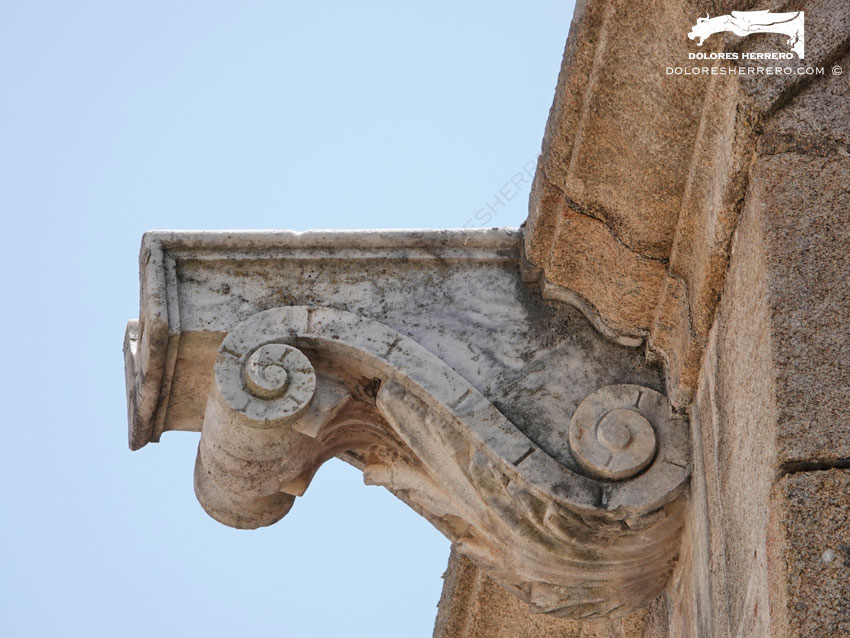
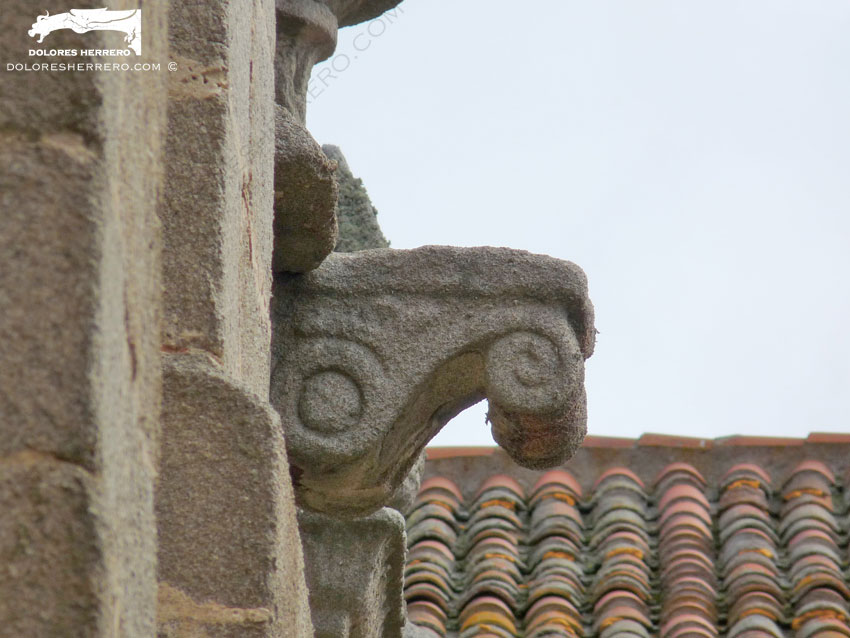
We now turn to the geometric gargoyles. These figures consist of a rectangular block with vegetal decoration on the sides and an ornamental element of two types beneath it. The first type of ornament is vegetal and features a double spiral on the sides, resembling a papyrus scroll rolled at the ends, an element also found in other gargoyles, such as those of Ávila Cathedral (Spain) and the parish church of San Pedro in Gata (Cáceres, Spain).
-
- Ávila Cathedral (Spain)
-
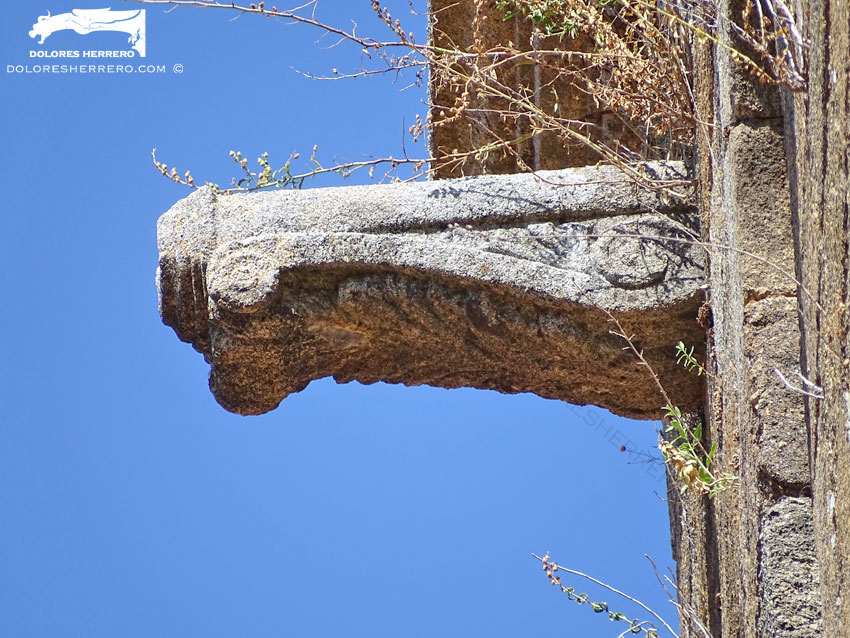
- San Pedro Parish Church, Gata (Cáceres, Spain)
The second type of ornament features a triple spiral that extends along the body of the gargoyle, creating a sense of undulation.
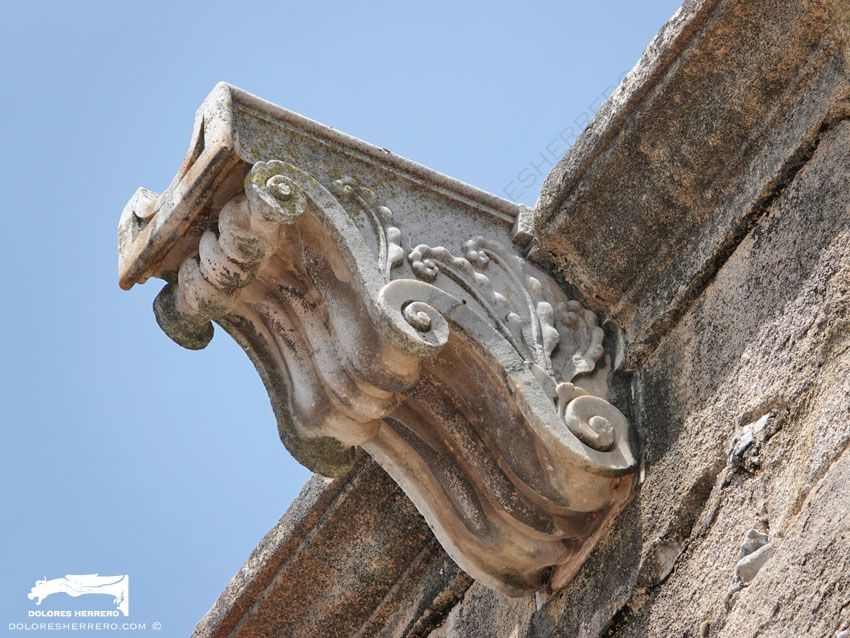
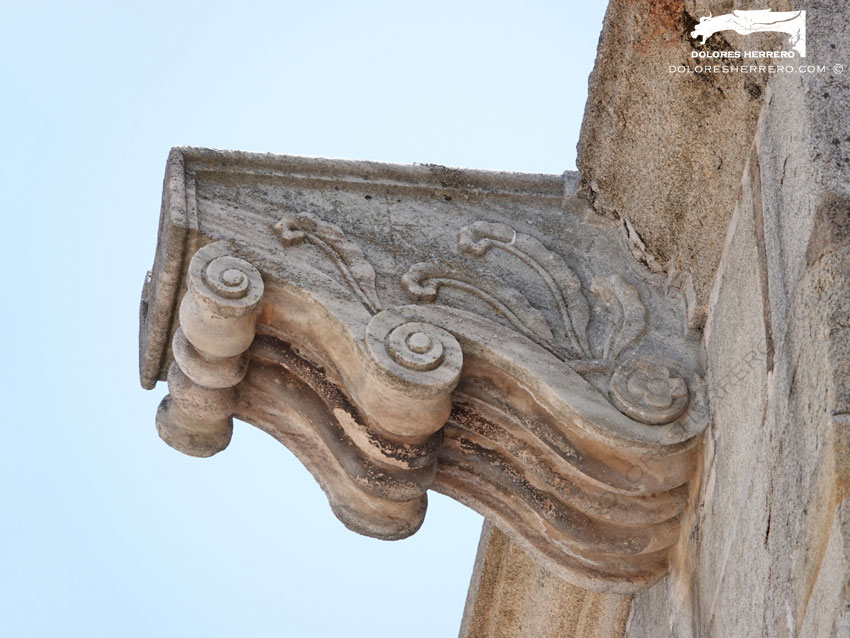
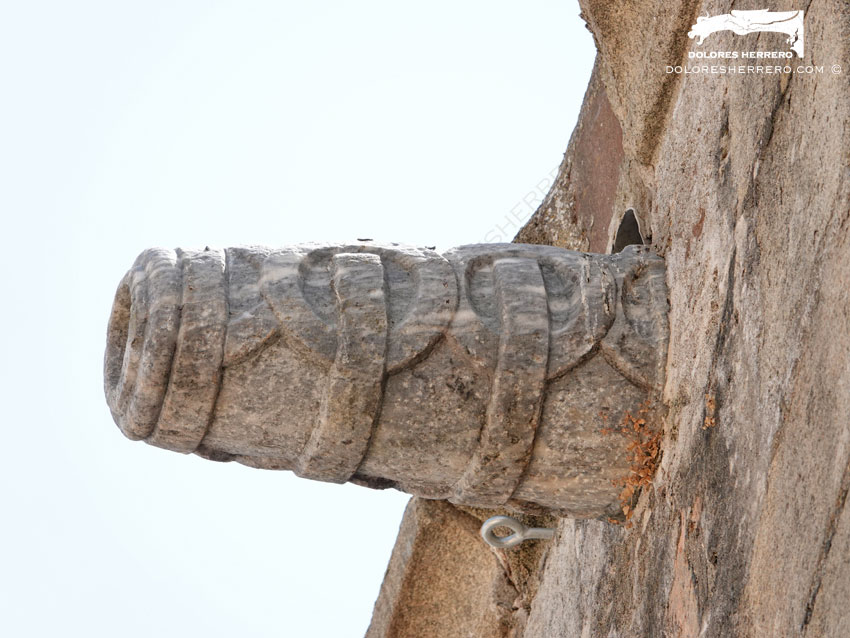
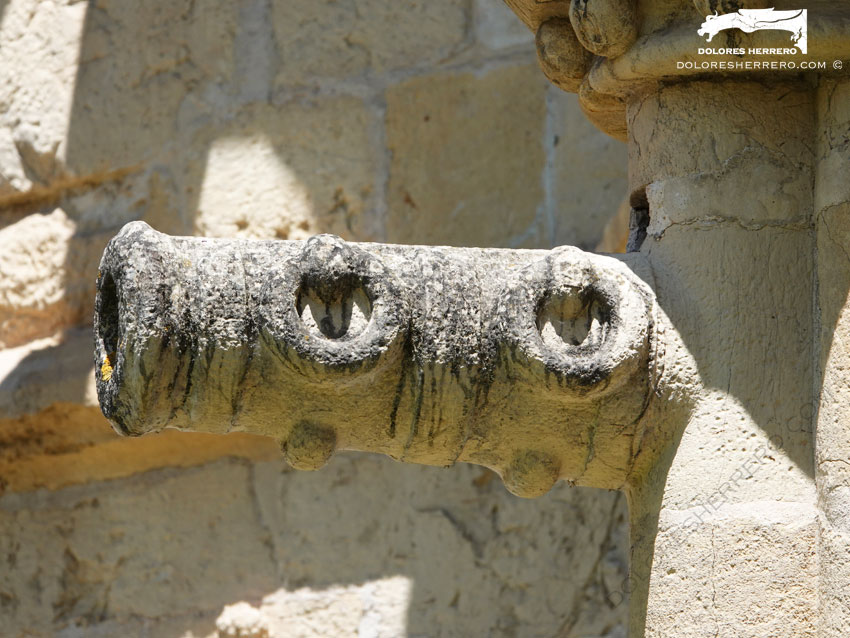
The final gargoyle takes the form of a cannon, an artillery element frequently represented in Portugal (Batalha, Guarda, Jerónimos, Coimbra) and in Spain, at Burgos Cathedral.
-
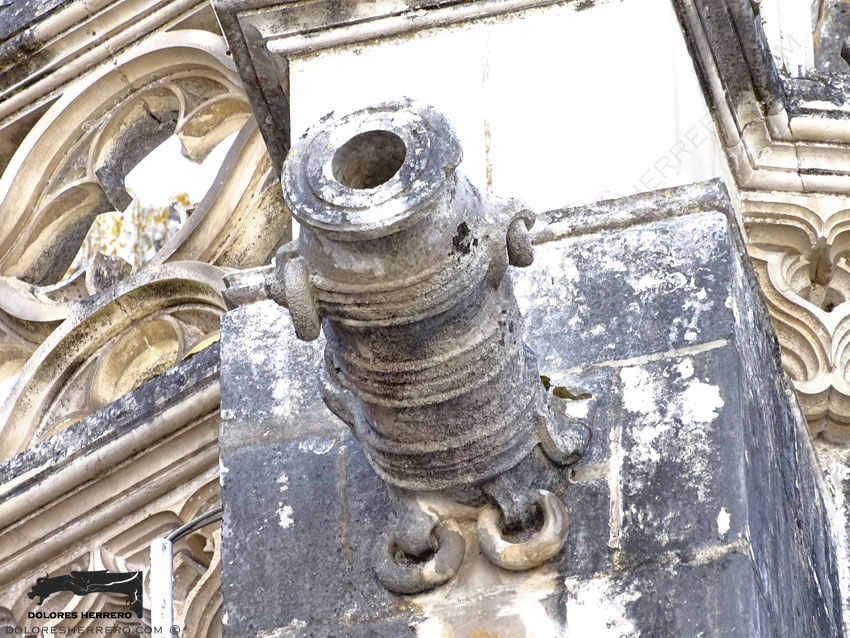
- Batalha Monastery (Portugal)
-
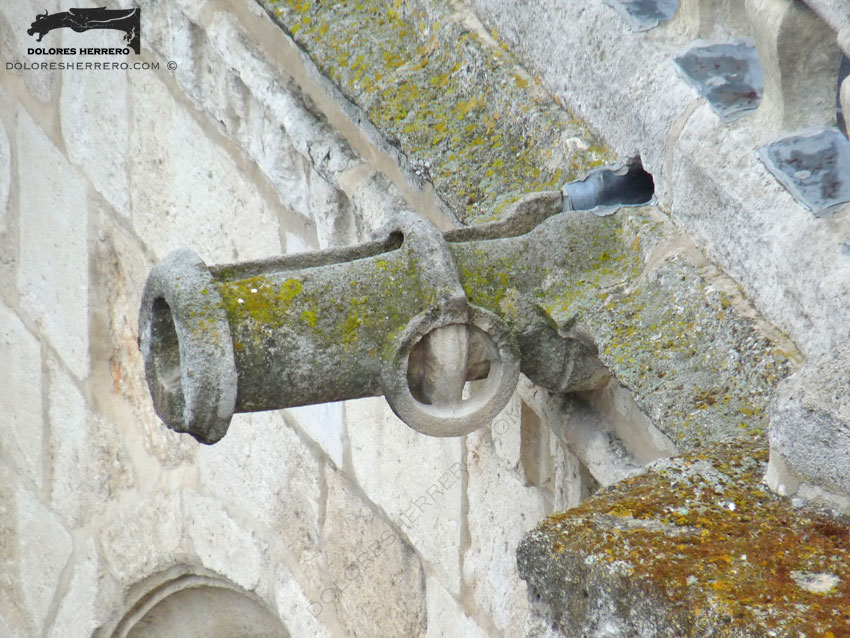
- Burgos Cathedral (Spain)
-
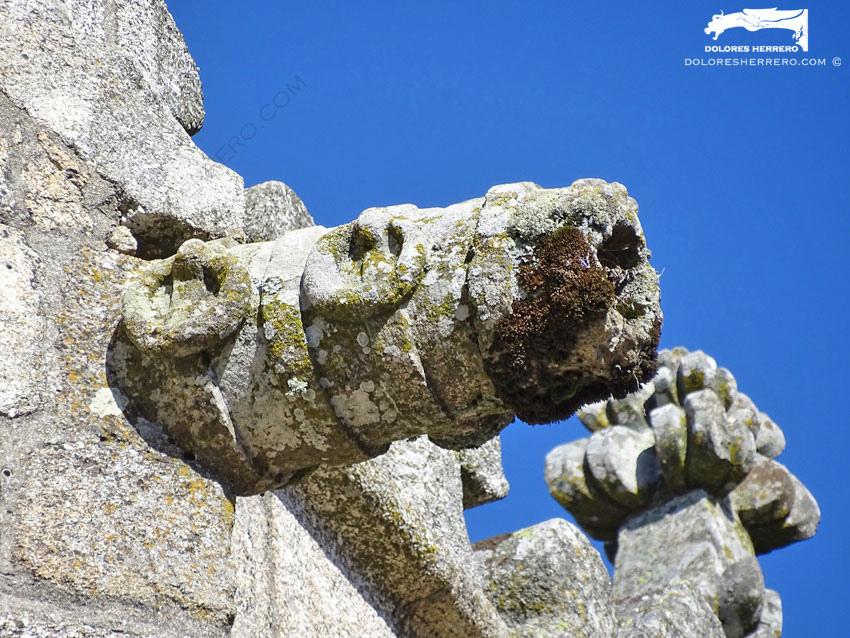
- Guarda Cathedral (Portugal)
-
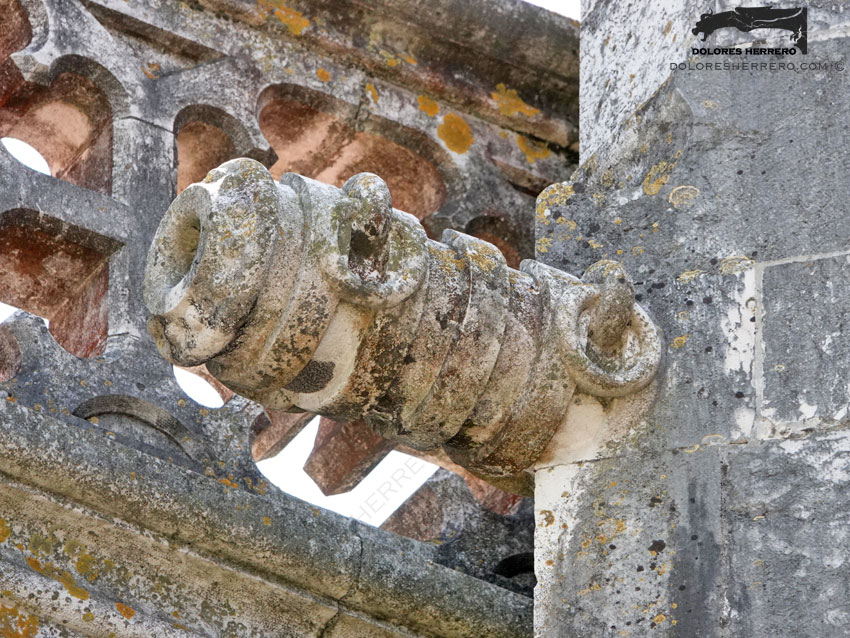
- Jerónimos Monastery, Lisbon (Portugal)
-
- Santa Cruz Monastery, Coimbra (Portugal)
Grotesque Representing a Human Figure
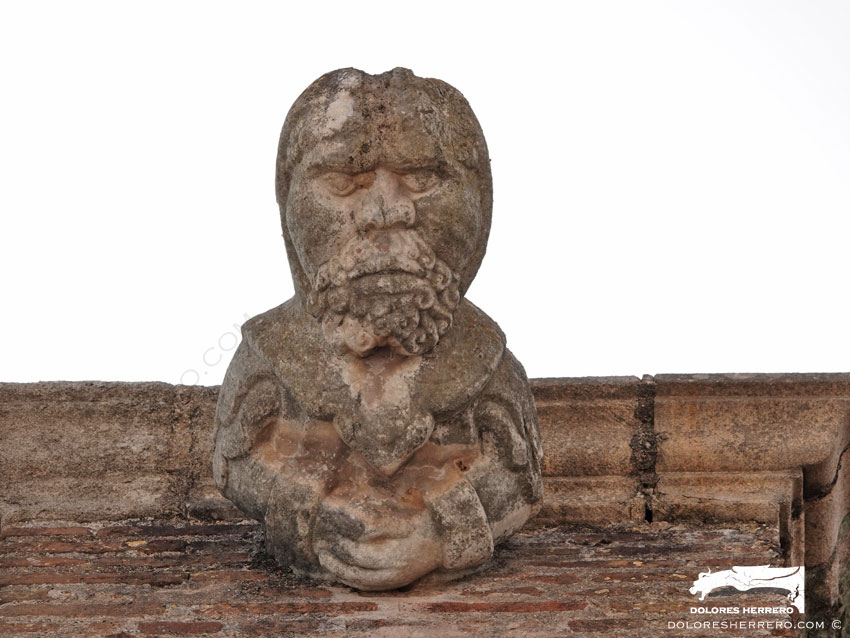
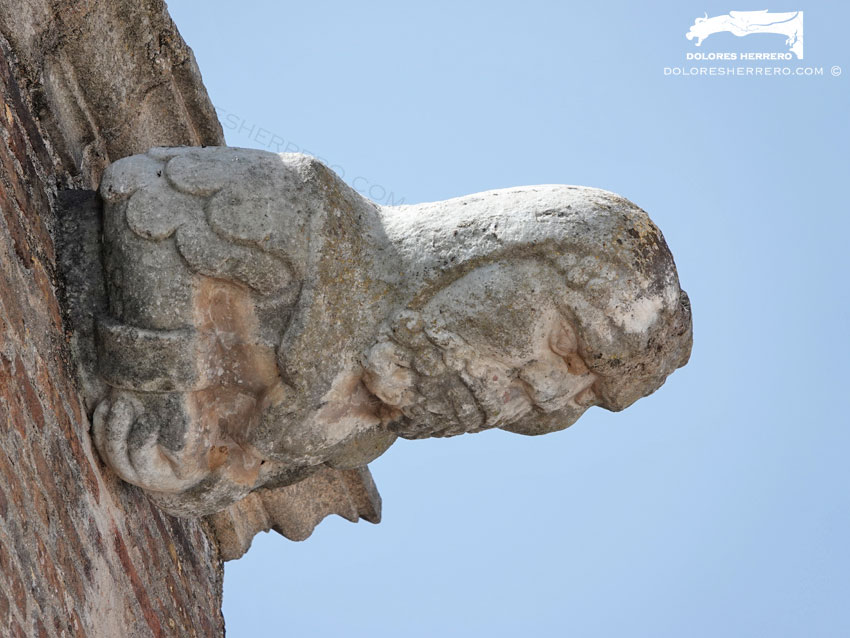
The only human figure is a bust of a bearded man with his hands joined and resting on his lap, wearing historical attire and displaying a serious expression with a furrowed brow; a powerful image.
A Remarkable Group of Gargoyles in Aroche
In just 13 gargoyles, a wide range of typologies can be observed, featuring original elements, rich ornamentation, and highly precise carving. The geometric gargoyles are particularly distinctive within the ensemble. Likewise, similarities can be identified with other gargoyles in Extremadura (Gata), Burgos, and Oviedo, as well as with examples from Batalha Monastery (Portugal), demonstrating the circulation of models and formal solutions. This group is undoubtedly of great interest, enriching the artistic heritage of Aroche and constituting a valuable testimony to the architectural sculpture associated with its parish church, which is well worth visiting.
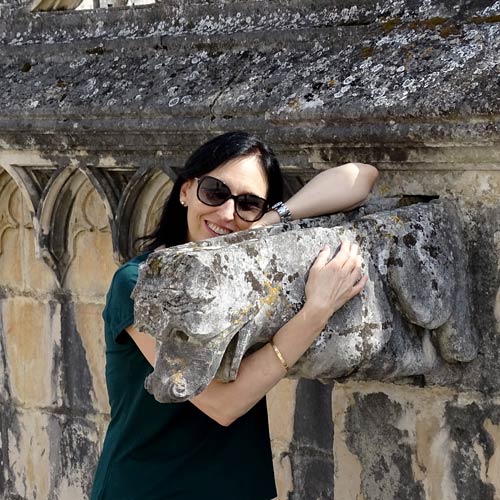
Doctor of Art History and researcher specializing in the study of gargoyles.
I am Dolores Herrero Ferrio, and my thesis, “An Approach to the Study of Gargoyles of Gothic Cathedrals in Castilla and León”, is dedicated to the study of these fascinating figures.
If you like gargoyles and art history, you will also enjoy my book, “The Gargoyle and Its Iconography,” a book I have written with great care for those interested in the world of gargoyles.
I have created my own Encyclopedia of Gargoyles, a Gargopedia to share with you, where you will discover all the secrets and wonders of these enigmatic sculptures.
I hope you enjoy this Gargopedia as much as I have enjoyed creating it, and remember that each gargoyle has a story to tell, and here you will discover them all.
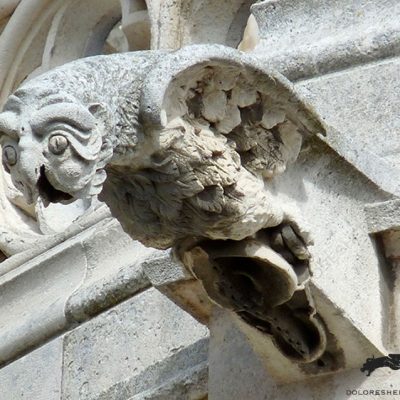 Gargoyles and Unusual Animals: Part One
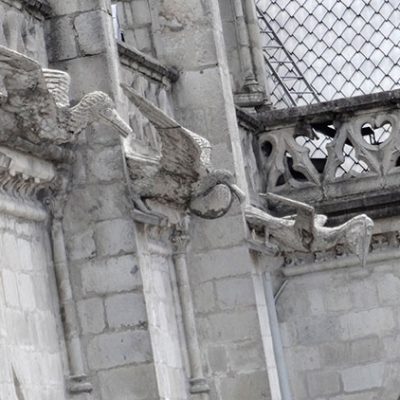 Gargoyles of Quito (Ecuador): Animal Sculptures in Andean Architecture
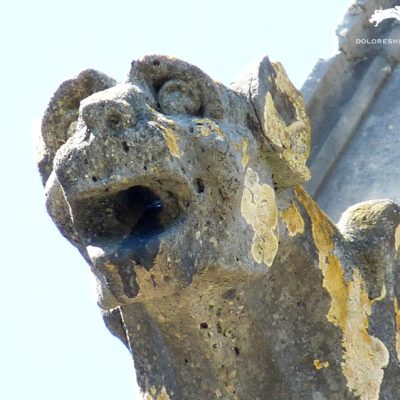 Gargoyles in Limoux (France): The Sculptural Ensemble of the Church of Saint-Martin
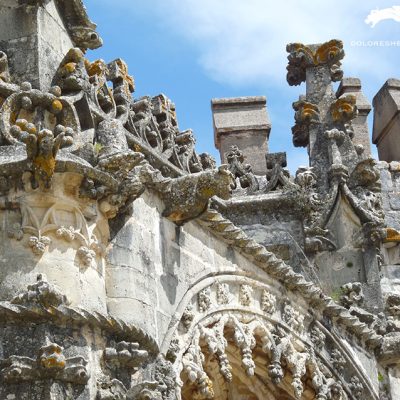 Gargoyles of Tomar in Portugal: Gothic Art and Templar Legacy
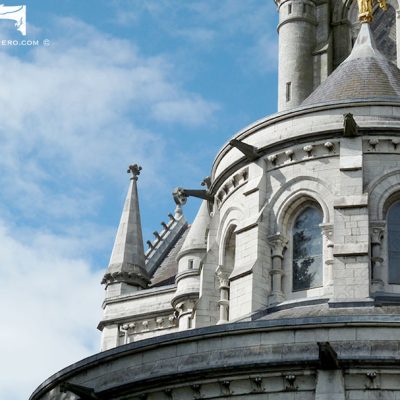 Gargoyles of Cork Cathedral: Fantastic Symbols in the Architecture of Ireland